Get your free personalized podcast brief
We scan new podcasts and send you the top 5 insights daily.
With the rise of targeted therapies, about 25% of gastric cancers are now considered "triple negative": Claudin-negative, HER2-negative, and PD-L1 negative. This newly defined subgroup represents a significant unmet need and highlights the necessity for novel treatment strategies beyond current biomarkers.

Related Insights
While Trastuzumab deruxtecan (TDXD) is effective in HER2-low breast cancer, there is no evidence that it benefits patients with HER2-low or HER2-intermediate (IHC 2+/FISH negative) gastric cancer. Its use should be strictly limited to truly HER2-positive cases in this disease.

Some experts advocate for using immunotherapy in PD-L1 negative (CPS 0) gastric adenocarcinoma, arguing the biomarker test itself is unreliable. Factors like stromal sampling variability mean a "zero" score might not be truly negative, justifying treatment in a patient who would otherwise be excluded.
In the increasingly common scenario of gastric cancer with multiple biomarkers (HER2, PD-L1, Claudin), experts recommend a clear hierarchy. Based on data maturity, HER2-targeted therapy is the first choice, followed by PD-L1 immunotherapy, with Claudin-targeted therapy third.

Contrary to concerns about over-complicating treatment, experts advocate for fragmenting gastric cancer even further. The goal is to treat each molecularly defined subset as its own distinct disease, which requires deeper understanding and more targeted approaches rather than broad simplification.

Unlike breast or lung cancer where a biomarker's effectiveness persists across treatment stages, biomarkers in upper GI cancers often fail to show similar efficacy when moved from one line of therapy to another. This suggests a more variable and rapidly changing tumor biology.
The antibody-drug conjugate TDxD is a promising first-line therapy for HER2+ gastric cancer because of its bystander effect. The chemotherapy payload can kill adjacent HER2-low or negative cells, directly addressing the tumor heterogeneity that limits the efficacy of traditional HER2-targeted agents in this disease.

Experts recommend using the most effective first-line therapy, like zanidatumab combinations, for HER2-positive gastric cancer, despite the risk of the tumor losing HER2 expression upon progression. The substantial upfront survival benefit outweighs the concern of losing a second-line target like T-DXd.
In the increasingly common scenario of a patient with multiple positive biomarkers, a clear hierarchy exists for treatment decisions. Based on the robustness and maturity of clinical trial data, HER2-directed therapy is the top priority, followed by PD-L1 immunotherapy, with Claudin-18.2 targeting considered third.
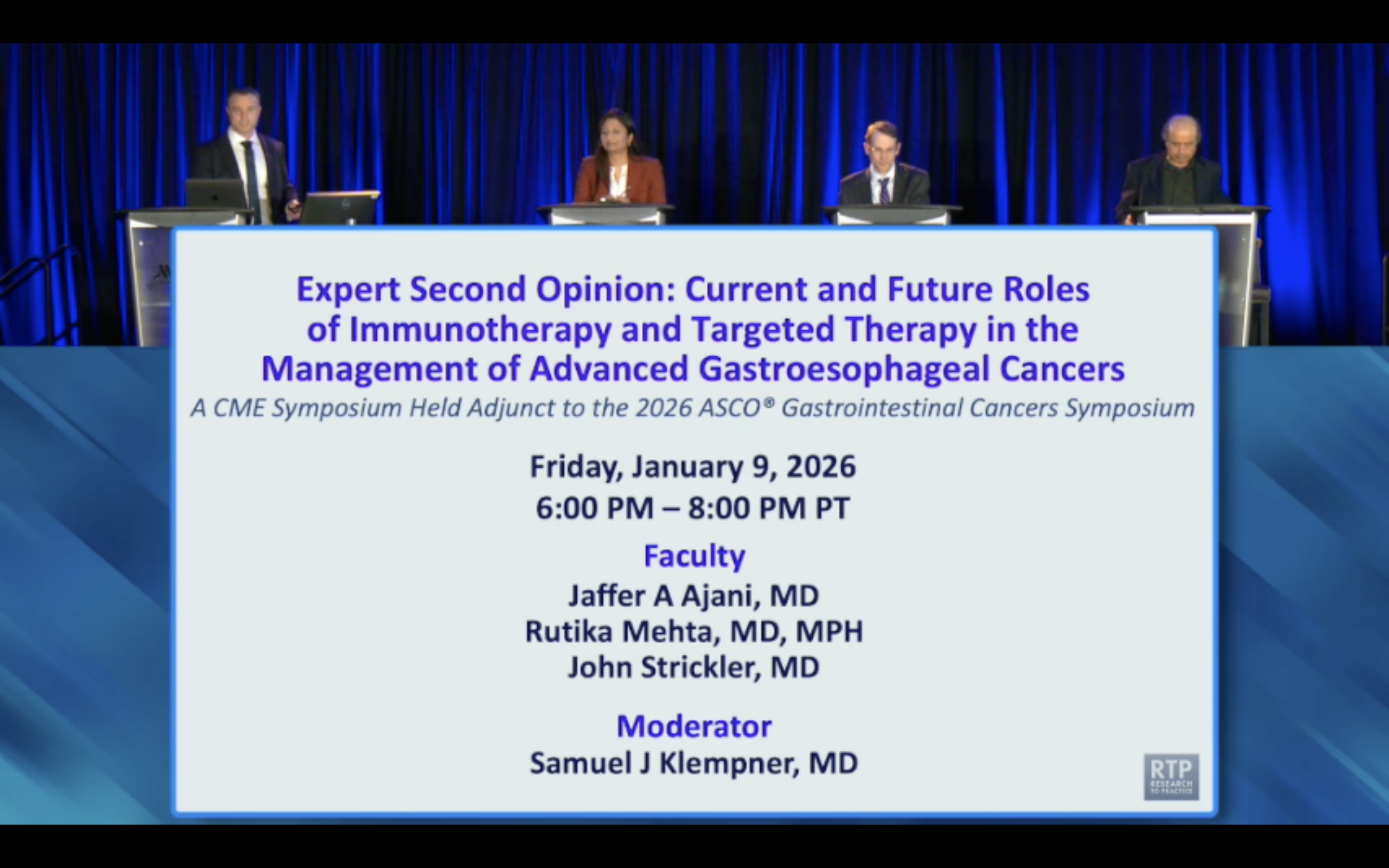
Unlike trastuzumab, zanidatumab's effectiveness in the HORIZON-GEA-01 trial did not seem to depend on PD-L1 status. This surprising finding suggests a novel, possibly immune-mediated, mechanism of action that could expand its use to a broader patient population, including those who are PD-L1 negative.

The HORIZON-GEA1 trial demonstrated that zanidatumab, a bispecific antibody, provides a significant survival benefit in HER2-positive gastroesophageal cancers, even in patients with PD-L1 negative tumors. This finding challenges the conventional wisdom that checkpoint inhibitors are the primary driver of benefit in combination therapies.