Get your free personalized podcast brief
We scan new podcasts and send you the top 5 insights daily.
As enterprises become more cost-conscious about token spend, they are actively seeking cheaper alternatives to OpenAI and Anthropic. Data from Ramp shows China's DeepSeek is the top trending software vendor, indicating a new willingness to use foreign or open-source models despite potential data privacy concerns.

Related Insights
Faced with rising costs from proprietary labs, sophisticated enterprise clients are building internal evaluation and routing systems. This allows them to use cheaper, open-source models for less complex tasks, optimizing for both cost and performance.

DeepSeek's V4 model, while not frontier-level, is drastically cheaper than US counterparts. This makes it highly attractive for most business use cases, creating a national security risk if US companies become dependent on Chinese-controlled, open-source AI infrastructure that could be altered or restricted, leaving them strategically vulnerable.
While US firms lead in cutting-edge AI, the impressive quality of open-source models from China is compressing the market. As these free models improve, more tasks become "good enough" for open source, creating significant pricing pressure on premium, closed-source foundation models from companies like OpenAI and Google.

Unlike the largely closed-source US market, DeepSeek's open-source models spurred intense competition among Chinese tech giants and startups to release their own open offerings. This has made Chinese open-source models the most used globally by token count, creating a distinct competitive dynamic.

Airbnb's reliance on Alibaba's QWEN 3 model as a more affordable alternative to US models signals a critical trend. As Chinese models approach performance parity, their significant cost advantage is making them a viable and attractive choice for Western companies, challenging the market dominance of US-based labs.
While a global token shortage suggests rising costs, Chinese AI firms like DeepSeek are employing a counter-strategy: permanent, drastic price cuts. This is not driven by efficiency gains but is a deliberate tactic to lure cost-sensitive global customers away from premium models. This uses price as a geopolitical lever for market penetration.
The high operational cost of using proprietary LLMs creates 'token junkies' who burn through cash rapidly. This intense cost pressure is a primary driver for power users to adopt cheaper, local, open-source models they can run on their own hardware, creating a distinct market segment.
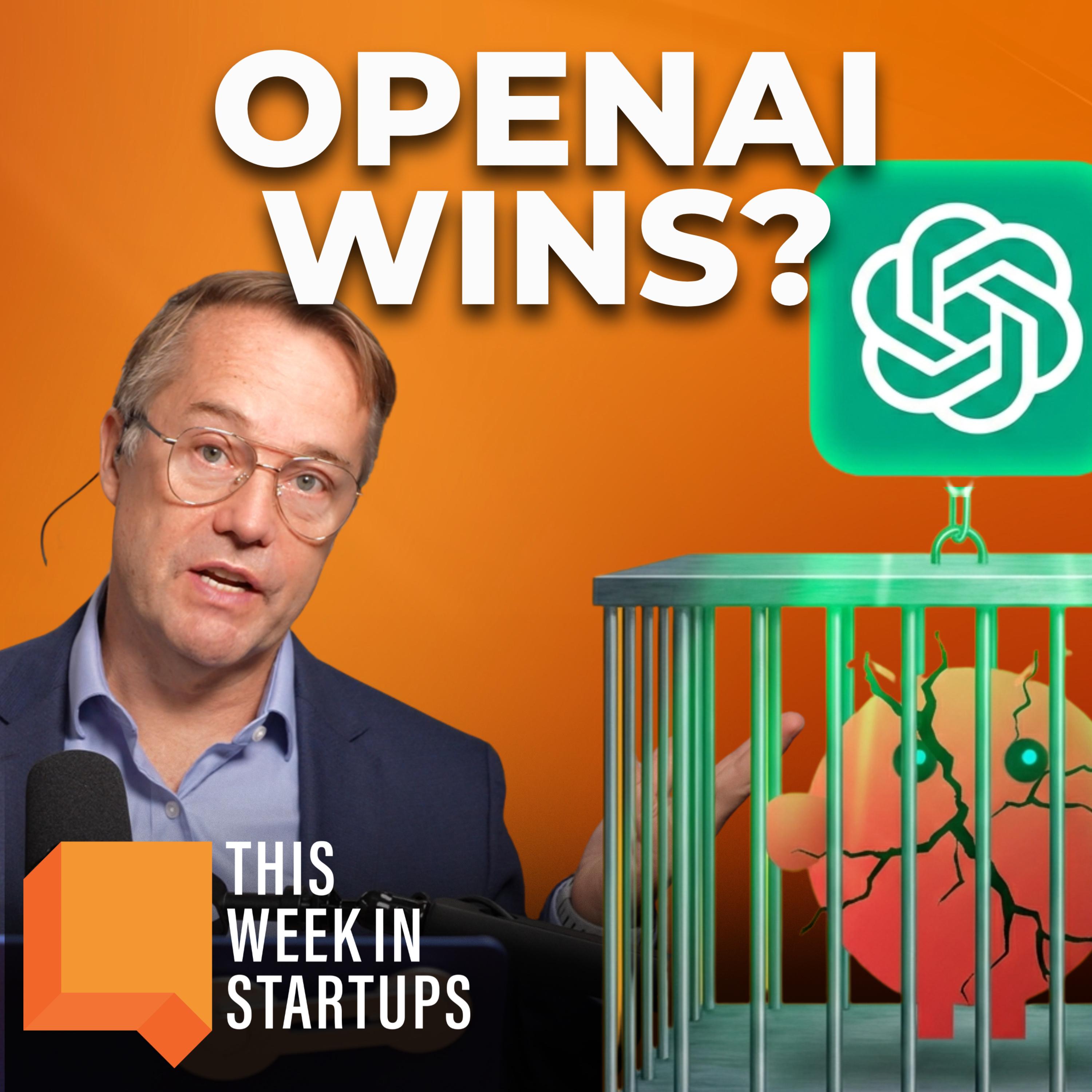
While the U.S. leads in closed, proprietary AI models like OpenAI's, Chinese companies now dominate the leaderboards for open-source models. Because they are cheaper and easier to deploy, these Chinese models are seeing rapid global uptake, challenging the U.S.'s perceived lead in AI through wider diffusion and application.

To escape platform risk and high API costs, startups are building their own AI models. The strategy involves taking powerful, state-subsidized open-source models from China and fine-tuning them for specific use cases, creating a competitive alternative to relying on APIs from OpenAI or Anthropic.
Misha Laskin, CEO of Reflection AI, states that large enterprises turn to open source models for two key reasons: to dramatically reduce the cost of high-volume tasks, or to fine-tune performance on niche data where closed models are weak.
