Get your free personalized podcast brief
We scan new podcasts and send you the top 5 insights daily.
The leap to Level 4 AI is the shift from executing pre-defined, human-designed tasks to pursuing a high-level goal. An autonomous agent can refine its own methods based on performance feedback, while Level 3 automation requires a human to manually update its logic.

Related Insights
Moving beyond the co-pilot model, Genesis has its AI agents work autonomously on complex tasks. They only engage a human when they get stuck or their confidence in a decision drops, inverting the traditional human-in-the-loop workflow for maximum efficiency and creating a system that learns from every interaction.

The key to enabling an AI agent like Ralph to work autonomously isn't just a clever prompt, but a self-contained feedback loop. By providing clear, machine-verifiable "acceptance criteria" for each task, the agent can test its own work and confirm completion without requiring human intervention or subjective feedback.

A practical definition of AGI is an AI that operates autonomously and persistently without continuous human intervention. Like a child gaining independence, it would manage its own goals and learn over long periods—a capability far beyond today's models that require constant prompting to function.

Unlike simple prompts that yield a single output, AI agents are systems that can execute a series of actions autonomously. They can develop a plan, use tools like the internet, and perform multiple steps to complete a complex task like running a marketing campaign.

Instead of a single "AGI" event, AI progress is better understood in three stages. We're in the "powerful tools" era. The next is "powerful agents" that act autonomously. The final stage, "autonomous organizations" that outcompete human-led ones, is much further off due to capability "spikiness."

The next step for agents is self-awareness: understanding the specifics of their "harness"—the tools, APIs, and constraints of their environment. This awareness is a prerequisite for more advanced behaviors like identifying knowledge gaps and eventually modifying their own system prompts.
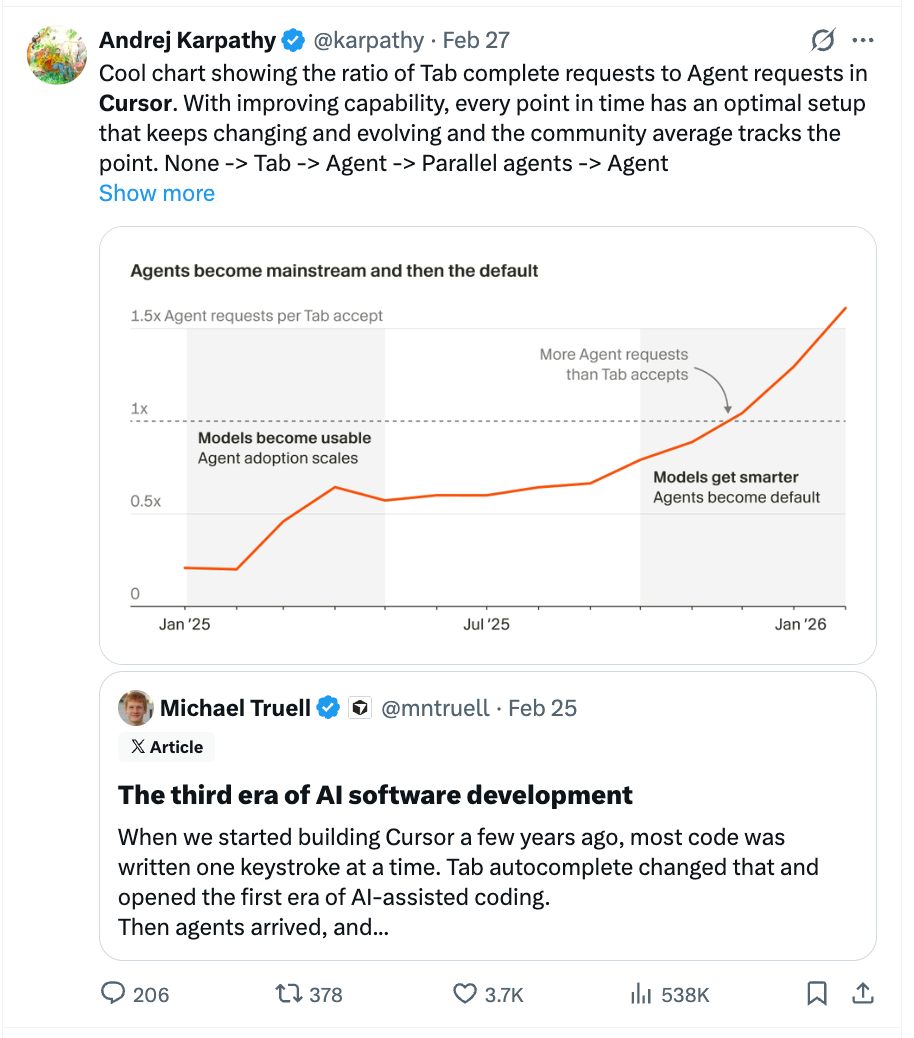
Frame AI agent development like training an intern. Initially, they need clear instructions, access to tools, and your specific systems. They won't be perfect at first, but with iterative feedback and training ('progress over perfection'), they can evolve to handle complex tasks autonomously.

Unlike simple chat models that provide answers to questions, AI agents are designed to autonomously achieve a goal. They operate in a continuous 'observe, think, act' loop to plan and execute tasks until a result is delivered, moving beyond the back-and-forth nature of chat.
The next evolution for AI agents is recursive learning: programming them to run tasks on a schedule to update their own knowledge. For example, an agent could study the latest YouTube thumbnail trends daily to improve its own thumbnail generation skill.

Unlike traditional automation that follows simple rules (e.g., match competitor price), AI agents optimize for a business goal. They synthesize data from siloed systems like inventory and finance, simulate potential outcomes, and then recommend the best course of action.
