Get your free personalized podcast brief
We scan new podcasts and send you the top 5 insights daily.
Wave CEO Alex Kendall clarifies the liability question for self-driving cars. For 'hands-off' systems (L2), the driver remains liable. For 'eyes-off' (L3) or fully driverless systems (L4), liability shifts to the manufacturer or operator. This creates a clear delineation that will shape insurance and regulatory frameworks.

Related Insights
Frame AI independence like self-driving car levels: 'Human-in-the-loop' (AI as advisor), 'Human-on-the-loop' (AI acts with supervision), and 'Human-out-of-the-loop' (full autonomy). This tiered model allows organizations to match the level of AI independence to the specific risk of the task.

As Full Self-Driving (FSD) and autonomous vehicles become widespread, the culture of driving will fundamentally shift. Prohibitive risk and insurance costs will make manual driving a rare, expensive hobby for enthusiasts, much like thoroughbred racing is today.
Beyond technology and cost, the most significant immediate barrier to scaling autonomous vehicle services is the fragmented, state-by-state regulatory approval process. This creates a complex and unpredictable patchwork of legal requirements that hinders rapid, nationwide expansion for all players in the industry.

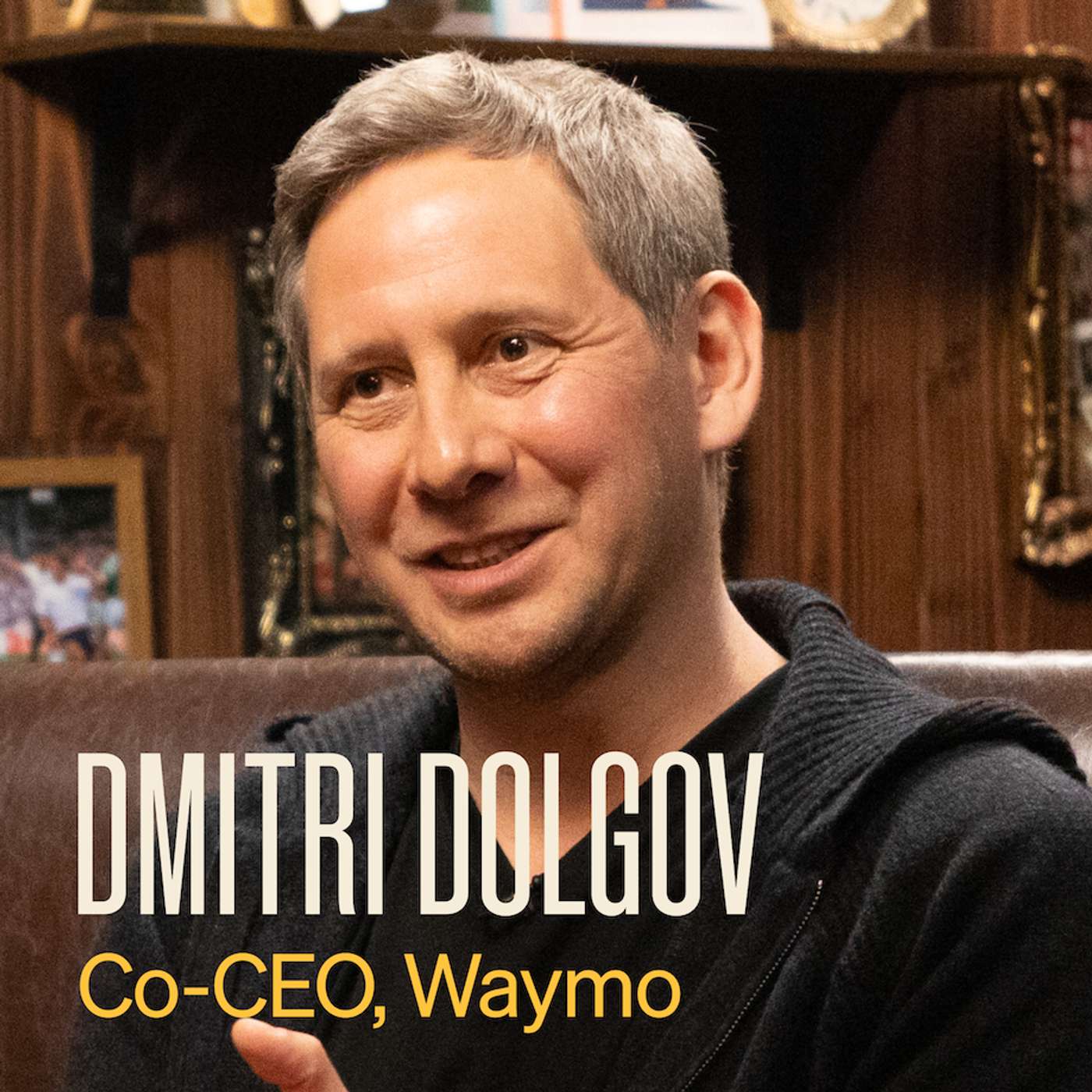
Waymo's co-CEO argues that Level 4/5 autonomy will not emerge by incrementally improving Level 2/3 driver-assist systems. The hardest challenges of operating without a human driver are entirely absent in assist systems, requiring a "qualitative jump" and a completely different approach from the outset.
Wave CEO Alex Kendall argues against the integrated models of Tesla (building cars) and Waymo (building fleets). Instead, Wave licenses its AI driver to any automaker or fleet, believing this is the largest and most flexible business model, as it avoids the capex and limitations of a single brand.
Waabi's CEO argues that achieving Level 4 (eyes-off) autonomy isn't a linear progression from Level 2 (driver-assist). They are entirely different safety problems. L4 requires a purpose-built technology stack from day one, as the absence of a human driver introduces challenges that cannot be solved by simply improving an L2 system.
Waymo's CEO argues it is a deceptive assumption that Level 2/3 driver-assist systems exist on a continuous spectrum with Level 4/5 full autonomy. The hardest parts of building a 'rider only' system are fundamentally different, requiring a qualitative jump in technology.

The classic "trolley problem" will become a product differentiator for autonomous vehicles. Car manufacturers will have to encode specific values—such as prioritizing passenger versus pedestrian safety—into their AI, creating a competitive market where consumers choose a vehicle based on its moral code.
Self-driving company Wave found that automakers want one technology partner for the entire autonomy spectrum, from driver-assist (L2) to full self-driving (L4). This streamlines integration, speeds up development, and allows data from lower-level systems to improve the higher-level ones, creating a powerful flywheel.
Wave's CEO asserts that the core scientific challenges of self-driving are solved. The remaining hurdles are engineering execution, product integration, and economic scaling. This marks a maturation point where the problem moves from a question of 'if' to 'how'—a predictable, albeit difficult, path of scaling data, compute, and validation.