Get your free personalized podcast brief
We scan new podcasts and send you the top 5 insights daily.
China, once rattled by US tariffs, has regained confidence and now frames its relationship with America as a "strategic stalemate." This Mao-era term implies it has reached parity with an incumbent power, reflecting a newfound belief in its own economic self-reliance and ability to withstand pressure.
Related Insights
The summit represents a temporary lull in an ongoing, long-term competition, not a fundamental shift toward resolution. Beijing views it as a tactical 'test of wills' to buy time and strengthen its capabilities while maintaining a competitive mindset.

China's key learning from the past year is not that the U.S. lacks economic leverage, but that it lacks the political will to use it. Beijing perceives an unwillingness in Washington to endure domestic consequences, like higher consumer prices during an election year, to win a trade war.
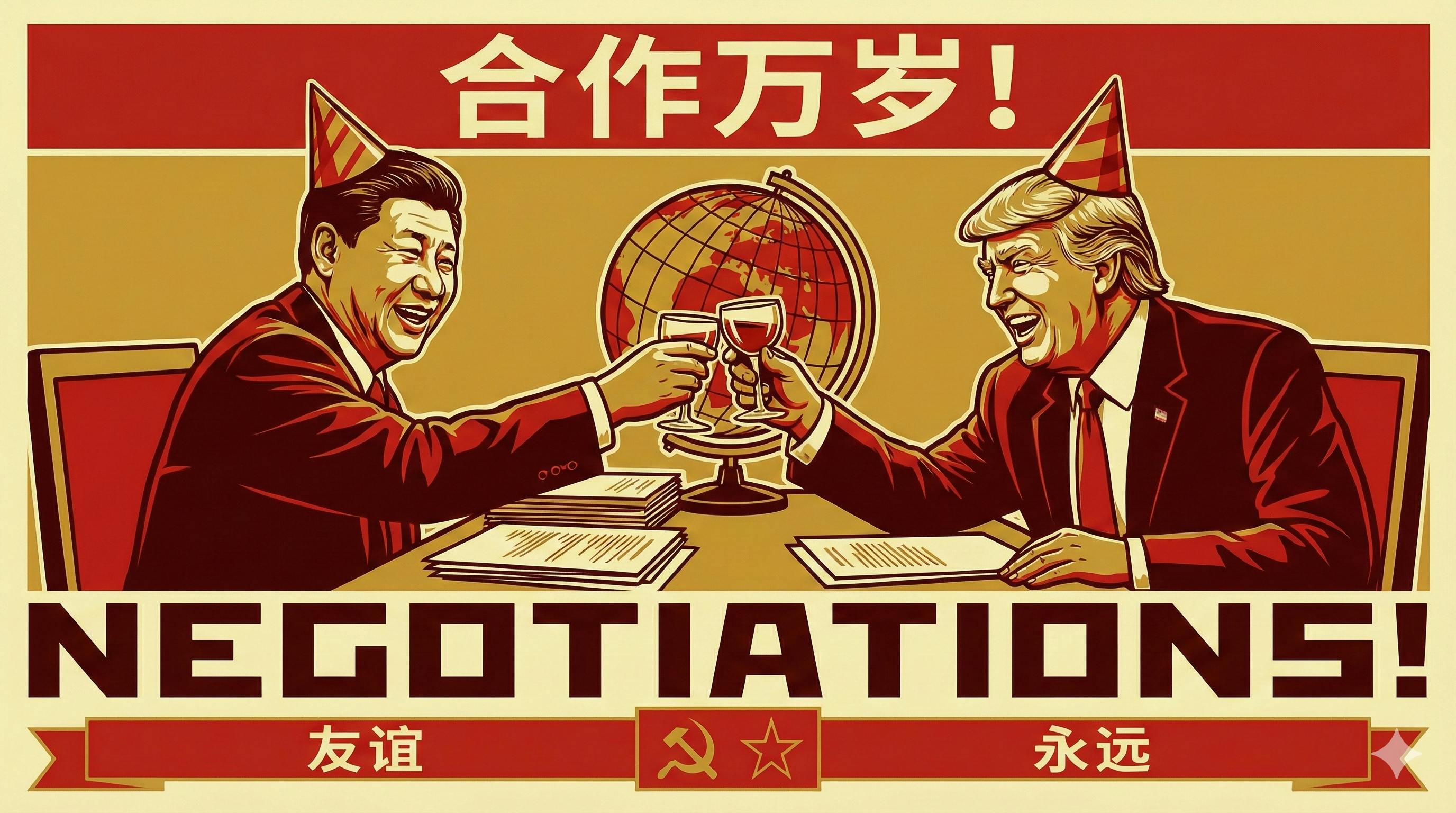
By publicly stating a desire to avoid the historical pattern of a rising power (China) clashing with a declining one (US), Xi Jinping strategically framed the future of the relationship as an economic partnership rather than an inevitable military conflict.

China has shifted its assessment from eventually overtaking the U.S. to a model of parallel growth, where both nations exist as great powers on a unique tier. This recalibration doesn't diminish their confidence, as they have historically competed effectively from a weaker position.

Unlike the US's focus on quarterly results and election cycles, China's leadership operates on a civilizational timescale. From their perspective, the US is a recent phenomenon, and losing the US market is an acceptable short-term cost in a much longer game of survival and dominance. This fundamental difference in strategic thinking is often missed.

The balance of power between the US and China is a "Mexican standoff" of mutual vulnerability. Due to globalization, China has significant leverage over manufacturing and rare earth metals, meaning any US economic pressure will be met with painful reciprocation.

Beijing's 30-year strategy anticipated that the U.S. would become more aggressive and unpredictable as its relative power declined. Events like the Trump presidency and recent global conflicts are seen as confirmations of this long-held view, not surprises requiring a strategic rethink.
Unlike the first trade war, where Beijing was caught flat-footed, it entered the second with a prepared policy plan and emotional resolve. China developed a toolkit of retaliatory measures, such as the rare earth card, and seized the initiative rather than simply reacting to U.S. actions.
For the first time in history, China's leader, Xi Jinping, is negotiating from a position of relative strength compared to the U.S. president. This power shift is driven by China's larger manufacturing base, peer-level technology, and ability to weaponize control over critical economic resources like rare earth minerals.
The current lull in US-China tensions should not be mistaken for a stable détente. It's a temporary stalemate born from mutual leverage recognition. Both nations are using this pause to fortify their domestic capabilities and supply chains for the next round of competition.
