Get your free personalized podcast brief
We scan new podcasts and send you the top 5 insights daily.
The first practical step toward making space habitable is developing microbe-based bioreactors. These systems will use local materials on the Moon and Mars to produce essentials like food, medicine, and plastics, creating the self-sustaining ecosystems required for any long-term human presence off-Earth before large-scale terraforming is possible.

Related Insights
Unlike on Earth, where atmospheric drag makes electromagnetic launchers (mass drivers) impractical, the Moon's vacuum environment makes them highly efficient. This technology could turn the Moon into a "train station" for the solar system, launching raw materials and goods to Mars at a fraction of the energy cost.

The long-term vision isn't just launching data centers, but manufacturing them on the moon. This would utilize lunar resources and electromagnetic mass drivers to deploy satellites, making Earth's launch costs and gravity well irrelevant for deep space expansion.
The expansion of humanity to the Moon and Mars, using robotics for base-building and mining, will necessitate vast, local computing resources. It is more efficient to process data in space than to transmit it to Earth, creating an inevitable new frontier for data infrastructure.

Scaling from a T-flask to a bioreactor isn't just increasing volume; it's a fundamental shift in the biological context. Changes in cell density, mass transfer, and mechanical stress rewire cell signaling. Therefore, understanding and respecting the cell's biology must be the primary design input for successful scale-up.

The use of low-cost, scalable plastic tank bioreactors eliminates the need for traditional, expensive GMP facilities. This allows companies to convert cheap, underutilized office space into production labs, enabling a novel business model of decentralized, onshore manufacturing that dramatically lowers real estate and operational costs.
Innovative biotech solutions use programmed proteins to act like tiny robots, targeting and extracting specific rare earths from industrial waste. This method is cleaner, faster, and transforms a domestic liability like coal ash and mine tailings into a valuable resource.

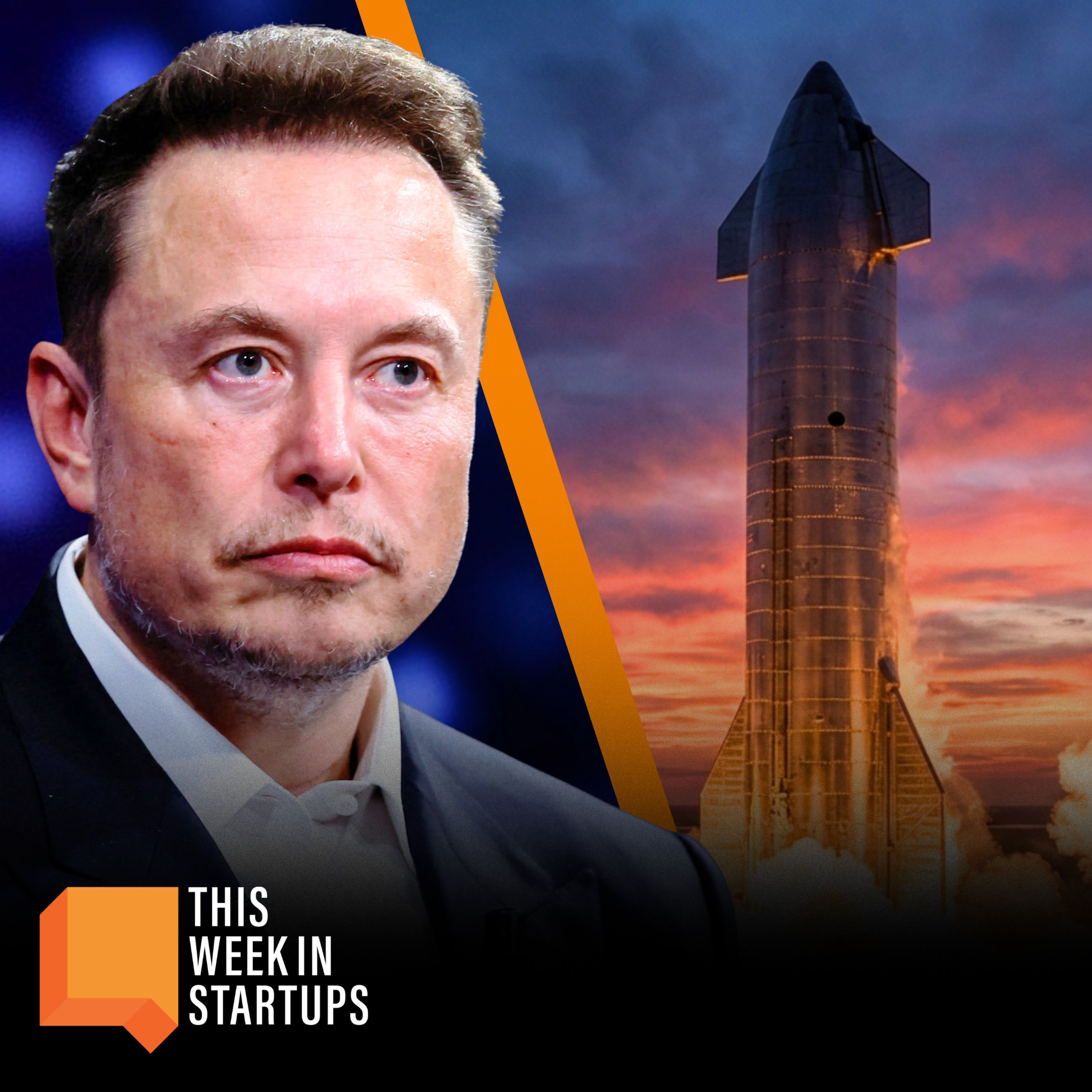
SpaceX is strategically delaying its Mars ambitions to first establish a permanent, 'self-growing' city on the moon. Elon Musk now views this as a more practical 10-year goal, with the moon serving as an essential staging ground for materials and deeper space exploration, rather than a direct-to-Mars approach.

Silkworm biomanufacturing offers incredible production density, with one pupa producing 10-20 mg of protein. Scaling requires simply adding more pupae ('scaling out') rather than building larger facilities ('scaling up'), enabling decentralized, small-footprint manufacturing.
To overcome the limitations of wheeled rovers getting stuck, future exploration robots may be inspired by plant growth. Instead of moving through space, they will 'grow' through it, extending structures from one point to another. This approach allows for traversing difficult terrain and creating a distributed information network.

Since Mars cooled and had water before Earth, Avi Loeb argues life likely started there first. This primordial life could have been transported to Earth inside rocks ejected by asteroid impacts. This makes humans descendants of Martian microbes and Elon Musk's mission a 'return to our childhood home'.
