Get your free personalized podcast brief
We scan new podcasts and send you the top 5 insights daily.
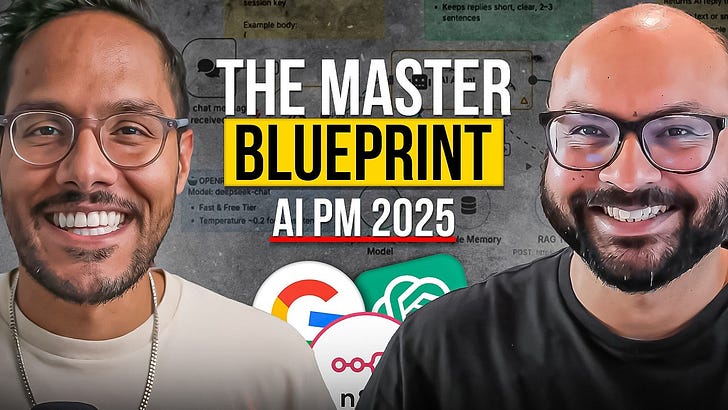
With foundation models becoming commoditized, the critical skill is shifting from model creation to architecting a cohesive system. This "AI Integrator" role, which connects services like RAG, databases, and tool APIs into a functional agentic workflow, is becoming highly valuable and defensible.
Related Insights
Beyond traditional engineers using AI and non-technical "vibe coders," a third archetype is emerging: the "agentic engineer." This professional operates at a higher level of abstraction, managing AI agents to perform programming, rather than writing or even reading the code themselves, reinventing the engineering skill set.

As AI agents take over task execution, the primary role of human knowledge workers evolves. Instead of being the "doers," humans become the "architects" who design, model, and orchestrate the workflows that both human and AI teammates follow. This places a premium on systems thinking and process design skills.

Theoretical knowledge is now just a prerequisite, not the key to getting hired in AI. Companies demand candidates who can demonstrate practical, day-one skills in building, deploying, and maintaining real, scalable AI systems. The ability to build is the new currency.
As AI evolves from single-task tools to autonomous agents, the human role transforms. Instead of simply using AI, professionals will need to manage and oversee multiple AI agents, ensuring their actions are safe, ethical, and aligned with business goals, acting as a critical control layer.

As AI agents proliferate across departments, a new role is emerging to manage them holistically. This person must understand the entire organization to ensure agents communicate effectively and workflows are cohesive, preventing the creation of new digital silos.

Top-performing engineering teams are evolving from hands-on coding to a managerial role. Their primary job is to define tasks, kick off multiple AI agents in parallel, review plans, and approve the final output, rather than implementing the details themselves.
The adoption of powerful AI agents will fundamentally shift knowledge work. Instead of executing tasks, humans will be responsible for directing agents, providing crucial context, managing escalations, and coordinating between different AI systems. The primary job will evolve from 'doing' to 'managing and guiding'.

Instead of focusing on foundational models, software engineers should target the creation of AI "agents." These are automated workflows designed to handle specific, repetitive business chores within departments like customer support, sales, or HR. This is where companies see immediate value and are willing to invest.

Even powerful AI tools don't produce a final, polished product. This "last mile" problem creates an opportunity for humans who master AI tools and then refine, integrate, and complete the work. These "finisher" roles are indispensable as there is no single AI solution to rule them all.

The key technical skill for an AI PM is not deep knowledge of model architecture but a higher-level understanding of how to orchestrate AI components. Knowing what AI can do and how systems connect is more valuable than knowing the specifics of fine-tuning or RAG implementation.