Get your free personalized podcast brief
We scan new podcasts and send you the top 5 insights daily.
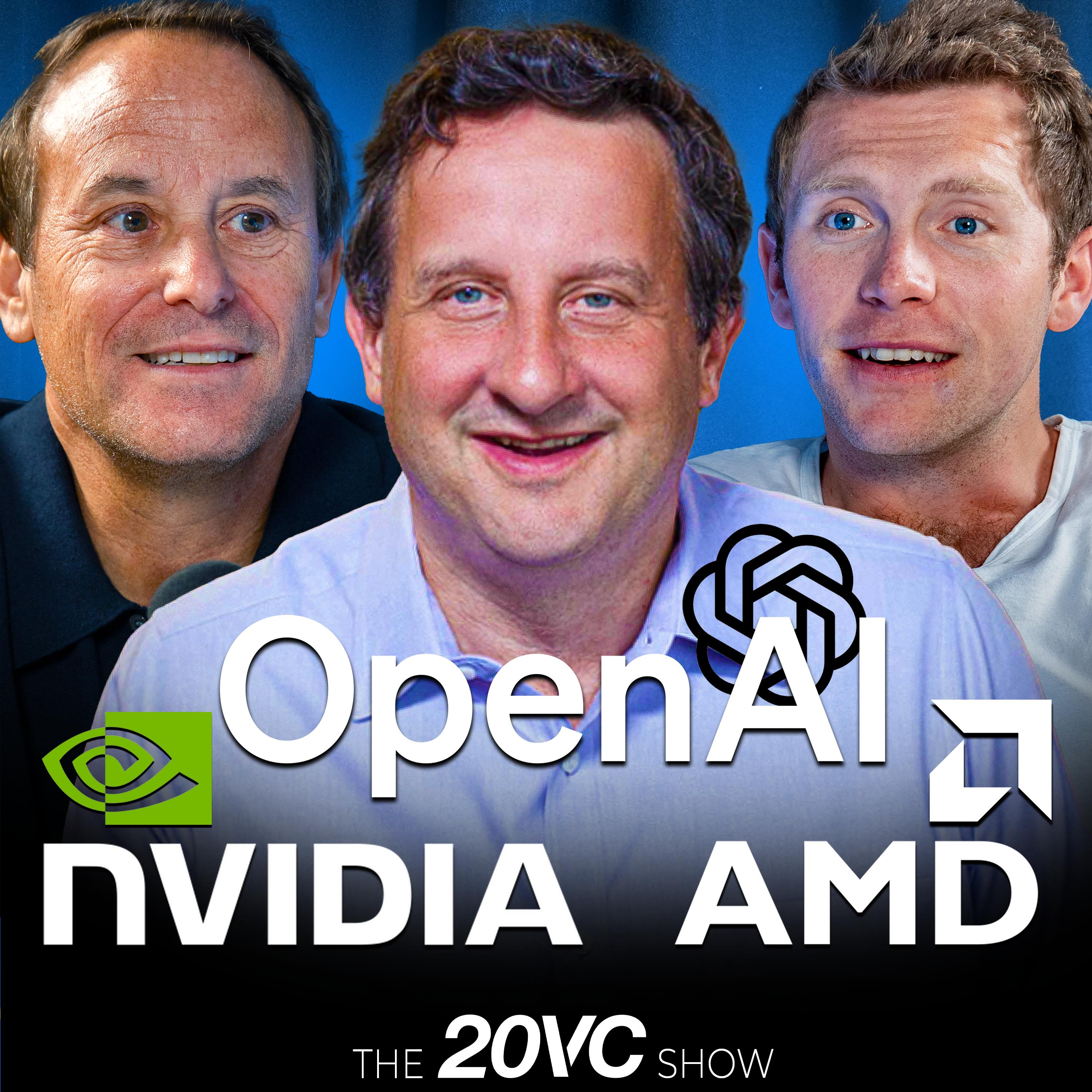
Despite losing money, OpenAI leveraged its massive user base to secure warrants for 10% of AMD. This contrasts with NVIDIA, who received equity in OpenAI, showcasing how user control dictates power in strategic partnerships, even with hardware giants.
Related Insights
NVIDIA's deep investment in OpenAI is a strategic bet on its potential to become a dominant hyperscaler like Google or Meta. This reframes the relationship from a simple vendor-customer dynamic to a long-term partnership with immense financial upside, justifying the significant capital commitment.

OpenAI's strategy involves getting partners like Oracle and Microsoft to bear the immense balance sheet risk of building data centers and securing chips. OpenAI provides the demand catalyst but avoids the fixed asset downside, positioning itself to capture the majority of the upside while its partners become commodity compute providers.

By structuring massive, multi-billion dollar deals, OpenAI is deliberately entangling partners like NVIDIA and Oracle in its ecosystem. Their revenue and stock prices become directly tied to OpenAI's continued spending, creating a powerful coalition with a vested interest in ensuring OpenAI's survival and growth, effectively making it too interconnected to fail.

SoftBank's strategy of selling its Nvidia stake to fund companies like OpenAI, whose main expense is buying Nvidia chips, creates a circular flow of capital within the AI ecosystem. This financial loop suggests that major investment funds are not just placing bets but actively fueling the valuation cycle between AI infrastructure and application layers.

Sam Altman's deal-making prowess isn't just skill; it's fueled by leverage from leading OpenAI, the breakout AI company. Partners feel compelled to collaborate, fearing shareholder backlash for missing the 'next Google', which gives Altman a significant advantage.

OpenAI is actively diversifying its partners across the supply chain—multiple cloud providers (Microsoft, Oracle), GPU designers (Nvidia, AMD), and foundries. This classic "commoditize your compliments" strategy prevents any single supplier from gaining excessive leverage or capturing all the profit margin.
The current AI landscape mirrors the historic Windows-Intel duopoly. OpenAI is the new Microsoft, controlling the user-facing software layer, while NVIDIA acts as the new Intel, dominating essential chip infrastructure. This parallel suggests a long-term power concentration is forming.
OpenAI's deal structures highlight the market's perception of chip providers. NVIDIA commanded a direct investment from OpenAI to secure its chips (a premium). In contrast, AMD had to offer equity warrants to OpenAI to win its business (a discount), reflecting their relative negotiating power.

By inking deals with NVIDIA, AMD, and major cloud providers, OpenAI is making its survival integral to the entire tech ecosystem. If OpenAI faces financial trouble, its numerous powerful partners will be heavily incentivized to provide support, effectively making it too big to fail.
Altman’s ability to secure massive deals, like getting Nvidia to co-sign loans for data centers, stems from the immense leverage ChatGPT's market dominance provides. Partners fear missing out on the key AI platform, compelling them into aggressive agreements they might otherwise avoid.