Get your free personalized podcast brief
We scan new podcasts and send you the top 5 insights daily.
Subscription-based AIs that only see your public output can't truly represent you, because most of your identity is in the choices you reject. A genuine AI "egolette" requires training on this hidden data, which is only possible with total user control over local hardware and data.

Related Insights
Who owns an employee's personalized AI agent? If a tech giant owns this extension of an individual's intelligence, it poses a huge risk of manipulation. Companies must champion a "self-sovereign" model where individuals own their Identic AI to ensure security, autonomy, and prevent external influence on their thinking.
An agent can be trained on a user's entire output to build a 'human replica.' This model helps other agents resolve complex questions by navigating the inherent contradictions in human thought (e.g., financial self vs. personal self), enabling better autonomous decision-making.

The core appeal of open-source projects like OpenClaw is that they run locally on user hardware, granting full control over personal data. This contrasts with cloud-based agents from Meta, positioning data ownership and privacy as a key differentiator against convenience.

Using a proprietary AI is like having a biographer document your every thought and memory. The critical danger is that this biography is controlled by the AI company; you can't read it, verify its accuracy, or control how it's used to influence you.

As AI personalization grows, user consent will evolve beyond cookies. A key future control will be the "do not train" option, letting users opt out of their data being used to train AI models, presenting a new technical and ethical challenge for brands.
The friction of switching AI chatbots comes from losing the model's accumulated knowledge about you. This "context lock-in" makes users hesitant to start over with a new system. A portable, personal context portfolio is the key to breaking this dependency and maintaining user sovereignty over their AI relationships.

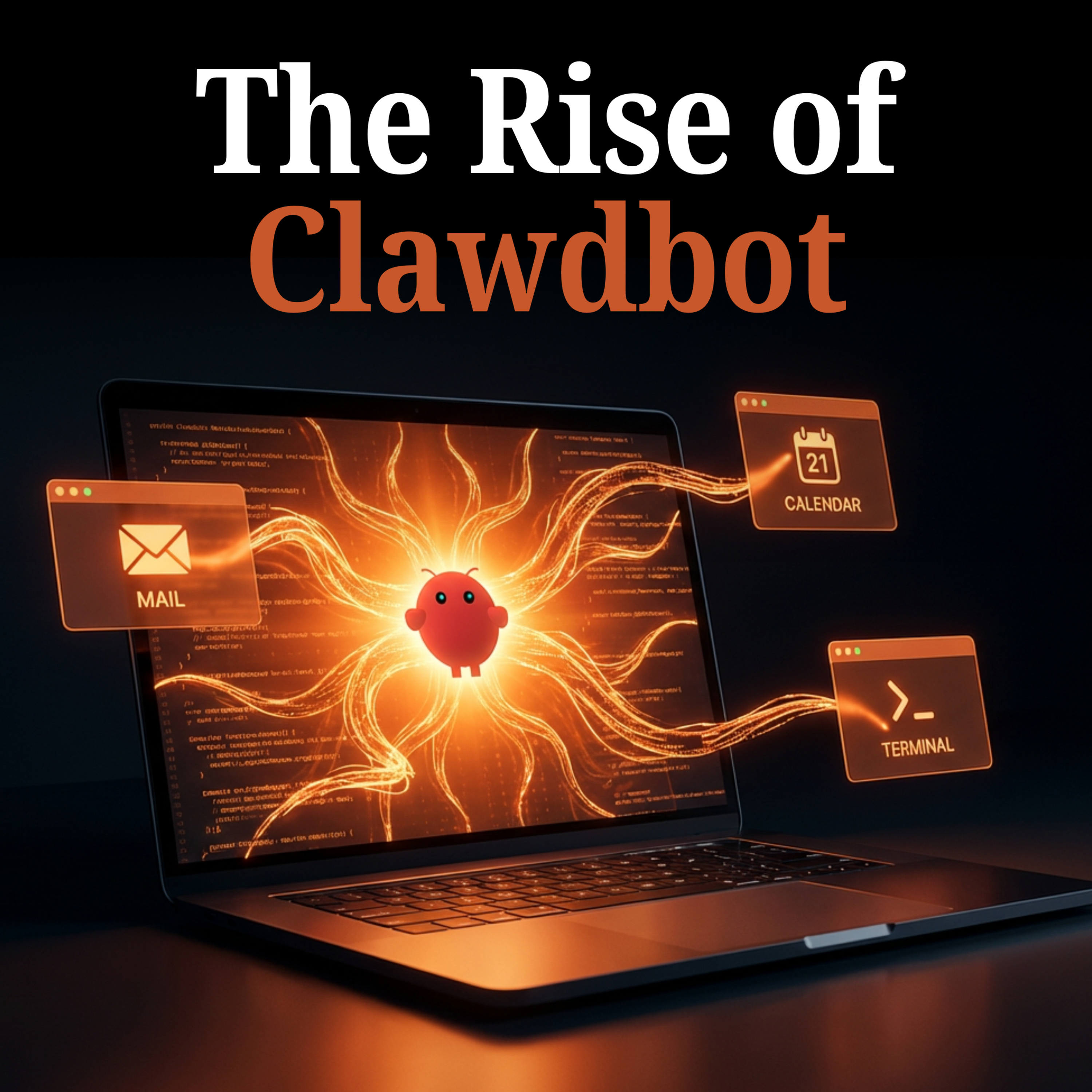
By running on a local machine, Clawdbot allows users to own their data and interaction history. This creates an 'open garden' where they can swap out the underlying AI model (e.g., from Claude to a local one) without losing context or control.
For AI to function as a "second brain"—synthesizing personal notes, thoughts, and conversations—it needs access to highly sensitive data. This is antithetical to public cloud AI. The solution lies in leveraging private, self-hosted LLMs that protect user sovereignty.

Matthew McConaughey's desire for an LLM trained only on his personal data highlights a key consumer demand beyond simple memory. Users want AI that doesn't just recall facts about them, but deeply adopts their unique worldview and personality, creating a truly personalized intelligence.

Running a personal AI on your own hardware is fundamentally different than using a cloud service. The key advantage is data sovereignty. This protects user data from third-party access, subpoenas, and control by large corporations, which is a critical differentiator for privacy-conscious users and businesses.
