Get your free personalized podcast brief
We scan new podcasts and send you the top 5 insights daily.
While Generative AI will dramatically lower content creation costs, it will also lead to a massive explosion of new content. This dynamic decreases the value of existing IP libraries but massively benefits distribution platforms like Netflix and YouTube, which aggregate eyeballs and win in a world of content abundance.

Related Insights
Unlike platforms like YouTube that merely host user-uploaded content, new generative AI platforms are directly involved in creating the content themselves. This fundamental shift from distributor to creator introduces a new level of brand and moral responsibility for the platform's output.

As AI tools enable millions of amateur creators to produce professional-quality content, platforms like YouTube and Spotify become less reliant on a small number of mainstream media giants. This diffusion of content creation shifts bargaining power away from traditional studios and labels to the platforms themselves.
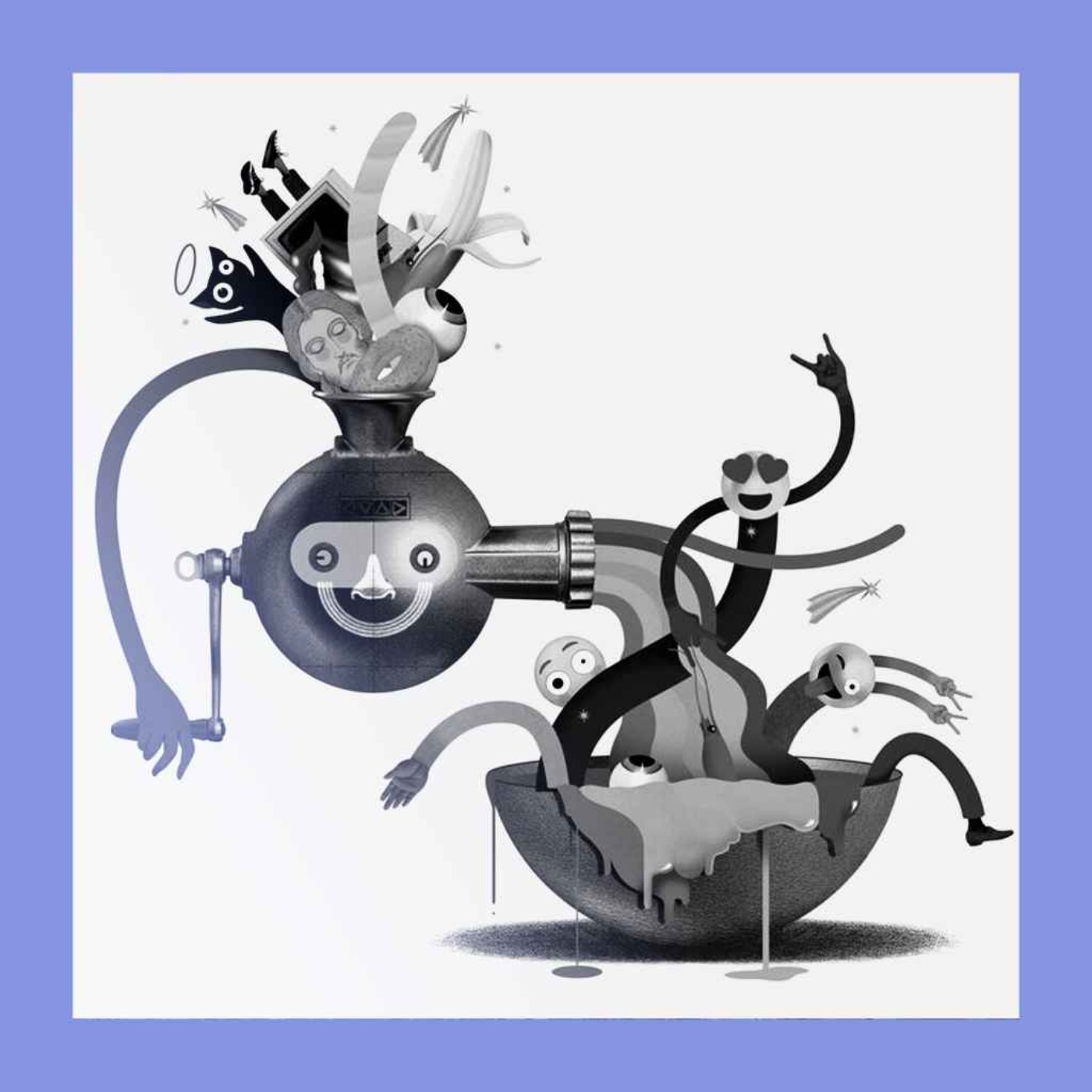
The internet's value stems from an economy of unique human creations. AI-generated content, or "slop," replaces this with low-quality, soulless output, breaking the internet's economic engine. This trend now appears in VC pitches, with founders presenting AI-generated ideas they don't truly understand.

Contrary to expectations, the flood of AI-generated content doesn't dilute the success of top artists. In a sea of infinite choice, users rely more on algorithms, which tend to amplify the reach of already popular stars, making the biggest names more dominant than ever.
As AI drives the cost of content creation to zero, the world floods with 'average' material. In this environment, the most valuable and scarce skill becomes 'taste'—the ability to identify, curate, and champion high-quality, commercially viable work. This elevates the role of human curators over pure creators.
![Ari Emanuel - The Anti-AI Bet - [Invest Like the Best, EP.448] thumbnail](https://megaphone.imgix.net/podcasts/c5910280-c4dd-11f0-94be-ab6a7a5865b0/image/1e5a2263eb62fcde200846919e24419a.jpg?ixlib=rails-4.3.1&max-w=3000&max-h=3000&fit=crop&auto=format,compress)
Generative AI allows any marketer to quickly produce mediocre content. This saturation makes buyers more discerning and creates a significant opportunity for brands that invest in genuinely excellent, insightful content to stand out and build trust. Quality, not quantity, becomes the key differentiator.

Rather than fighting the inevitable rise of AI-generated fan content, Disney is proactively licensing its IP to OpenAI. This move establishes a legitimate, monetizable framework for generative media, much like how Apple's iTunes structured the digital music market after Napster.

Historically, the value of content IP like scripts and music declined sharply 30-60 days after release. AI tools can now "reimagine" these dormant libraries quickly and cost-effectively, creating new derivative works. This presents a massive, previously untapped opportunity to unlock new revenue streams from back catalogs.
![Media M&A - [Business Breakdowns, EP.230] thumbnail](https://megaphone.imgix.net/podcasts/8404be2a-a3c6-11f0-9d01-7b00b28a9d50/image/9a48597af1149c3b024e8d2f7327aa89.jpg?ixlib=rails-4.3.1&max-w=3000&max-h=3000&fit=crop&auto=format,compress)
Platforms like Sora represent a new phase where content is generated on the fly, tailored to maximize individual user attention. This devalues the role of human creators, as platforms no longer depend on them to fill their content catalogs, fundamentally altering the media landscape.
An AI CEO predicts that within two years, AI tools will make content creation instantaneous and nearly free. This will destroy traditional moats like audience loyalty and production quality, as anyone can generate photorealistic content. The market will shift focus from the creator to the individual content piece.
