Get your free personalized podcast brief
We scan new podcasts and send you the top 5 insights daily.
Current healthcare is a 'sick care' system that reacts to problems after they arise. AI health agents, by continuously integrating data from wearables, environment, and even smart appliances, can identify baseline health and prompt proactive behaviors to optimize wellness and prevent disease from occurring.
Related Insights
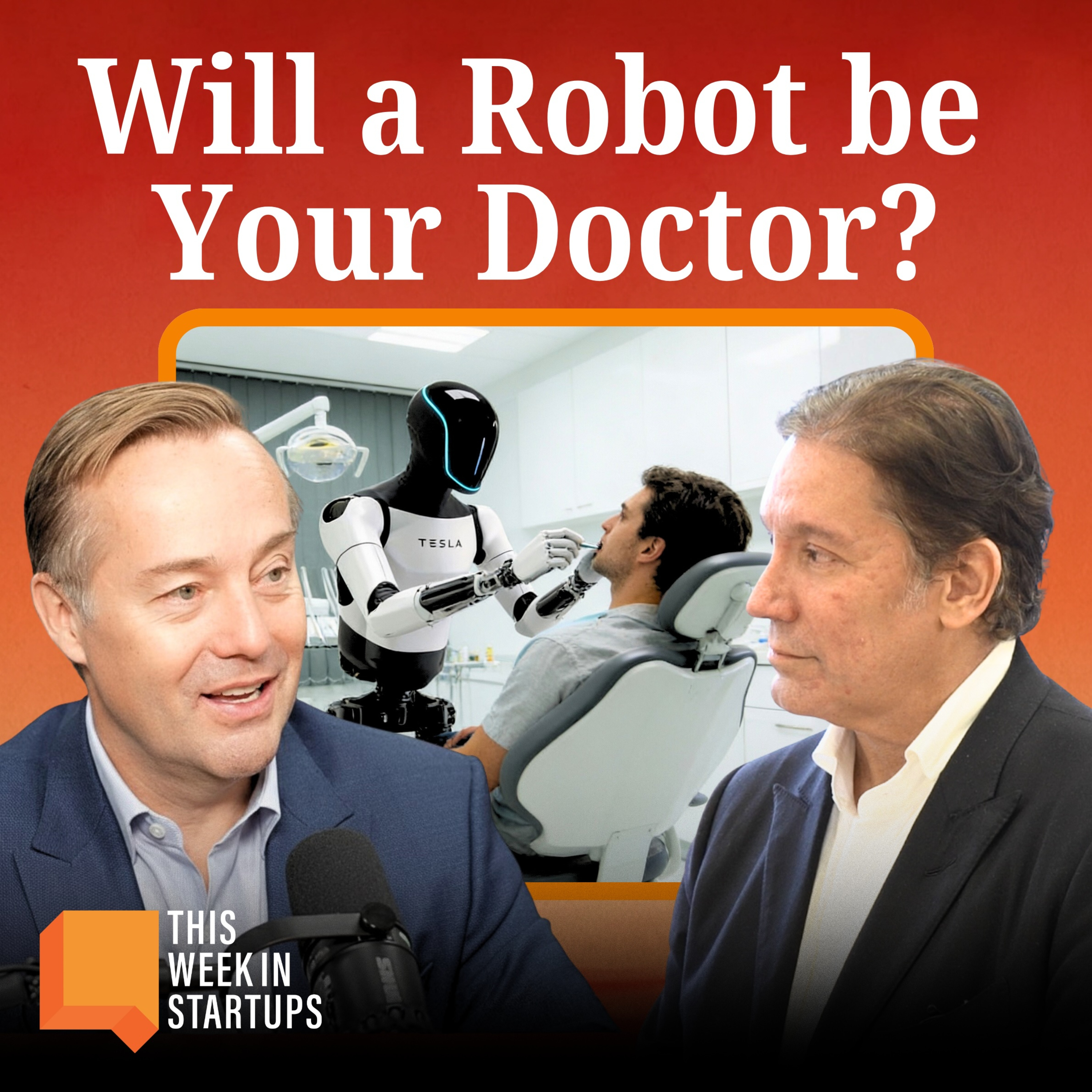
The future of healthcare will see AI handling initial patient consultations, effectively becoming the primary care doctor. This will streamline the process, sending patients directly to specialized clinics for diagnostic tests, bypassing traditional, inefficient doctor visits.
The real breakthrough in healthcare AI is not raw processing power but its ability to synthesize diverse, personal data streams like genomics, environment, and wearables. This 'contextual intelligence' allows for highly personalized insights, such as connecting a fever to recent travel to a malaria-prone region.
The next evolution in personalized medicine will be interoperability between personal and clinical AIs. A patient's AI, rich with daily context, will interface with their doctor's AI, trained on clinical data, to create a shared understanding before the human consultation begins.
An effective AI strategy in healthcare is not limited to consumer-facing assistants. A critical focus is building tools to augment the clinicians themselves. An AI 'assistant' for doctors to surface information and guide decisions scales expertise and improves care quality from the inside out.

The goal of advanced in-home health tech is not just to track vitals but to use AI to analyze subtle changes, like gait. By comparing data to population norms and personal baselines, these systems can predict issues and enable early, less invasive interventions before a crisis occurs.

The widespread use of AI for health queries is set to change doctor visits. Patients will increasingly arrive with AI-generated analyses of their lab results and symptoms, turning appointments into a three-way consultation between the patient, the doctor, and the AI's findings, potentially improving diagnostic efficiency.

The value of a personal AI coach isn't just tracking workouts, but aggregating and interpreting disparate data types—from medical imaging and lab results to wearable data and nutrition plans—that human experts often struggle to connect.
Instead of replacing experts, AI can reformat their advice. It can take a doctor's diagnosis and transform it into a digestible, day-by-day plan tailored to a user's specific goals and timeline, making complex medical guidance easier to follow.
AI is improving medical imaging accuracy and speed by nearly 70%, enabling earlier detection of chronic diseases. This leads to more effective preventive care, which is crucial for an aging global population and offers a promising path to making overall healthcare more cost-effective.

AI assistants can democratize medical knowledge for patients. By processing personal health data and doctor's notes, these tools can explain complex conditions in simple terms and suggest specific questions to ask medical professionals, improving collaboration.