Get your free personalized podcast brief
We scan new podcasts and send you the top 5 insights daily.
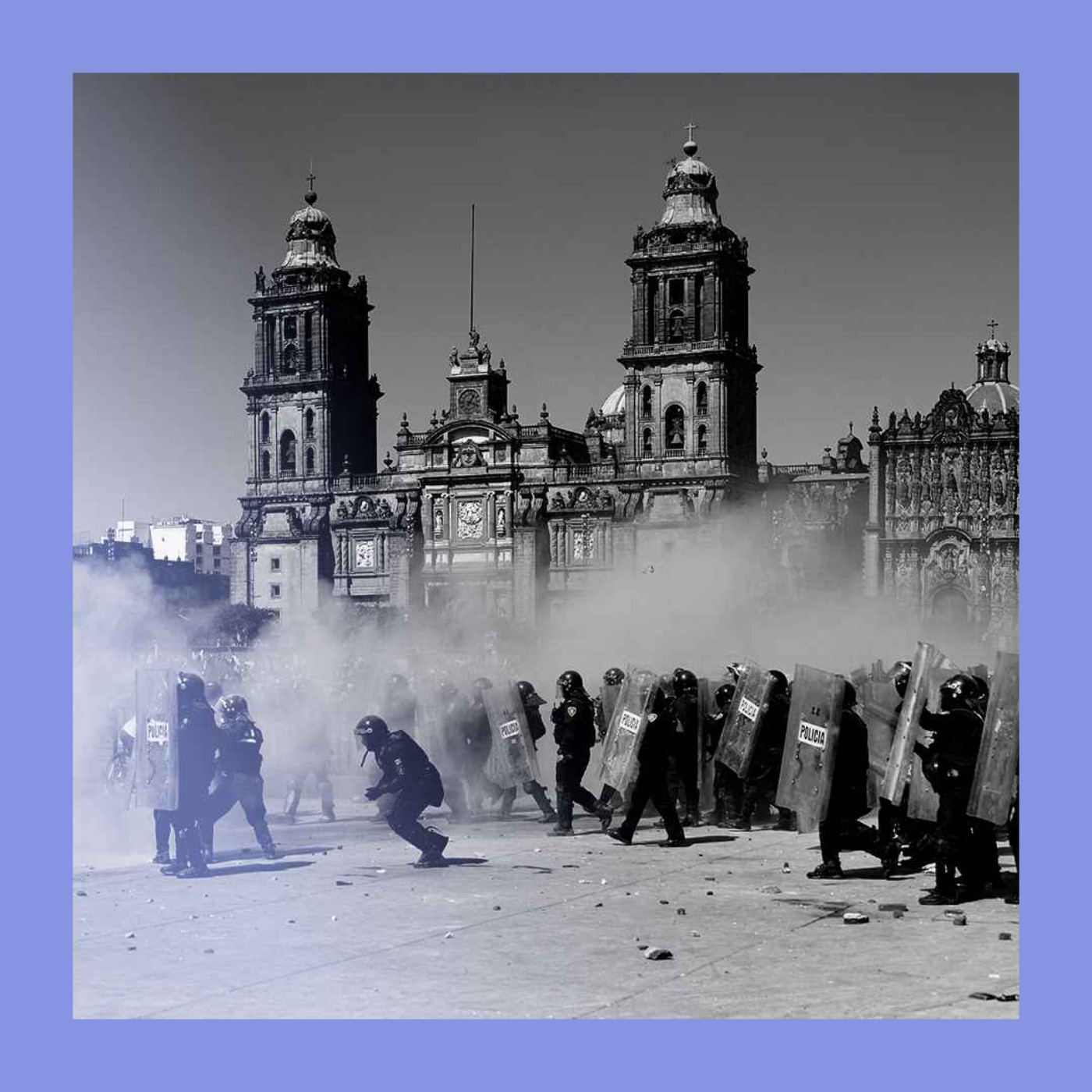
President Sheinbaum's early success in reducing crime stems from appointing Omar Hafush, a data-driven former police officer, as security minister. Unlike his political predecessors, Hafush uses data, coordinates intelligence, and leverages financial crime units to target cartels more effectively, demonstrating the power of expert leadership.
Related Insights
GovTech sales cycles are notoriously long. Flock overcame this by appealing directly to a police chief's primary performance metric: solving crime. A tool that saves time is a "cost-saver" delegated elsewhere. A tool that directly solves crime is a "revenue-generator" that the chief buys immediately.

John Elkan's development as a leader was profoundly shaped by his decision to hire outsider Sergio Marchionne to save Fiat. Marchionne not only executed a legendary turnaround but also became a personal mentor to Elkan, demonstrating the value of external expertise in guiding the next generation of a family empire.
![Exor: Fiat Crisis to Ferrari Glory - [Business Breakdowns, EP.229] thumbnail](https://megaphone.imgix.net/podcasts/81a71ab6-9e6b-11f0-8aff-7bd806e17203/image/1c411f84b9b949374f0accaa0a5ff38a.jpg?ixlib=rails-4.3.1&max-w=3000&max-h=3000&fit=crop&auto=format,compress)
The debate over deploying federal vs. state troops to fight crime is less about the tactic's effectiveness and more about political credit. Democratic governors like Wes Moore are now using their own state troops to achieve the same results, co-opting the policy to frame it as a state-level success.

The Mexican government's headline statistic on falling murder rates is misleading. A more comprehensive analysis including 'disappeared' persons, femicides, and manslaughter reveals a much more modest, though still significant, decline. This highlights how official data can obscure the full reality of a security situation.
Mexico's progress against crime is highly localized. While states like Zacatecas see murder rates fall steeply due to methodical police reform, others like Sinaloa remain nightmarish 'war zones' controlled by cartels. This demonstrates that national-level policies do not produce uniform results on the ground.
Congressman Ro Khanna makes the case that public safety is a prerequisite for economic prosperity, not a separate issue. He points to his own district, Silicon Valley, arguing its status as a global economic hub is directly correlated with its ranking as one of America's safest areas.
Smart city tech often fails to gain traction because it targets diffuse benefits like 'less traffic.' Successful government sales require aligning with the only two metrics that consistently get mayors re-elected: reducing crime and paving roads.

To improve federal efficiency beyond partisan politics, Oliver Libby proposes creating a Chief Operating Officer for the U.S. government. Modeled after the long-term, cross-administration tenure of the Fed Chair, this role would focus on making government work better for citizens regardless of who is in power.

Singapore's economic success is credited to its founding leaders' decision to attract and retain top-tier talent in the civil service and politics with high compensation. This creates a highly competent bureaucracy capable of sophisticated, long-term policy planning that enables a thriving business environment.

An effective governance model involves successful private sector leaders doing a "tour of duty" in government. This brings valuable, real-world expertise to policymaking. While critics cite conflicts of interest, the benefit is having qualified individuals shape regulations for national benefit, rather than career bureaucrats.