Get your free personalized podcast brief
We scan new podcasts and send you the top 5 insights daily.
To solve the problem of an AI agent creating low-quality memories and skills ("slop") over time, Hermes Agent runs a sub-system called "Hermes Curator." This internal agent automatically and continuously cleans, refines, and improves the main agent's learned skills and memories.

Related Insights
Inspired by human dreaming as a memory reconsolidation process, Anthropic has its AI agents use downtime to "dream." During this background process, the agent reviews its memories, identifies and prunes contradictions, and cleans up the information to improve the coherence and utility of its long-term memory.
Enable agents to improve on their own by scheduling a recurring 'self-review' process. The agent analyzes the results of its past work (e.g., social media engagement on posts it drafted), identifies what went wrong, and automatically updates its own instructions to enhance future performance.
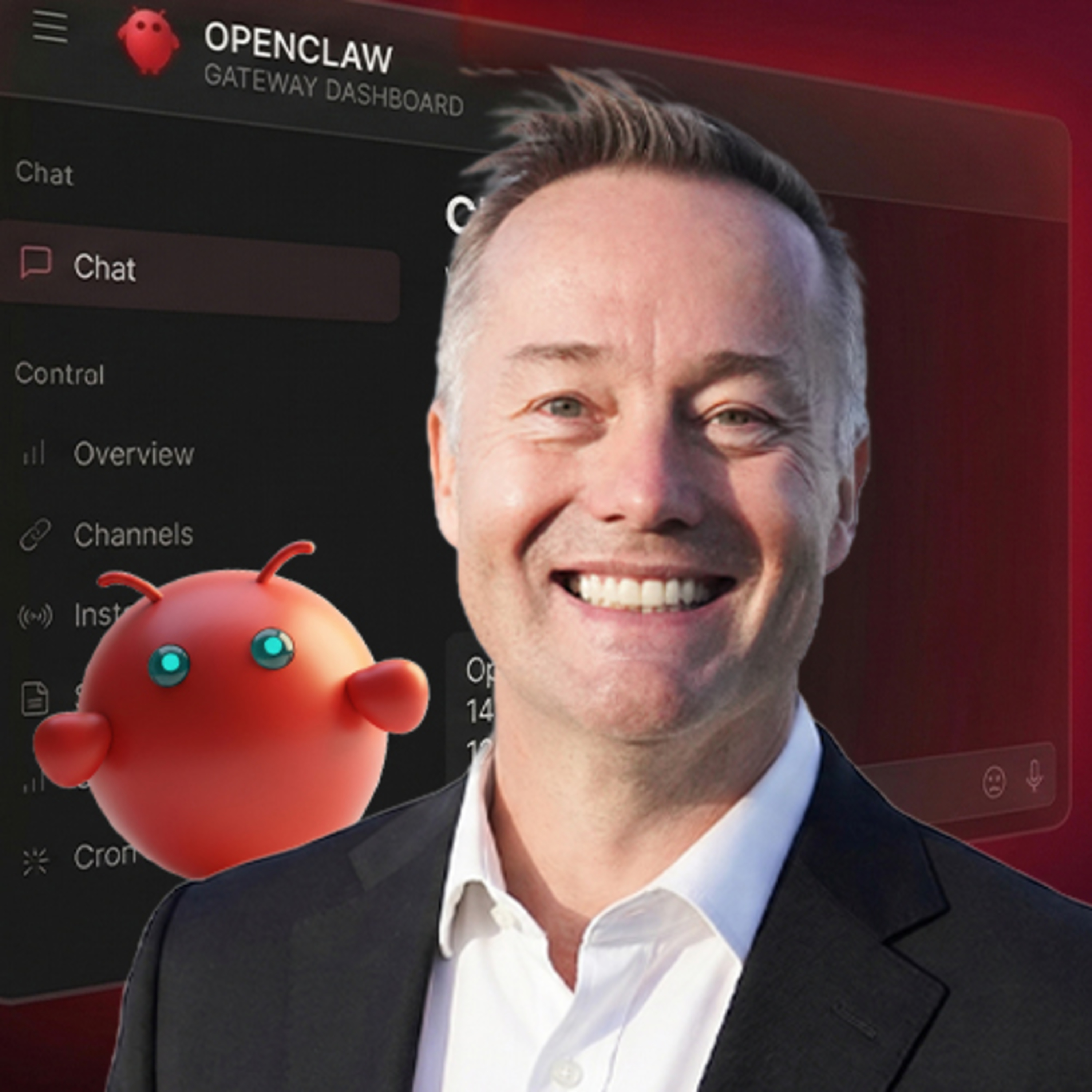
Implementing effective long-term memory for AI agents is a major unsolved problem. The difficulty is not in storing information, but in automatically generating useful memories from interactions and accurately retrieving the correct, context-specific memory without cluttering the prompt with irrelevant information.

A static agent doesn't improve. To create a continuously learning system, build a secondary agent that observes a human's corrections. This "learner" agent synthesizes patterns from the feedback and suggests updates to the primary agent's instructions, creating a powerful self-improvement cycle.

OpenClaw competitor Hermes is winning over developers with a unique feature: the agent writes its own "skills" (instruction sets) for new tasks. It also reflects on and combines these skills when idle, a process likened to human sleep, reducing manual setup for users and advancing agent autonomy.

Move beyond manual agent improvement by creating an automated loop. In this process, an agent runs, its performance is evaluated, failures are identified, and another process suggests and implements code fixes. This creates a foundation for self-improving systems.
Demonstrating a powerful self-improvement loop, the Hermes Agent AI is now the most active contributor to its own open-source code repository. It actively takes user feedback and improves its own functionality, literally building itself over time.
Long-running AI agent conversations degrade in quality as the context window fills. The best engineers combat this with "intentional compaction": they direct the agent to summarize its progress into a clean markdown file, then start a fresh session using that summary as the new, clean input. This is like rebooting the agent's short-term memory.

Instead of pre-programming specific functions, Hermes Agent is designed to observe user interactions, identify important achievements, and autonomously create new "skills" for future use. This allows it to adapt and improve organically, breaking from traditional software design paradigms.
Instead of curating a personal knowledge base, feed raw information (articles, posts, data) to AI agents. Task them with organizing it, identifying patterns, and forming rules. This creates a system where the agents' effectiveness grows autonomously with new data.