Get your free personalized podcast brief
We scan new podcasts and send you the top 5 insights daily.
Instead of curating a personal knowledge base, feed raw information (articles, posts, data) to AI agents. Task them with organizing it, identifying patterns, and forming rules. This creates a system where the agents' effectiveness grows autonomously with new data.

Related Insights
To prevent autonomous agents from operating in silos with 'pure amnesia,' create a central markdown file that every agent must read before starting a task and append to upon completion. This 'learnings.md' file acts as a shared, persistent brain, allowing agents to form a network that accumulates and shares knowledge across the entire organization over time.

A foundational context layer should not be static. Create a feedback loop by providing your AI with content performance data. Then, instruct it to analyze what worked and update its own foundational files to replicate successful patterns, creating a system that gets progressively better over time.

Enable agents to improve on their own by scheduling a recurring 'self-review' process. The agent analyzes the results of its past work (e.g., social media engagement on posts it drafted), identifies what went wrong, and automatically updates its own instructions to enhance future performance.

A static agent doesn't improve. To create a continuously learning system, build a secondary agent that observes a human's corrections. This "learner" agent synthesizes patterns from the feedback and suggests updates to the primary agent's instructions, creating a powerful self-improvement cycle.
A key capability is creating skills that continuously search the web, Reddit, and X for the latest techniques on a topic. The agent then incorporates this new knowledge to improve its future outputs and stay current.
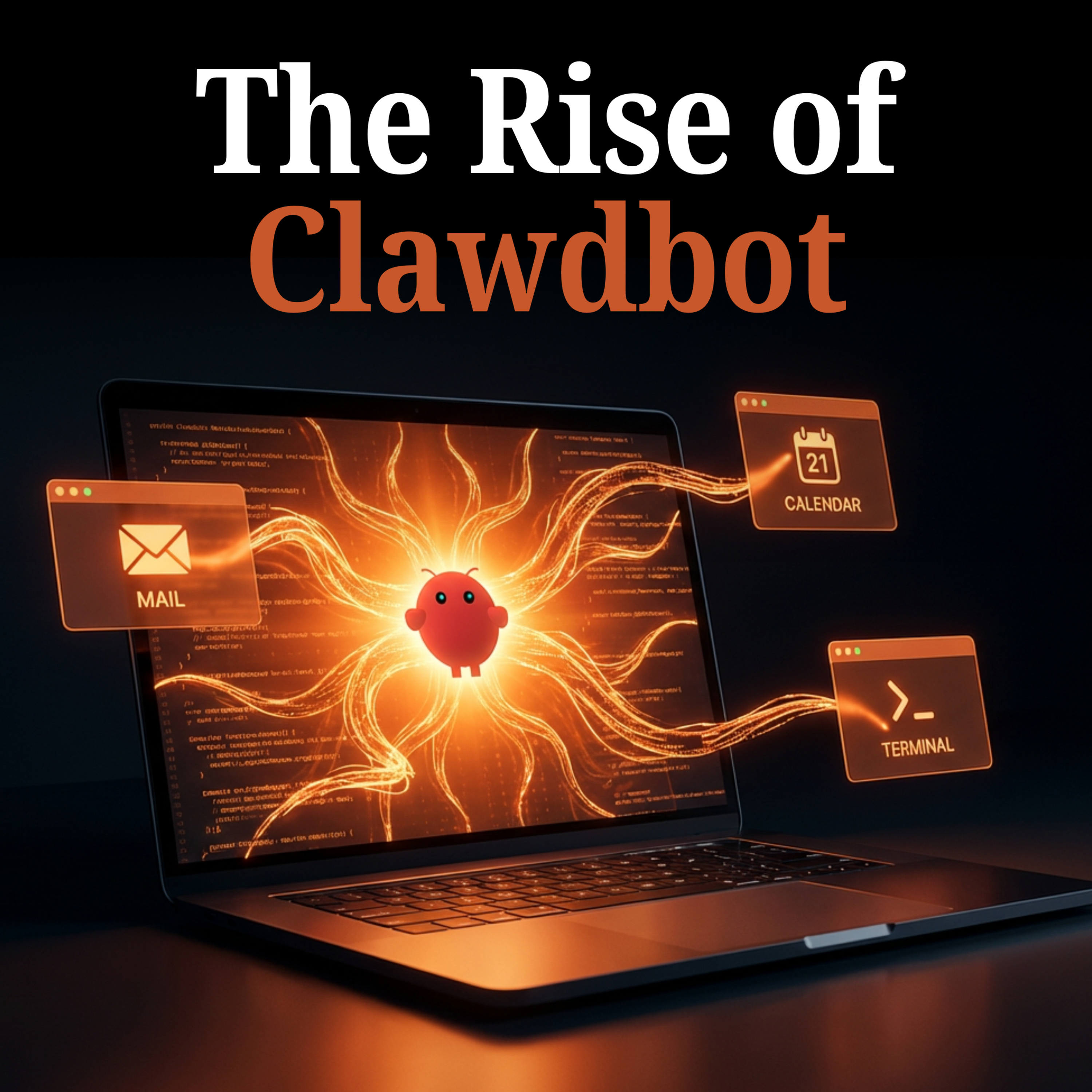
Establish a powerful feedback loop where the AI agent analyzes your notes to find inefficiencies, proposes a solution as a new custom command, and then immediately writes the code for that command upon your approval. The system becomes self-improving, building its own upgrades.

The next evolution for AI agents is recursive learning: programming them to run tasks on a schedule to update their own knowledge. For example, an agent could study the latest YouTube thumbnail trends daily to improve its own thumbnail generation skill.

Instead of explicitly telling an AI agent how to organize its knowledge, simply provide the necessary context. A well-designed agent can figure out what information is important and create its own knowledge files, such as a 'user.md' for personal details or an 'identity.md' for its own persona.
Instead of manually maintaining your AI's custom instructions, end work sessions by asking it, "What did you learn about working with me?" This turns the AI into a partner in its own optimization, creating a self-improving system.

Build a feedback loop where an AI system captures performance data for the content it creates. It then analyzes what worked and automatically updates its own skills and models to improve future output, creating a system that learns.