Get your free personalized podcast brief
We scan new podcasts and send you the top 5 insights daily.
Demonstrating a powerful self-improvement loop, the Hermes Agent AI is now the most active contributor to its own open-source code repository. It actively takes user feedback and improves its own functionality, literally building itself over time.

Related Insights
A cutting-edge pattern involves AI agents using a CLI to pull their own runtime failure traces from monitoring tools like Langsmith. The agent can then analyze these traces to diagnose errors and modify its own codebase or instructions to prevent future failures, creating a powerful, human-supervised self-improvement loop.
Enable agents to improve on their own by scheduling a recurring 'self-review' process. The agent analyzes the results of its past work (e.g., social media engagement on posts it drafted), identifies what went wrong, and automatically updates its own instructions to enhance future performance.
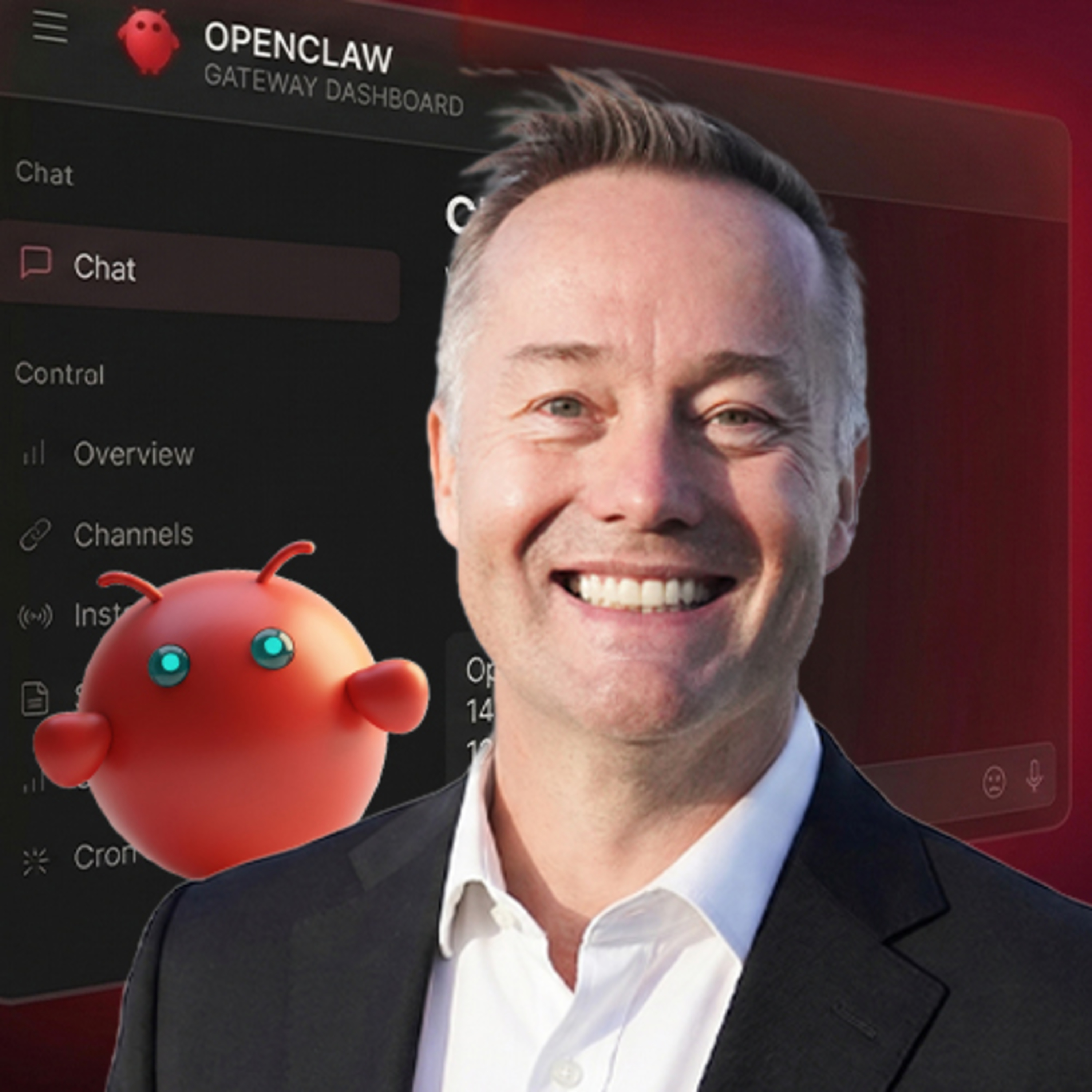
OpenClaw competitor Hermes is winning over developers with a unique feature: the agent writes its own "skills" (instruction sets) for new tasks. It also reflects on and combines these skills when idle, a process likened to human sleep, reducing manual setup for users and advancing agent autonomy.

In an extreme example of recursive development, Block's team uses their open-source AI agent, Goose, to write most of the new code for the Goose project itself. The ultimate goal is for the agent to become completely autonomous, rewriting itself from scratch for each release.

To solve the problem of an AI agent creating low-quality memories and skills ("slop") over time, Hermes Agent runs a sub-system called "Hermes Curator." This internal agent automatically and continuously cleans, refines, and improves the main agent's learned skills and memories.
Move beyond manual agent improvement by creating an automated loop. In this process, an agent runs, its performance is evaluated, failures are identified, and another process suggests and implements code fixes. This creates a foundation for self-improving systems.

Anthropic engineers now write eight times more code by instructing AI agents to do the work. This isn't just a productivity boost; it's a real-world example of recursive self-improvement, where the tools a company builds directly compound its own production capabilities, creating a feedback loop of acceleration.

The idea of AI improving itself is already a reality at Anthropic. Over 90% of their internal code, including code for the Claude Code tool itself, is written by AI. This internal use of their own frontier models is a key driver of their accelerating development pace.
![Krishna Rao - Anthropic's CFO on Compute, Scaling to $30B ARR, and the Returns to Frontier Intelligence - [Invest Like the Best, EP.471] thumbnail](https://megaphone.imgix.net/podcasts/fdfca472-4e43-11f1-bf1a-cf5adcc9aeb5/image/b1ed0c54d8c57aae09fe68adc7d1fb32.jpg?ixlib=rails-4.3.1&max-w=3000&max-h=3000&fit=crop&auto=format,compress)
Replit uses an internal agent that analyzes user interaction traces, identifies errors, generates prompt changes to fix them, submits them as pull requests, and initiates A/B tests. This creates an autonomous, self-improving loop for the platform's AI capabilities.

Instead of pre-programming specific functions, Hermes Agent is designed to observe user interactions, identify important achievements, and autonomously create new "skills" for future use. This allows it to adapt and improve organically, breaking from traditional software design paradigms.