Get your free personalized podcast brief
We scan new podcasts and send you the top 5 insights daily.
While creating a custom 'mission control' dashboard for monitoring AI agents is a technologically demanding learning exercise, it is likely a poor investment of time. The agent ecosystem is evolving so rapidly that powerful, off-the-shelf monitoring and management solutions will soon become widely available.

Related Insights
A major trend in AI development is the shift away from optimizing for individual model releases. Instead, developers can integrate higher-level, pre-packaged agents like Codex. This allows teams to build on a stable agentic layer without needing to constantly adapt to underlying model changes, API updates, and sandboxing requirements.

For AI agents requiring deep, nuanced training, the 'self-service' model is currently ineffective. These complex tools still demand significant, hands-on human expertise for successful deployment and management. Don't fall for vendors promising a cheap, self-trainable solution for sophisticated tasks.

While it's tempting to build custom AI sales agents, the rapid pace of innovation means any internal solution will likely become obsolete in months. Unless you are a company like Vercel with dedicated engineers passionate about the problem, it's far better to buy an off-the-shelf tool.

The opportunity cost of building custom internal AI can be massive. By the time a multi-million dollar project is complete, off-the-shelf tools like ChatGPT are often far more capable, dynamic, and cost-effective, rendering the custom solution outdated on arrival.

When deploying a complex AI agent like OpenClaw, the first step should be creating a visual dashboard. The default chat interface is a black box; a dashboard provides critical visibility into the AI's memory, skills, and scheduled jobs, making it manageable.
The current state of multi-agent management isn't a unified control panel. It's a practical but messy orchestration using tools like Zapier and webhooks to connect specialized agents and sync data to a system of record like Salesforce. Don't search for a non-existent 'Master Control Program.'
The durable investment opportunities in agentic AI tooling fall into three categories that will persist across model generations. These are: 1) connecting agents to data for better context, 2) orchestrating and coordinating parallel agents, and 3) providing observability and monitoring to debug inevitable failures.
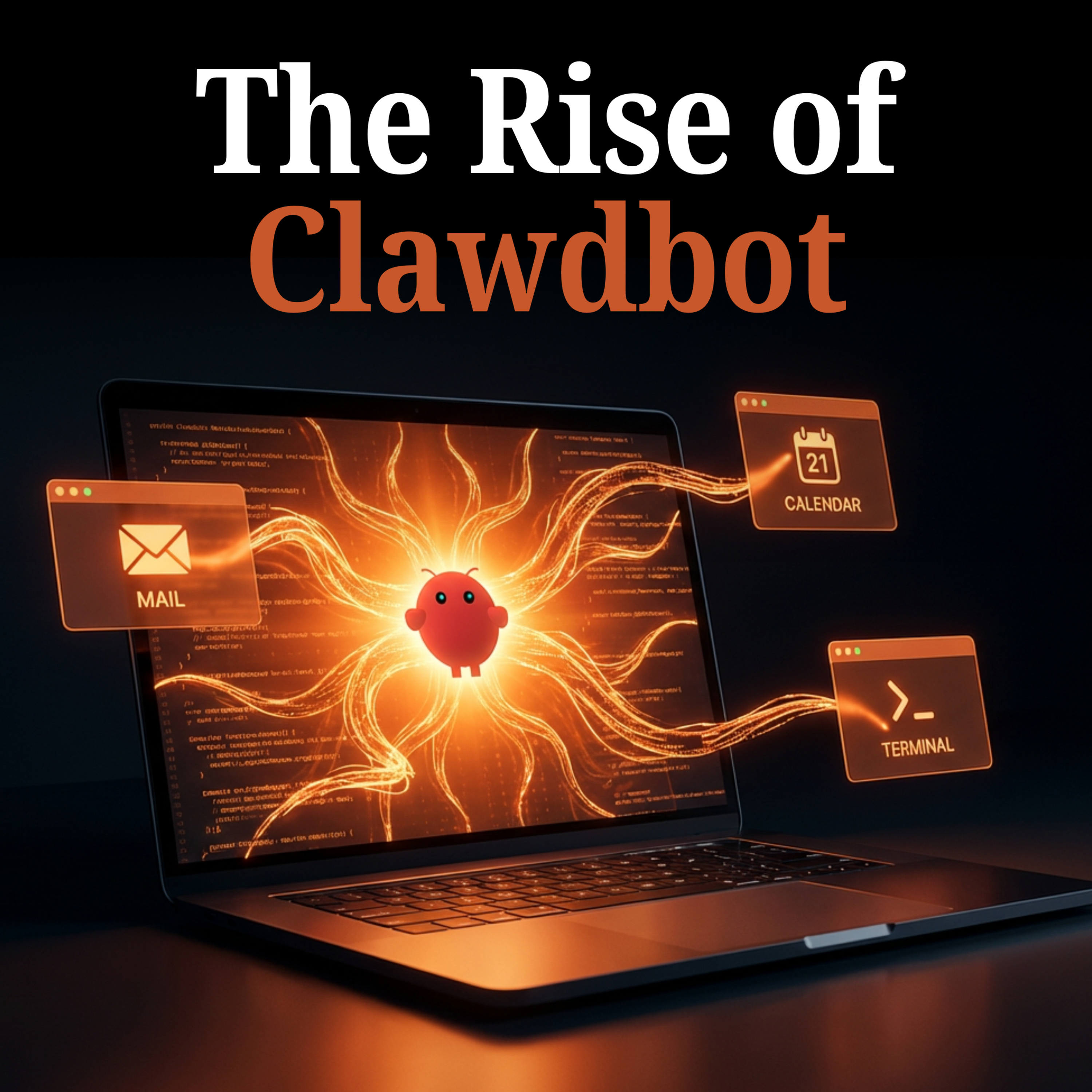
Instead of integrating with existing SaaS tools, AI agents can be instructed on a high-level goal (e.g., 'track my relationships'). The agent can then determine the need for a CRM, write the code for it, and deploy it itself.
The shift from command-line interfaces to visual canvases like OpenAI's Agent Builder mirrors the historical move from MS-DOS to Windows. This abstraction layer makes sophisticated AI agent creation accessible to non-technical users, signaling a pivotal moment for mainstream adoption beyond the engineering community.

Reviewing user interaction data is the highest ROI activity for improving an AI product. Instead of relying solely on third-party observability tools, high-performing teams build simple, custom internal applications. These tools are tailored to their specific data and workflow, removing all friction from the process of looking at and annotating traces.