Get your free personalized podcast brief
We scan new podcasts and send you the top 5 insights daily.
The future of AI interfaces is not a better text box. It's an intelligent layer that understands user goals and operates tools like Blender in the background. Technical details like context windows and model selection will fade away, replaced by a proactive, persistent assistant that gives users their time back.

Related Insights
The dominant paradigm of interacting with computers through graphical user interfaces (GUIs) is temporary. The future is a single, conversational AI agent that acts as an operating system, managing all your data and executing commands directly, thereby making applications and their visual interfaces redundant.

AI won't just help people use applications like Excel; it will eliminate the need for them entirely. The final user interface will be a conversational agent that manages underlying data and executes complex tasks on command, making traditional software and its associated friction obsolete.
The current user experience for AI tools is too complex, forcing users to make choices like which model or mode to use. The next major step is a unified, consolidated interface where the AI intelligently handles resource allocation behind the scenes, simply delivering 'intelligence'.

Sam Altman argues there is a massive "capability overhang" where models are far more powerful than current tools allow users to leverage. He believes the biggest gains will come from improving user interfaces and workflows, not just from increasing raw AI intelligence.
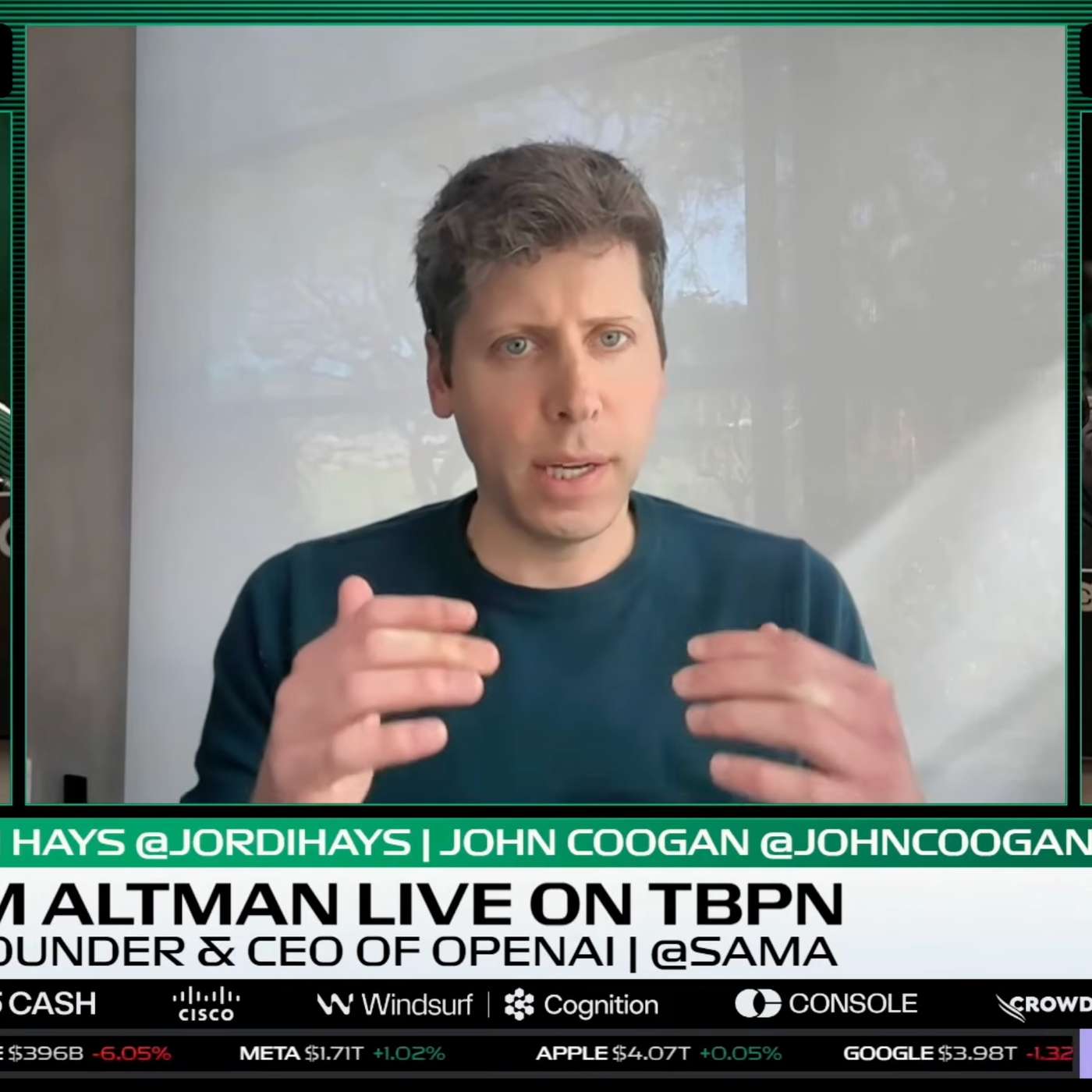
AI is best understood not as a single tool, but as a flexible underlying interface. It can manifest as a chat box for some, but its real potential is in creating tailored workflows that feel native to different roles, like designers or developers, without forcing everyone into a single interaction model.

The primary interface for AI is shifting from a prompt box to a proactive system. Future applications will observe user behavior, anticipate needs, and suggest actions for approval, mirroring the initiative of a high-agency employee rather than waiting for commands.
The current chatbot model is a primitive state for AI interaction. The next evolution lies in "ambient AI" that integrates seamlessly into daily life, moving beyond reactive conversation to proactively assist, anticipate needs, and surface information, much like the original vision for Google Now.
The future of professional work involves interacting with computers via a single context window using natural language commands, not manual typing. AI will execute multi-app workflows based on simple instructions, making users directors rather than laborers.

OpenAI is developing a "dynamic user interface library" designed so the AI model can interpret and compose UI elements itself. This forward-thinking approach anticipates a future where the model assembles bespoke interfaces for users on the fly.
The next user interface paradigm is delegation, not direct manipulation. Humans will communicate with AI agents via voice, instructing them to perform complex tasks on computers. This will shift daily work from hours of clicking and typing to zero, fundamentally changing our relationship with technology.
