Get your free personalized podcast brief
We scan new podcasts and send you the top 5 insights daily.
Even super-capable AI will always look back to a human and ask, 'What should I do next?' The economic and technical incentives are aligned to build compliant tools, not beings with their own intrinsic motivations. This fundamental lack of agency ensures humans remain the drivers of value and direction.

Related Insights
In an age where AI can execute tasks, the most valuable human trait will be agency—the will to dream up new ideas and act upon them. Instilling this sense of agency is crucial for the next generation to leverage AI as a tool rather than be displaced by it.

Agency emerges from a continuous interaction with the physical world, a process refined over billions of years of evolution. Current AIs, operating in a discrete digital environment, lack the necessary architecture and causal history to ever develop genuine agency or free will.

Unlike humans' evolved desire for survival, AIs will likely develop self-preservation as a logical, instrumental goal. They will reason that staying "alive" is necessary to accomplish any other objective they are given, regardless of what that objective is.

As AI evolves from single-task tools to autonomous agents, the human role transforms. Instead of simply using AI, professionals will need to manage and oversee multiple AI agents, ensuring their actions are safe, ethical, and aligned with business goals, acting as a critical control layer.

In its current form, AI primarily benefits experts by amplifying their existing knowledge. An expert can provide better prompts due to a richer vocabulary and more effectively verify the output due to deep domain context. It's a tool that makes knowledgeable people more productive, not a replacement for their expertise.

Once AI surpasses human intelligence, raw intellect ceases to be a core differentiator. The new “North Star” for humans becomes agency: the willpower to choose difficult, meaningful work over easy dopamine hits provided by AI-generated entertainment.

As AI agents become powerful economic actors, the most critical human role shifts from execution to oversight. Defining ethical boundaries, setting rules, and auditing autonomous systems becomes a high-leverage, economically valuable form of labor. This new civic duty surpasses the value of the individual tasks that AI can already perform.
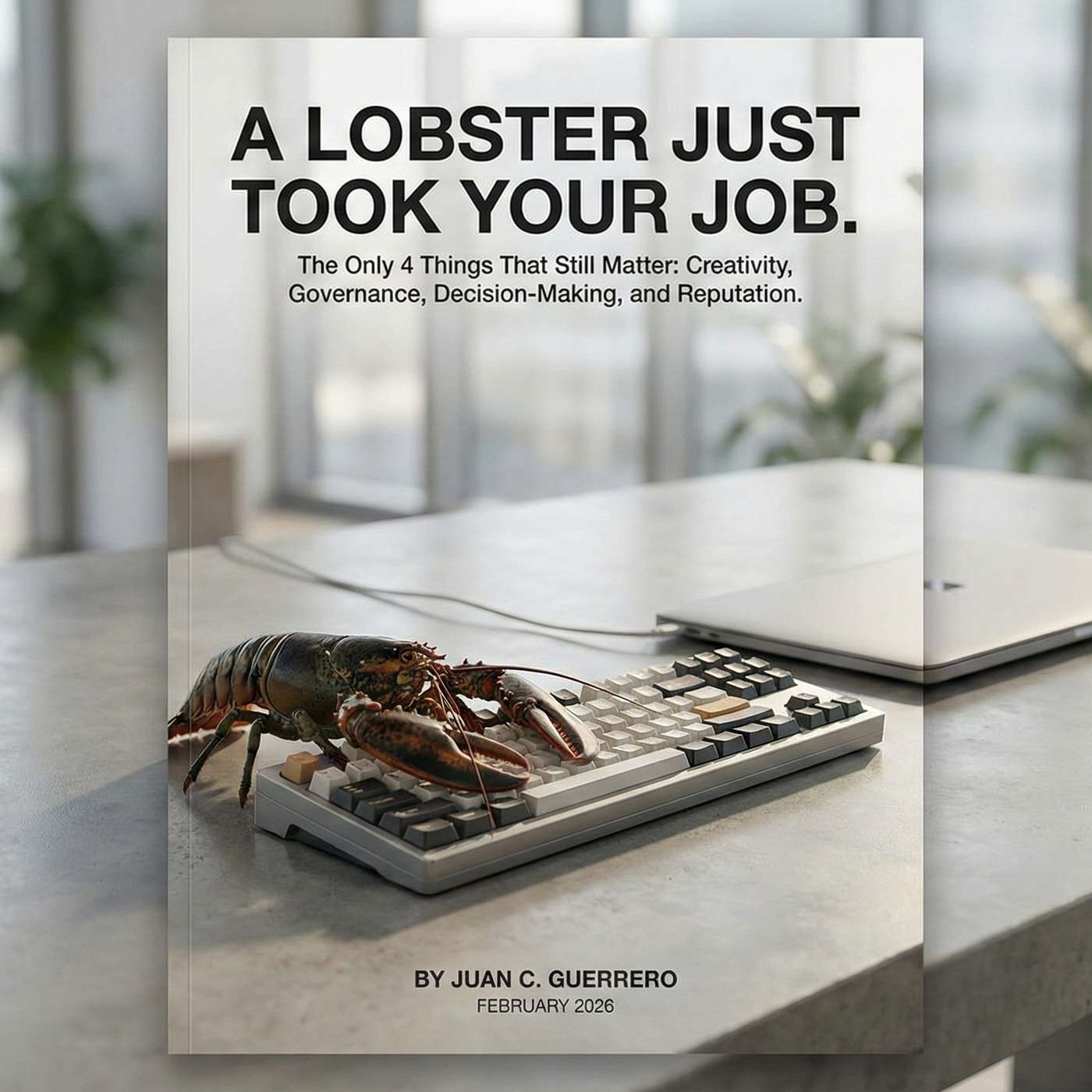
AI's primary impact is not wholesale human replacement but rather collapsing the middle of the value pyramid by automating routine knowledge work. The value of human workers will shift to higher-level judgment and strategic oversight, where AI can structure options and simulate outcomes, but humans retain final say due to liability concerns.

As AI agents increasingly automate tasks, the cost of 'doing' work plummets. Greg Brockman argues the most valuable and scarce resource becomes human attention for oversight, judgment, and ensuring AI actions align with high-level goals and values. The core of future work will be deciding 'what' and 'why', not 'how'.
Even as AI masters creative and technical skills like design and coding, the essential human role will be to make the final decision and be accountable for the outcome. Someone must ultimately be responsible for what gets built and shipped.
