Get your free personalized podcast brief
We scan new podcasts and send you the top 5 insights daily.
Even as AI masters creative and technical skills like design and coding, the essential human role will be to make the final decision and be accountable for the outcome. Someone must ultimately be responsible for what gets built and shipped.

Related Insights
Delegate the mechanical "science" of innovation—data synthesis, pattern recognition, quantitative analysis—to AI. This frees up human innovators to focus on the irreplaceable "art" of innovation: providing the judgment, nuance, cultural context, and heart that machines lack.

As AI automates entry-level knowledge work, human roles will shift towards management. The critical skill will no longer be doing the work, but effectively delegating to and coordinating a team of autonomous AI agents. This places a new premium on traditional management skills like project planning and quality control.

As AI commoditizes execution and intellectual labor, the only remaining scarce human skill will be judgment: the wisdom to know what to build, why, and for whom. This shifts economic value from effort and hard work to discernment and taste.

As AI agents take over execution, the primary human role will evolve to setting constraints and shouldering the responsibility for agent decisions. Every employee will effectively become a manager of an AI team, with their main function being risk mitigation and accountability, turning everyone into a leader responsible for agent outcomes.
When AI can generate code and designs endlessly, creating "AI slop," the critical human contribution becomes judgment. The key challenge shifts from *building* to *deciding what to build* and evaluating the output's quality and security. The question is no longer "can we build it?" but "should we build it?"
![Gokul Rajaram - Lessons from Investing in 700 Companies - [Invest Like the Best, EP.456] thumbnail](https://megaphone.imgix.net/podcasts/a35cb364-fc94-11f0-a24d-836fa963ece3/image/f64963c59af651cbb2d022f3a0dd7199.jpg?ixlib=rails-4.3.1&max-w=3000&max-h=3000&fit=crop&auto=format,compress)
As AI agents become powerful economic actors, the most critical human role shifts from execution to oversight. Defining ethical boundaries, setting rules, and auditing autonomous systems becomes a high-leverage, economically valuable form of labor. This new civic duty surpasses the value of the individual tasks that AI can already perform.
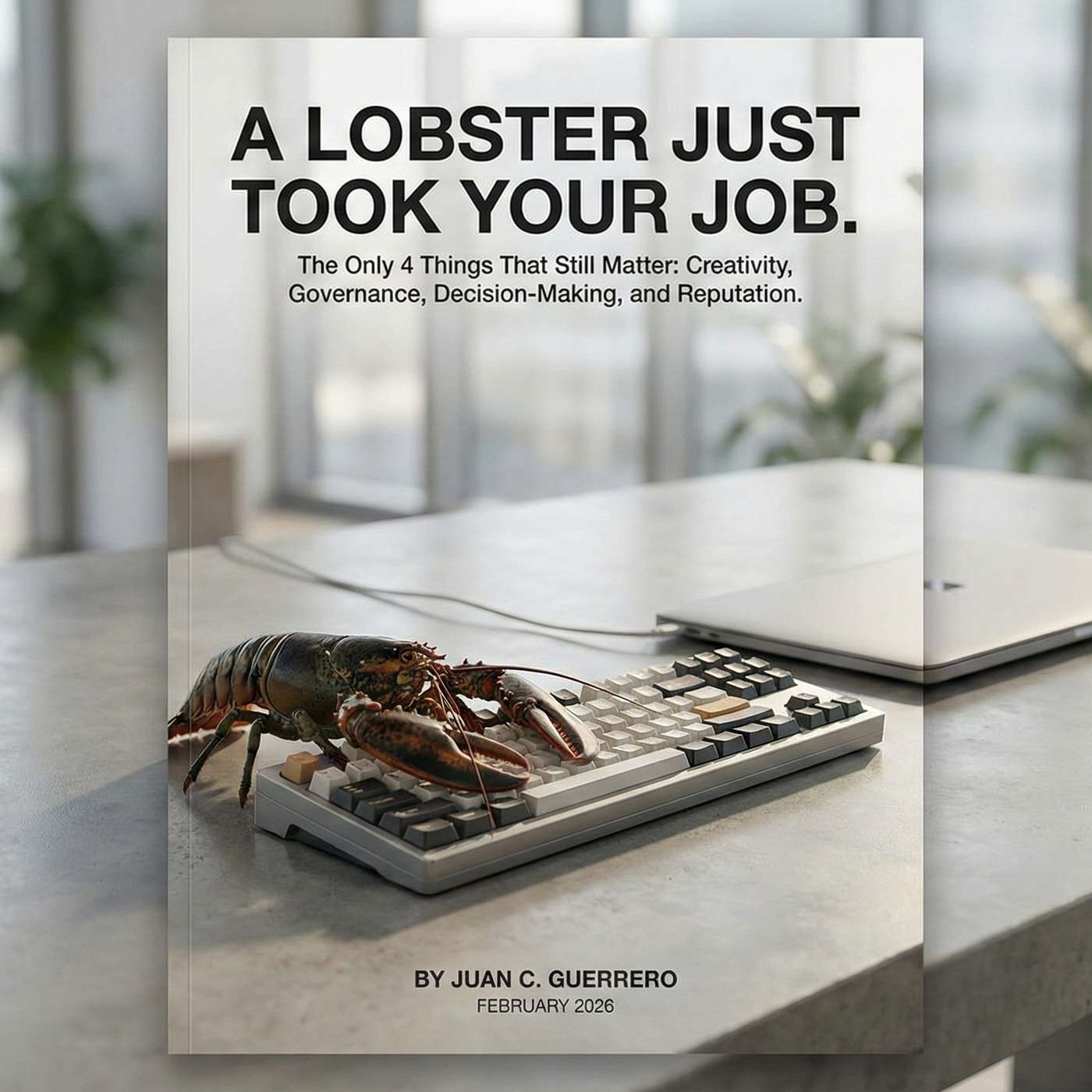
As AI agents eliminate the time and skill needed for technical execution, the primary constraint on output is no longer the ability to build, but the quality of ideas. Human value shifts entirely from execution to creative ideation, making it the key driver of progress.

As AI commoditizes the 'how' of building products, the most critical human skills become the 'what' and 'why.' Product sense (knowing ingredients for a great product) and product taste (discerning what’s missing) will become far more valuable than process management.

Even powerful AI tools don't produce a final, polished product. This "last mile" problem creates an opportunity for humans who master AI tools and then refine, integrate, and complete the work. These "finisher" roles are indispensable as there is no single AI solution to rule them all.

As AI makes it incredibly easy to build products, the market will be flooded with options. The critical, differentiating skill will no longer be technical execution but human judgment: deciding *what* should exist, which features matter, and the right distribution strategy. Synthesizing these elements is where future value lies.
