Get your free personalized podcast brief
We scan new podcasts and send you the top 5 insights daily.
As AI agents increasingly automate tasks, the cost of 'doing' work plummets. Greg Brockman argues the most valuable and scarce resource becomes human attention for oversight, judgment, and ensuring AI actions align with high-level goals and values. The core of future work will be deciding 'what' and 'why', not 'how'.

Related Insights
As AI becomes proficient at generating code, the critical human skill is no longer writing the code itself. Instead, the focus shifts to deciding *what* to build and maintaining a high standard of quality for the AI-generated output. The key contribution becomes strategic direction and taste.

AI agents will automate execution tasks at machine speed, nullifying the old business mantra that "execution is strategy." A firm's value will no longer come from *doing* things efficiently, but from the uniquely human ability to think big picture, choose the right goals, and make high-quality strategic judgments.
As AI evolves from single-task tools to autonomous agents, the human role transforms. Instead of simply using AI, professionals will need to manage and oversee multiple AI agents, ensuring their actions are safe, ethical, and aligned with business goals, acting as a critical control layer.

The future of work isn't just using AI as a tool, but managing it. Greg Brockman describes a paradigm where users act as high-level overseers, setting goals for a "fleet of agents" that handle the low-level execution, abstracting away details like clicking buttons or writing specific formulas.

When AI can generate code and designs endlessly, creating "AI slop," the critical human contribution becomes judgment. The key challenge shifts from *building* to *deciding what to build* and evaluating the output's quality and security. The question is no longer "can we build it?" but "should we build it?"
![Gokul Rajaram - Lessons from Investing in 700 Companies - [Invest Like the Best, EP.456] thumbnail](https://megaphone.imgix.net/podcasts/a35cb364-fc94-11f0-a24d-836fa963ece3/image/f64963c59af651cbb2d022f3a0dd7199.jpg?ixlib=rails-4.3.1&max-w=3000&max-h=3000&fit=crop&auto=format,compress)
As AI agents become powerful economic actors, the most critical human role shifts from execution to oversight. Defining ethical boundaries, setting rules, and auditing autonomous systems becomes a high-leverage, economically valuable form of labor. This new civic duty surpasses the value of the individual tasks that AI can already perform.
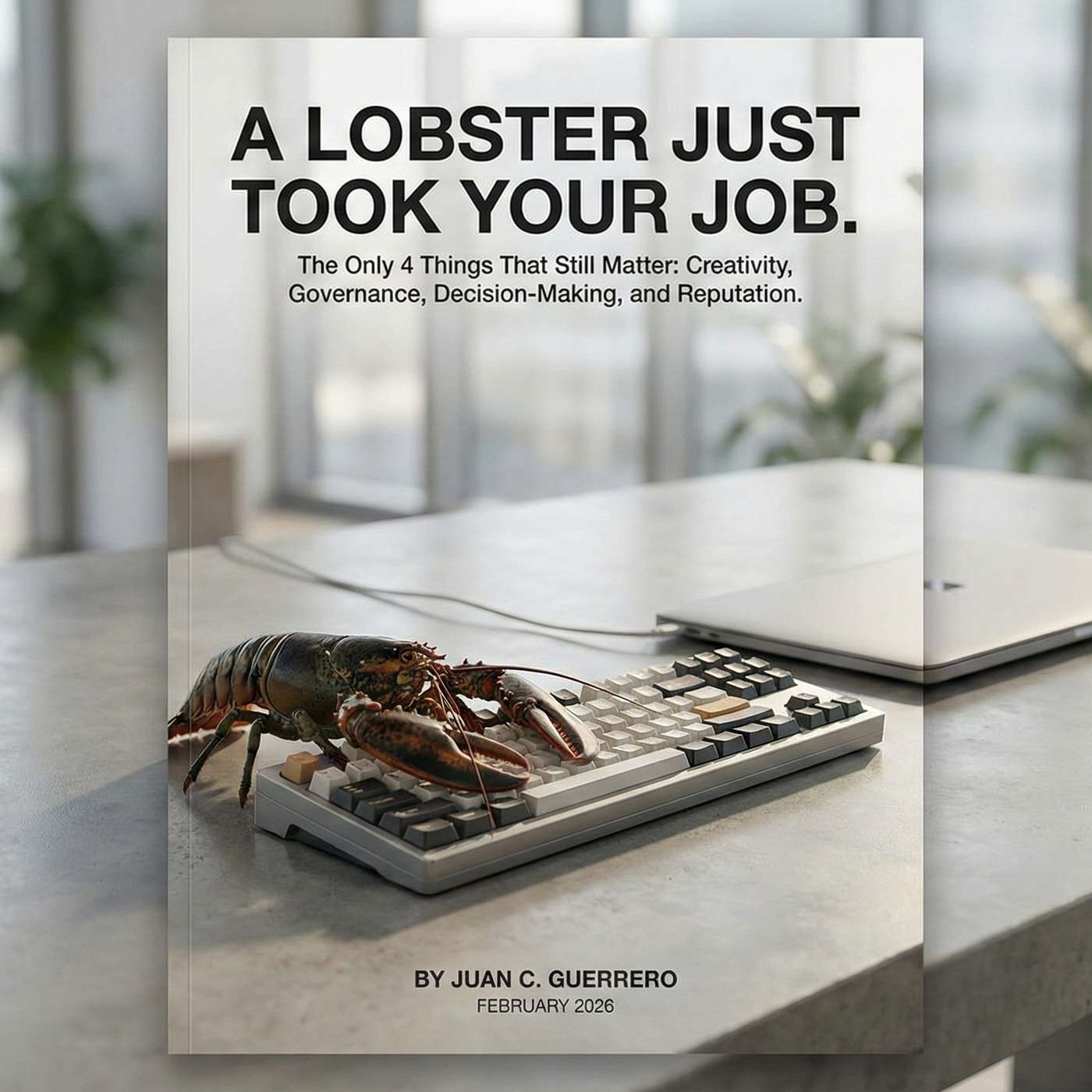
As AI agents eliminate the time and skill needed for technical execution, the primary constraint on output is no longer the ability to build, but the quality of ideas. Human value shifts entirely from execution to creative ideation, making it the key driver of progress.

AI's primary impact is not wholesale human replacement but rather collapsing the middle of the value pyramid by automating routine knowledge work. The value of human workers will shift to higher-level judgment and strategic oversight, where AI can structure options and simulate outcomes, but humans retain final say due to liability concerns.

The adoption of powerful AI agents will fundamentally shift knowledge work. Instead of executing tasks, humans will be responsible for directing agents, providing crucial context, managing escalations, and coordinating between different AI systems. The primary job will evolve from 'doing' to 'managing and guiding'.

Even as AI masters creative and technical skills like design and coding, the essential human role will be to make the final decision and be accountable for the outcome. Someone must ultimately be responsible for what gets built and shipped.
