Get your free personalized podcast brief
We scan new podcasts and send you the top 5 insights daily.
China has built full-sized replicas of key government buildings in Taiwan's capital, including the presidential office. Military drills at these sites focus on capturing or killing Taiwan's leadership in the first hours of a war, revealing a clear "decapitation strike" strategy designed to achieve a swift victory before outside intervention is possible.

Related Insights
Despite its military buildup, China's primary strategy for Taiwan is not a direct invasion, which remains highly difficult. Instead, President Xi Jinping favors a coerced diplomacy, aiming to squeeze Taiwan on all sides until it feels it has no choice but to accept a 'one country, two systems' model.

Instead of a risky invasion, Xi Jinping's preference is to slowly suffocate Taiwan's will to resist. This strategy involves chipping away at U.S. commitments and eroding the conviction of regional allies, buying time while avoiding a costly direct conflict.

Beijing’s core strategy for Taiwan is to convince its populace that "resistance is futile" and no outside help is coming. U.S. arms sales and rhetorical support from allies are particularly disruptive because they directly counter this psychological narrative of isolation, undermining China's goal of a coerced unification.

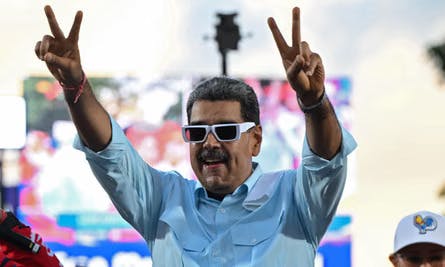
The U.S. operation to capture Maduro serves as a real-world case study for China's potential 'decapitation' strike against Taiwan. China has already rehearsed such scenarios in mock-ups of Taipei's presidential palace. This event demonstrates the feasibility of a quick, surgical strike, which is more aligned with the CCP's goals than a costly amphibious invasion.
Contrary to popular comparisons with Ukraine, Taiwan has 'zero chance' of defending itself independently. Its entire military posture is designed to hold out long enough for the United States to intervene, not to win a war of self-defense. This makes U.S. intervention speed the critical factor.
Beijing is undermining Taiwanese sovereignty without firing a shot. It employs economic pressure, diplomatic isolation, cyber attacks, and disinformation to achieve its goals, making a traditional military assault unnecessary. This multi-pronged strategy has already made significant inroads, aiming for capitulation over conflict.

China's strategy for Taiwan likely mirrors its 2019 Hong Kong takeover. Instead of a direct military assault, Beijing will use political influence, espionage, and legislative changes to create administrative bridges, making any physical resistance illegal before troops ever move in.

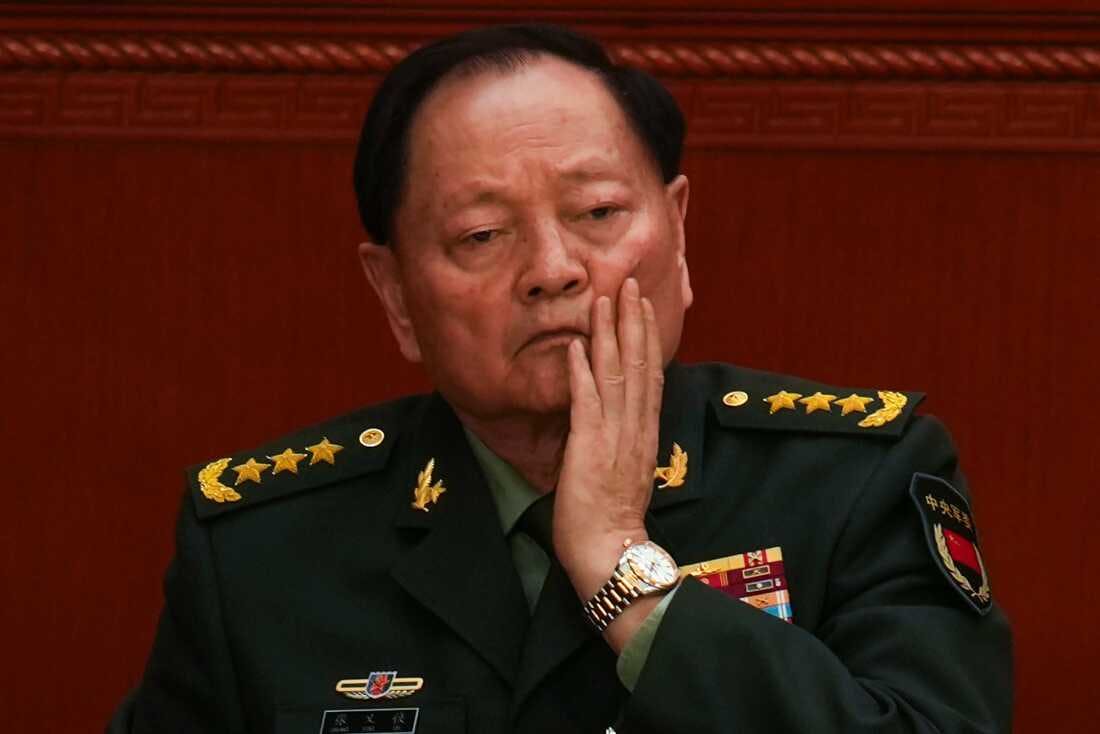
Xi Jinping's willingness to decapitate his military leadership suggests he feels secure about the external environment. He perceives no immediate crisis over Taiwan, giving him the political space to conduct a thorough and disruptive internal consolidation.
Instead of a full-scale invasion, China is employing an "anaconda strategy" of constant, low-level pressure. Tactics like cutting undersea cables and sending drones are designed to exhaust and demoralize Taiwan, making a military response from the US difficult to justify.
While the U.S. is preoccupied with Iran and the Strait of Hormuz, China has significantly increased its military presence around Taiwan. This may not be just a show of force, but a strategic dress rehearsal for an invasion, testing capabilities while global attention is focused elsewhere.