Get your free personalized podcast brief
We scan new podcasts and send you the top 5 insights daily.
Over 60% of product teams regain 2+ hours daily using AI, but this time is often absorbed by more execution tasks—the "hamster wheel"—rather than being allocated to crucial strategic planning. This is due to organizational demand and the cognitive load of context-switching.

Related Insights
As AI automates time-consuming tasks like data analysis, requirement writing, and prototyping, the product manager's focus will shift. More time will be spent on upstream activities like customer discovery and market strategy, transforming the role from operational execution to strategic thinking.

Contrary to the impulse to automate busywork, leaders should focus their initial AI efforts on their most critical strategic challenges. Parkinson's Law dictates that low-value tasks will always expand to fill available time. Go straight to the highest-leverage applications to see immediate, significant results.

AI agents will automate PM tasks like competitive analysis, user feedback synthesis, and PRD writing. This efficiency gain could shift the standard PM-to-developer ratio from 1:6-10 to 1:20-30, allowing PMs to cover a much broader product surface area and focus on higher-level strategy.
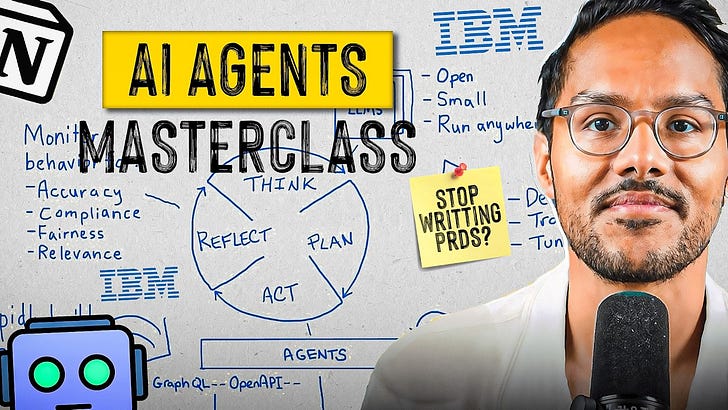
Generative AI's most immediate impact for product managers isn't just writing user stories. It's consolidating disparate information sources into a single interface, freeing up the cognitive load wasted on context switching and allowing for deeper strategic thinking.

Unlike traditional software that optimizes for time-in-app, the most successful AI products will be measured by their ability to save users time. The new benchmark for value will be how much cognitive load or manual work is automated "behind the scenes," fundamentally changing the definition of a successful product.

AI automates tactical tasks, shifting the PM's role from process management to de-risking delivery by developing deep customer insights. This allows PMs to spend more time confirming their instincts about customer needs, which engineering teams now demand.

AI tools can handle administrative and analytical tasks for product managers, like summarizing notes or drafting stories. However, they lack the essential human elements of empathy, nuanced judgment, and creativity required to truly understand user problems and make difficult trade-off decisions.

The "hamster wheel of execution" persists because performance reviews and incentives overwhelmingly focus on shipped features. Until companies tangibly reward strategic vision and planning, PMs will continue to prioritize execution, regardless of time saved by tools like AI.
Product managers often hit cognitive fatigue from constantly re-formatting the same core information for different audiences (e.g., customer notes to PRD, PRD to Jira tickets, tickets to executive summaries). Automating this "translation" work with AI frees up mental energy for higher-value strategic tasks and prevents lazy, context-poor handoffs.

As AI automates synthesis and creation, the product manager's core value shifts from managing the development process to deeply contextualizing all available information (market, customer, strategy) to define the *right* product direction.