Get your free personalized podcast brief
We scan new podcasts and send you the top 5 insights daily.
When asked to edit a video from disparate sources, Claude CoWork found no existing tool, so it wrote and executed its own custom script to extract the clips. This highlights AI's ability to create bespoke, single-use software on the fly, automating niche tasks that previously required manual work or specialized tools.

Related Insights
Previously, building bespoke software for niche internal problems was too expensive. AI agents dramatically lower this cost, allowing companies to create custom-fit solutions for 99% of their problems, ending the era of contorting workflows to fit generic, off-the-shelf tools.

You don't need technical skills to build custom AI tools. Frame your needs as problem statements to a capable AI agent. The AI then acts as a product manager, asking clarifying questions to understand the requirements before generating the necessary scripts and workflows to solve your problem automatically.

Tim McLear used AI coding assistants to build custom apps for niche workflows, like partial document transcription and field research photo logging. He emphasizes that "no one was going to make me this app." The ability for non-specialists to quickly create such hyper-specific internal tools is a key, empowering benefit of AI-assisted development.
The process of building AI tools is becoming automated. Claude features a 'Skill Creator,' a skill that builds other skills from natural language prompts. This meta-capability allows users to generate custom AI workflows without writing code, essentially asking the AI to build the exact tool they need for a task.

A new role is emerging for employees who identify business inefficiencies and direct AI agents to build custom software to solve them. This 'vibe coder' doesn't need to write code but acts as a problem-finder and agent-manager, creating bespoke internal tools that are superior to off-the-shelf software.

Instead of integrating with existing SaaS tools, AI agents can be instructed on a high-level goal (e.g., 'track my relationships'). The agent can then determine the need for a CRM, write the code for it, and deploy it itself.
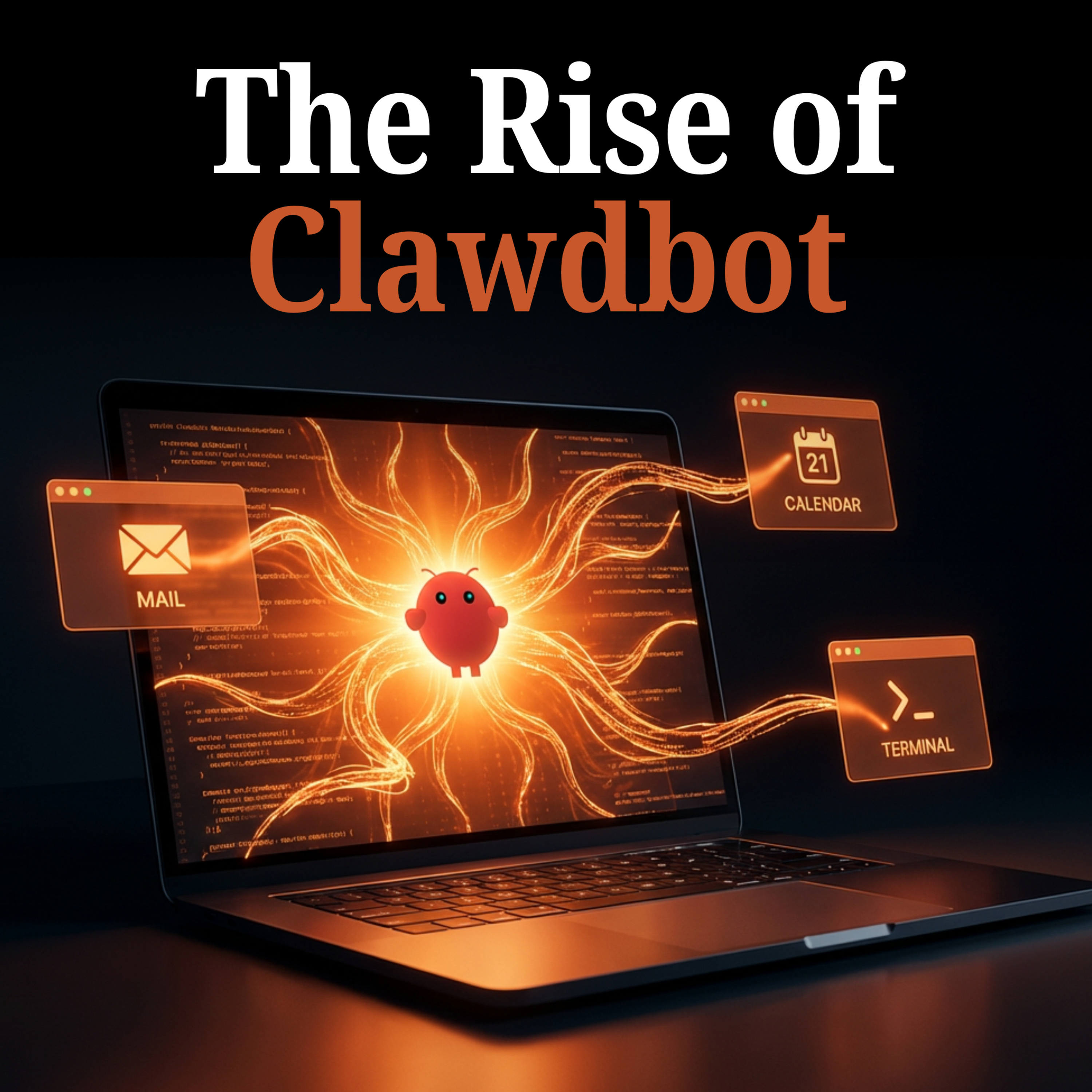
Unlike static tools, agents like Clawdbot can autonomously write and integrate new code. When faced with a new challenge, such as needing a voice interface or GUI control, it can build the required functionality itself, compounding its abilities over time.

Anthropic has seen a proliferation of personalized work apps created by employees in roles like sales. Tools like Claude Code lower the barrier to building software, allowing teams to create tailored solutions for repetitive tasks instead of using generic tools.
Non-coders can create sophisticated AI workflows without technical expertise. You can provide an AI like Claude with a podcast transcript describing a desired automation and ask it to build that system for you. The AI will then provide step-by-step instructions, effectively creating its own operational framework.
LLMs make it feasible to generate complex software intended to be executed only once. This 'disposable code' automates tasks previously too niche or time-consuming to justify manual software development, such as writing a custom script to alphabetize a book's appendix for a single use.