Get your free personalized podcast brief
We scan new podcasts and send you the top 5 insights daily.
LLMs make it feasible to generate complex software intended to be executed only once. This 'disposable code' automates tasks previously too niche or time-consuming to justify manual software development, such as writing a custom script to alphabetize a book's appendix for a single use.
Related Insights
Previously, the high cost of software development meant products needed to achieve scale to be successful. AI lowers this barrier, making it practical to build custom applications for very small, niche audiences (e.g., a Super Bowl app for 15 family members) that were never financially viable before.

The cost to run an autonomous AI coding agent is surprisingly low, reframing the value of developer time. A single coding iteration can cost as little as $3, meaning a complete feature built over 10 iterations could be completed for around $30, making complex software development radically more accessible.

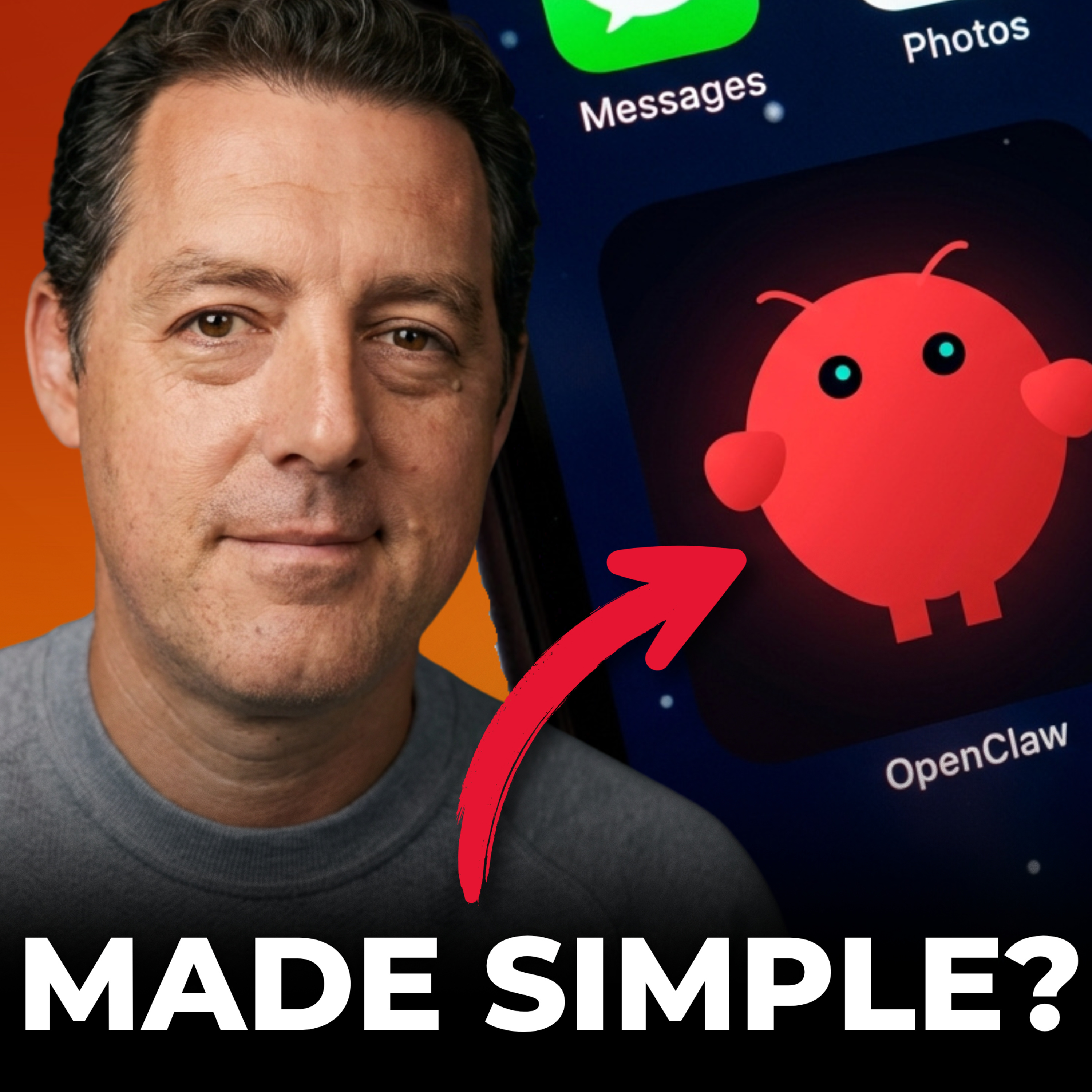
Agentic frameworks like OpenClaw are pioneering a new software paradigm where 'skills' act as lightweight replacements for entire applications. These skills are essentially instruction manuals or recipes in simple markdown files, combining natural language prompts with calls to deterministic code ('tools'), condensing complex functionality into a tiny, efficient format.
The ability to generate software with AI is like getting newly printed money before inflation hits. For a limited time, those who can leverage AI to build software cheaply have a massive advantage before the market reprices the value of software development downwards for everyone.

Tim McLear used AI coding assistants to build custom apps for niche workflows, like partial document transcription and field research photo logging. He emphasizes that "no one was going to make me this app." The ability for non-specialists to quickly create such hyper-specific internal tools is a key, empowering benefit of AI-assisted development.
The barrier to creating software is collapsing. Non-coders can now build sophisticated, personalized applications for specific workflows in under an hour. This points to a future where individuals and teams create their own disposable, custom tools, replacing subscriptions to numerous niche SaaS products.

AI tools like Perplexity Computer can generate fully functional websites in minutes to serve a single, temporary purpose, like sharing design mockups. This "disposable web" concept treats code as a transient communication tool to accomplish a specific task, after which it can be discarded without maintenance.

AI is drastically reducing software development costs. This makes it economically viable for small teams to build highly-focused applications for niche markets, such as specific skilled trades, that were previously too small to attract venture capital-backed software companies.

The long-held rule by Joel Spolsky to "never rewrite your code" no longer applies in the AI era. For an increasing number of scenarios, it is more efficient to have an LLM regenerate an entire system, like a unit test suite, from scratch than to attempt to incrementally fix or refactor it.

AI coding assistants reduce development time from days to just minutes or hours. This makes building custom tools to save a few minutes daily a highly valuable investment, as the payback period for the time spent building is now incredibly short.