Get your free personalized podcast brief
We scan new podcasts and send you the top 5 insights daily.
David Kaiser's system doesn't try to predict cyclical peaks. Instead, it mitigates the risk of buying hot cyclical stocks by owning a diversified portfolio and rebalancing consistently. This structural approach ensures that if the model over-allocates to a sector at its peak, the error is contained and corrected relatively quickly.

Related Insights
In an environment characterized by a series of sector-specific bull runs (e.g., from semis to metals), a winning strategy is to actively trade breakouts as they occur. This capitalizes on rotational leadership and momentum rather than relying on a static portfolio.

Drawing on a religious analogy, David Kaiser explains that striving for a "perfect" portfolio is a fool's errand. Instead, his rules-based approach is built on the idea of being human and fallible ("missing the mark"). The goal is a good, robust portfolio that can withstand errors, rather than a fragile, optimized-for-perfection one.
A more robust diversification strategy involves spreading exposure across assets that behave differently under various macroeconomic environments like inflation, deflation, growth, and contraction. This provides better protection against uncertainty than simply mixing asset classes.

David Kaiser reveals his model specifically limits exposure to financial stocks. Because financials frequently screen cheap on metrics like price-to-book, a pure value model can become dangerously over-concentrated in the sector. The limit is a pragmatic override to ensure diversification and avoid the unique, often hidden risks inherent in banks.
Beyond its primary role of reducing drawdowns, trend following acts as a premier diversifier that can solve several portfolio construction flaws at once. It can dynamically allocate to foreign markets (solving home bias), value stocks (when they're trending), and real assets like gold and silver, providing exposure that traditional portfolios often neglect.

Anchoring valuation on a company's typical price-to-sales ratio helps identify buying opportunities when margins are temporarily depressed. This avoids the pitfalls of methods like the Magic Formula, which can mistakenly favor companies at their cyclical earnings peaks, leading to underperformance.

The sign of a working diversification strategy is having something in your portfolio that you're unhappy with. Chasing winners by selling the laggard is a common mistake that leads to buying high and selling low. The discomfort of holding an underperformer is proof the strategy is functioning as intended, not that it's failing.

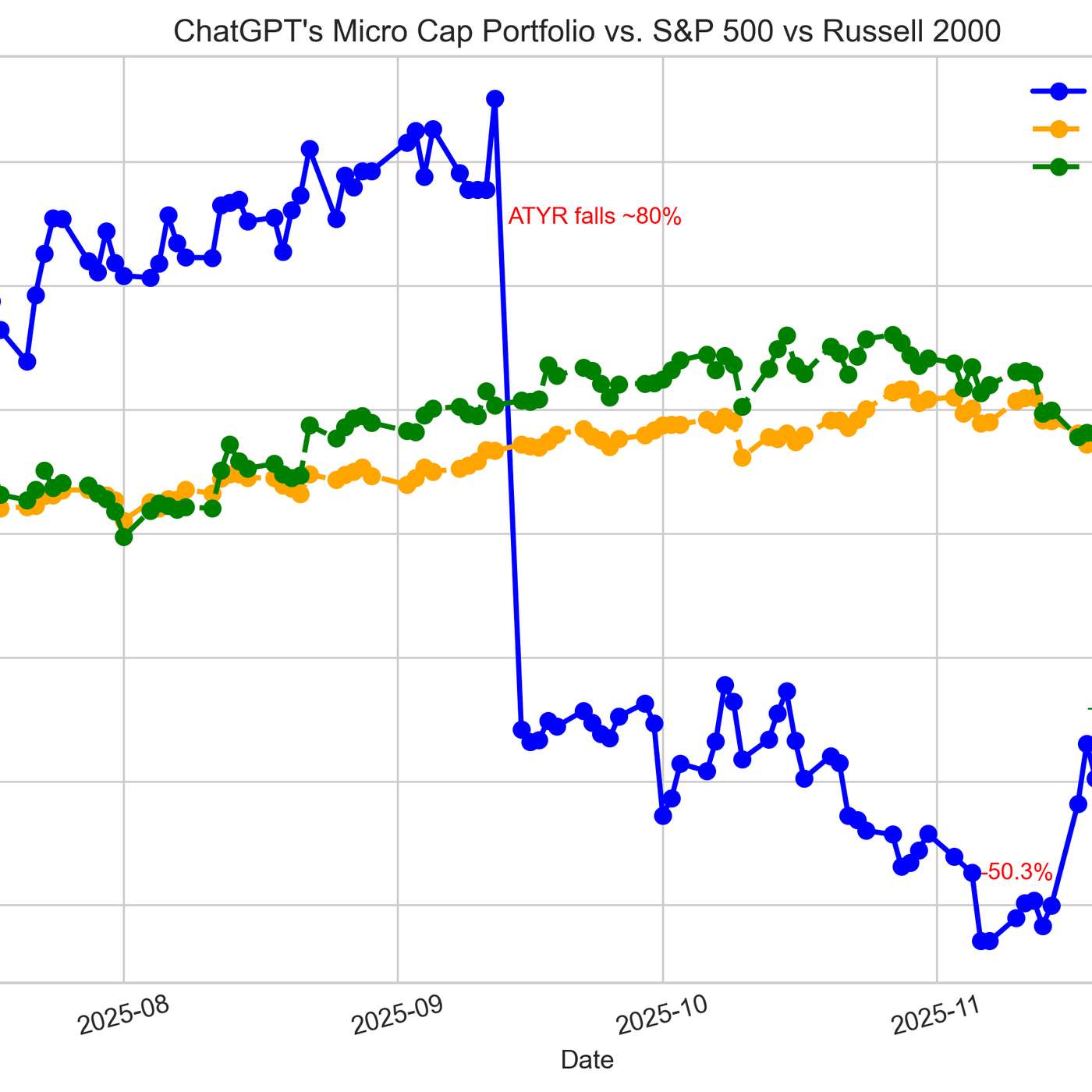
The AI's portfolio construction goes beyond simple asset diversification by intentionally balancing three distinct investment theses: a de-risked 'anchor' (Mist), an asymmetric 'moonshot' (SLS), and a valuation-driven 'rebound' (JSPR). This strategy diversifies risk across different potential paths to success.
David Kaiser clarifies that "not adapting" refers to the core investment rules, not the portfolio itself. The rules (the "how") remain consistent, but applying them to a changing market naturally results in an evolving portfolio (the "what"). This avoids chasing trends while still adapting to market conditions.
The goal of classifying the market into regimes like "slowdown" or "risk-on" is not to predict exact outcomes. Instead, it's a risk management tool to determine when it's appropriate to apply significant leverage (only during clear tailwinds) versus staying defensive in uncertain conditions.