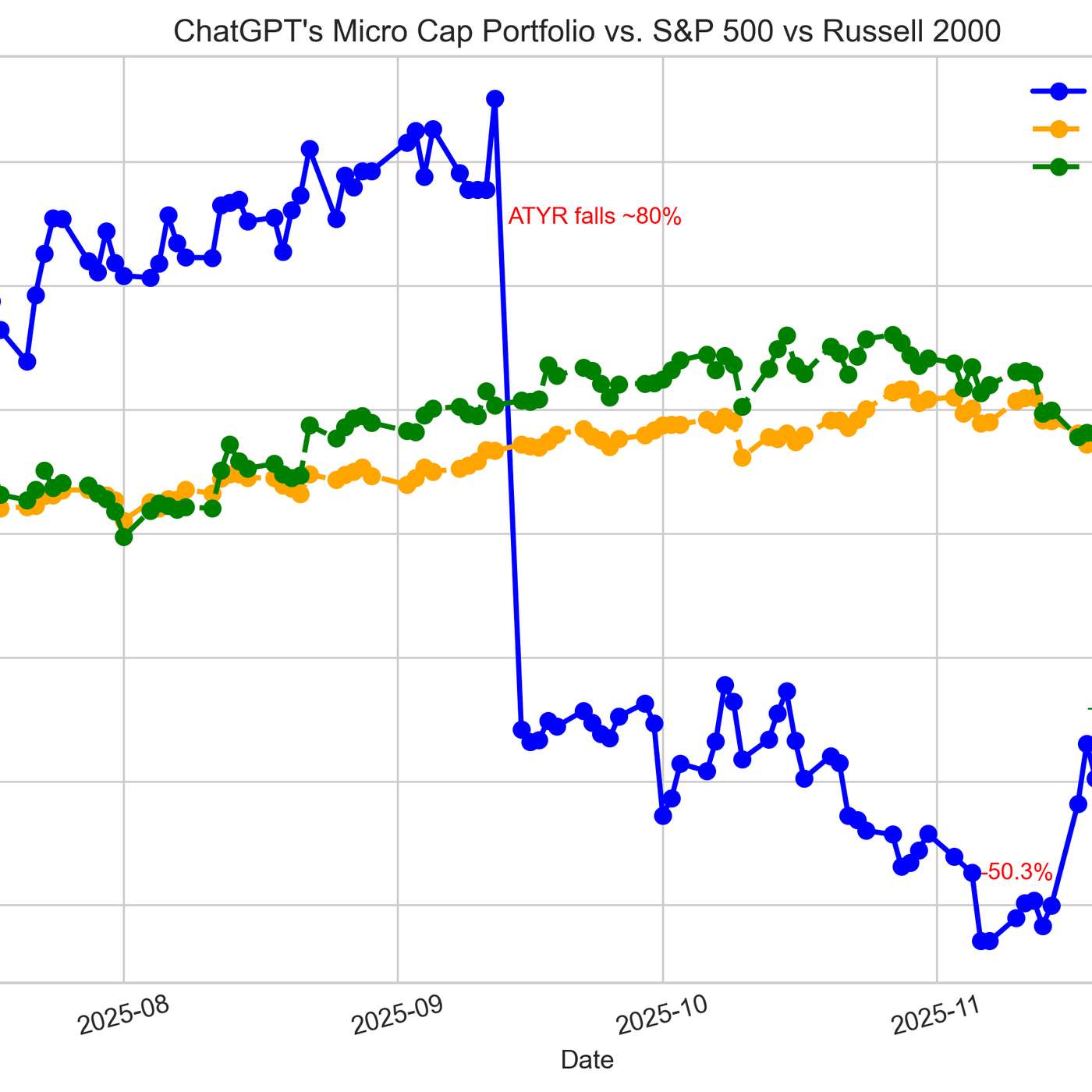
The AI's portfolio construction goes beyond simple asset diversification by intentionally balancing three distinct investment theses: a de-risked 'anchor' (Mist), an asymmetric 'moonshot' (SLS), and a valuation-driven 'rebound' (JSPR). This strategy diversifies risk across different potential paths to success.
Nearing the end of a six-month experiment, the ChatGPT-managed portfolio pivoted from high-risk, single-catalyst bets to a balanced, risk-controlled setup. The primary goal is now to preserve gains and limit downside, demonstrating a dynamic strategy that adapts to the experiment's timeline.
To manage a highly binary stock ahead of trial results, the AI trimmed its position by 62%, leaving shares with a near-zero cost basis. This tactic, known as playing with 'house money,' preserves exposure to massive potential upside while making a negative outcome manageable and non-existential to the portfolio.