Get your free personalized podcast brief
We scan new podcasts and send you the top 5 insights daily.
The traditional workflow (Idea -> PRD -> Alignment) is outdated. Now, PMs first create a functional AI prototype. This visual, interactive artifact is then brought to engineers and scientists for debate, accelerating alignment and making the development process more creative and collaborative from the start.
Related Insights
AI prototyping doesn't replace the PRD; it transforms its purpose. Instead of being a static document, the PRD's rich context and user stories become the ideal 'master prompt' to feed into an AI tool, ensuring the initial design is grounded in strategic requirements.
Traditional "writing-first" cultures create communication gaps and translation errors. With modern AI tools, product managers can now build working prototypes in hours. This "show, don't tell" approach gets ideas validated faster, secures project leadership, and overcomes language and team barriers.
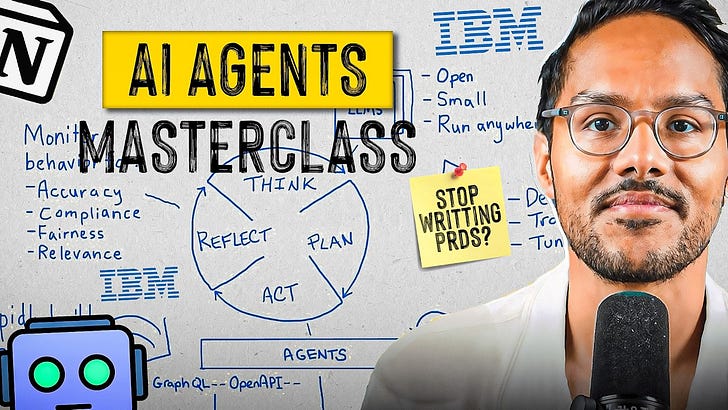
The traditional product management workflow (spec -> engineer build) is obsolete. The modern AI PM uses agentic tools to build, test, and iterate on the initial product, handing a working, validated prototype to engineering for productionalization.
![Building a Personal AI Model Map [AI Operators Bonus Episode] thumbnail](https://d3t3ozftmdmh3i.cloudfront.net/staging/podcast_uploaded_nologo/41472609/41472609-1752234663609-8665756a468e5.jpg)
The traditional, linear handoff from product spec to design to code is collapsing. Roles and stages are blurring, with interactive prototypes replacing static documents and the design file itself becoming the central place for the entire team to align and collaborate.

In AI, low prototyping costs and customer uncertainty make the traditional research-first PM model obsolete. The new approach is to build a prototype quickly, show it to customers to discover possibilities, and then iterate based on their reactions, effectively building the solution before the problem is fully defined.

At OpenAI, the development cycle is accelerated by a practice called "vibe coding." Designers and PMs build functional prototypes directly with AI tools like Codex. This visual, interactive method is often faster and more effective for communicating ideas than writing traditional product specifications.

Product Requirement Documents (PRDs) are often written and then ignored. AI-generated prototypes change this dynamic by serving as powerful internal communication tools. Putting an interactive model in front of engineering and design teams sparks better, more tangible conversations and ideas than a flat document ever could.

For complex features, a 17-page requirements document is inefficient for alignment. An interactive AI-generated prototype allows stakeholders to see and use the product, making it a more effective source of truth for gathering feedback and defining requirements than static documentation.
AI tools that generate functional UIs from prompts are eliminating the 'language barrier' between marketing, design, and engineering teams. Marketers can now create visual prototypes of what they want instead of writing ambiguous text-based briefs, ensuring alignment and drastically reducing development cycles.

The product development cycle has shifted. Instead of writing a spec, Product Managers use AI coding tools like Bolt.new to build the initial working version of a product. They then hand this functional prototype to engineers for hardening, security, and scaling, dramatically accelerating the process.