Get your free personalized podcast brief
We scan new podcasts and send you the top 5 insights daily.
The product development cycle has shifted. Instead of writing a spec, Product Managers use AI coding tools like Bolt.new to build the initial working version of a product. They then hand this functional prototype to engineers for hardening, security, and scaling, dramatically accelerating the process.
Related Insights
In an age of rapid AI prototyping, it's easy to jump to solutions without deeply understanding the problem. The act of writing a spec forces product managers to clarify their thinking and structure context. Writing is how PMs "refactor their thoughts" and avoid overfitting to a partially-baked solution.

Traditional "writing-first" cultures create communication gaps and translation errors. With modern AI tools, product managers can now build working prototypes in hours. This "show, don't tell" approach gets ideas validated faster, secures project leadership, and overcomes language and team barriers.
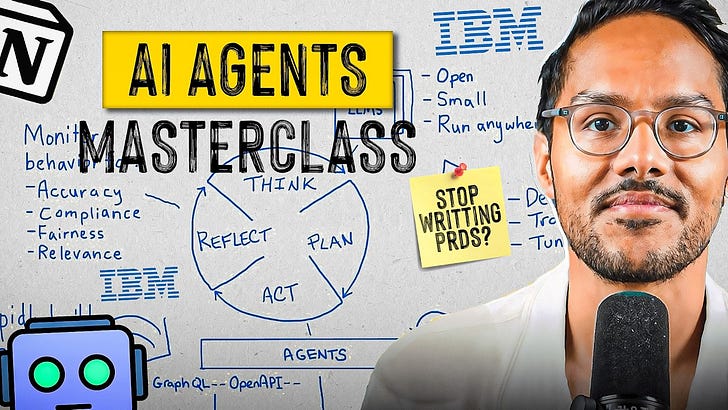
In AI, low prototyping costs and customer uncertainty make the traditional research-first PM model obsolete. The new approach is to build a prototype quickly, show it to customers to discover possibilities, and then iterate based on their reactions, effectively building the solution before the problem is fully defined.

AI tools reduce the communication overhead and lengthy handoffs that traditionally separated product and engineering. By streamlining the path from idea to code, AI makes the combined Chief Product and Technology Officer (CPTO) role more viable, enabling a single leader to manage both functions effectively.

To maximize speed, V0 operates with a "no handoffs" philosophy. Everyone, including designers and product managers, is expected to contribute code and submit their own pull requests. This "full-stack PM" model minimizes the coordination costs and wasted cycles of explaining changes.

Historically, resource-intensive prototyping (requiring designers and tools like Figma) was reserved for major features. AI tools reduce prototype creation time to minutes, allowing PMs to de-risk even minor features with user testing and solution discovery, improving the entire product's success rate.
When an engineering team is hesitant about a new feature due to unfamiliarity (e.g., mobile development), a product leader can use AI tools to build a functional prototype. This proves feasibility and shifts the conversation from a deadlock to a collaborative discussion about productionizing the code.
The V0 team dogfoods their own AI prototyping tool to define and communicate new features internally. Instead of writing specification documents, PMs build and share working prototypes. This provides immediate clarity and sparks more effective, tangible feedback from the entire team.
Instead of writing detailed Product Requirement Documents (PRDs), use a brief prompt with an AI tool like Vercel's v0. The generated prototype immediately reveals gaps and unstated assumptions in your thinking, allowing you to refine requirements based on the AI's 'misinterpretations' before creating a clearer final spec.
Traditional agile development, despite its intent, still involves handoffs between research, design, and engineering which create opportunities for misinterpretation. AI tools collapse this sequential process, allowing a single person to move from idea to interactive prototype in minutes, keeping human judgment and creativity tightly coupled.
