Get your free personalized podcast brief
We scan new podcasts and send you the top 5 insights daily.
While leveraging automated translation tools saves time, the output is not business-ready. ECI was surprised by the number of edits required from their native German-speaking employees, who spent significant time proofreading to ensure accuracy for customer-facing materials.

Related Insights
Using AI to generate content without adding human context simply transfers the intellectual effort to the recipient. This creates rework, confusion, and can damage professional relationships, explaining the low ROI seen in many AI initiatives.

Unlike previous deals, a German acquisition required a complete, simultaneous language localization across all systems. This "language lift" included everything from the website and lead-gen to contracts, support portals, invoices, and automated billing reminders, all launching on the same day.
Translating languages effectively in AI is less about scientific accuracy and more about cultural nuance and "policy alignment." Getting details right for native speakers is crucial, which is why local vendors often outperform global giants, as they possess the deep linguistic and cultural expertise required.
A Workday study reveals a critical blind spot in AI productivity metrics. While tools save time, roughly 37% of that saved time is offset by the need for rework—verifying information, correcting errors, and rewriting content. This dramatically reduces the net value and ROI of the technology.

For enterprise customers, a "good" translation goes far beyond literal accuracy. It must adhere to specific brand terminology, tone of voice, and even formatting rules like bolding and quotes. This complexity is why generic tools fail and specialized platforms are necessary for protecting brand integrity globally.

Models built for multilingual use, like Meta's LLaMA, don't necessarily "think" in multiple languages. They often retrieve answers internally in English and then translate back to the source language. This extra step introduces significant opportunities for error, undermining their multilingual promise and losing knowledge in translation.

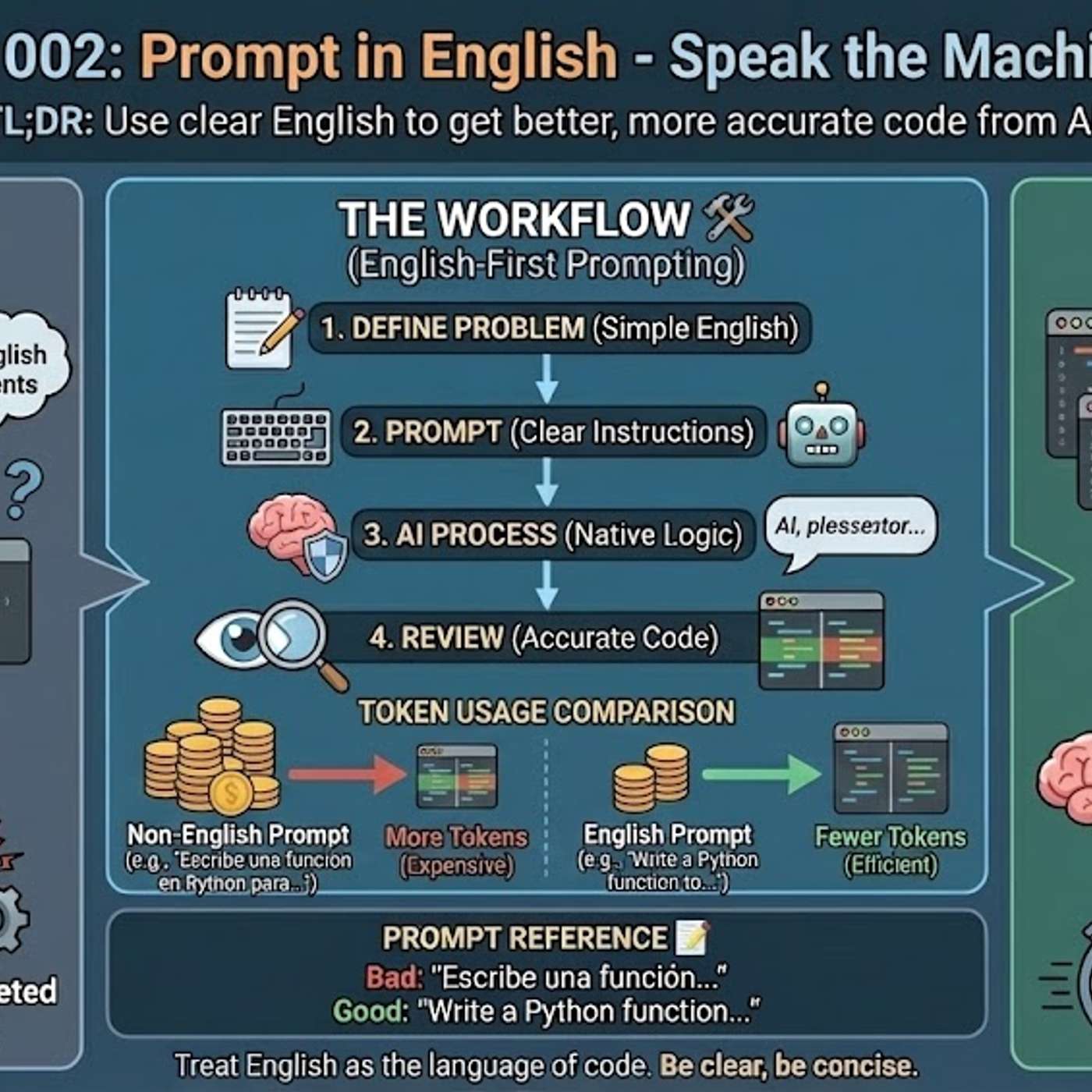
Technical terms like "callback" often lack a precise one-to-one translation in other languages. When a non-English prompt is used, the AI may misinterpret these crucial terms, leading it to misunderstand the user's intent, waste context tokens trying to disambiguate the instruction, and ultimately generate incorrect or suboptimal code.
The biggest impact of AI isn't just generating translations. It's programmatically assessing the quality to decide if a human review is even necessary. This removes the most expensive and time-consuming part of the process, dramatically cutting costs while maintaining quality standards.
Poor translation isn't just a content error; it's a fundamental breach of trust. Walmart's CPO states that data shows 71% of customers lose faith in an entire website or app if the language is incorrect, highlighting localization as a critical component of brand credibility, not just a line item.

Walmart replaced a $25 million/year translation process with an AI platform that costs 1% of the original. The system uses orchestrated AI and human experts to translate the *intent* and cultural nuance behind words—not just literal text—processing millions of items in milliseconds and boosting customer trust.