Get your free personalized podcast brief
We scan new podcasts and send you the top 5 insights daily.
Contrary to popular belief, AI won't replace healthcare workers. By increasing awareness and making it easier for people to identify health issues, AI will drive significantly more demand for healthcare services, intensifying the existing global shortage of professionals, not solving it.

Related Insights
AI is unlikely to replace fields like radiology because of Jevons Paradox. By making scans cheaper and faster, AI increases the overall demand for scans, which in turn can increase the total number of jobs for human radiologists to manage the higher volume and complex cases.

While fears of AI-driven job loss are valid in some industries, healthcare faces a massive and growing supply-demand mismatch. With record shortages of clinicians and unlimited demand, AI is less a job destroyer and more a critical tool to augment existing workers.

The future of healthcare will see AI handling initial patient consultations, effectively becoming the primary care doctor. This will streamline the process, sending patients directly to specialized clinics for diagnostic tests, bypassing traditional, inefficient doctor visits.
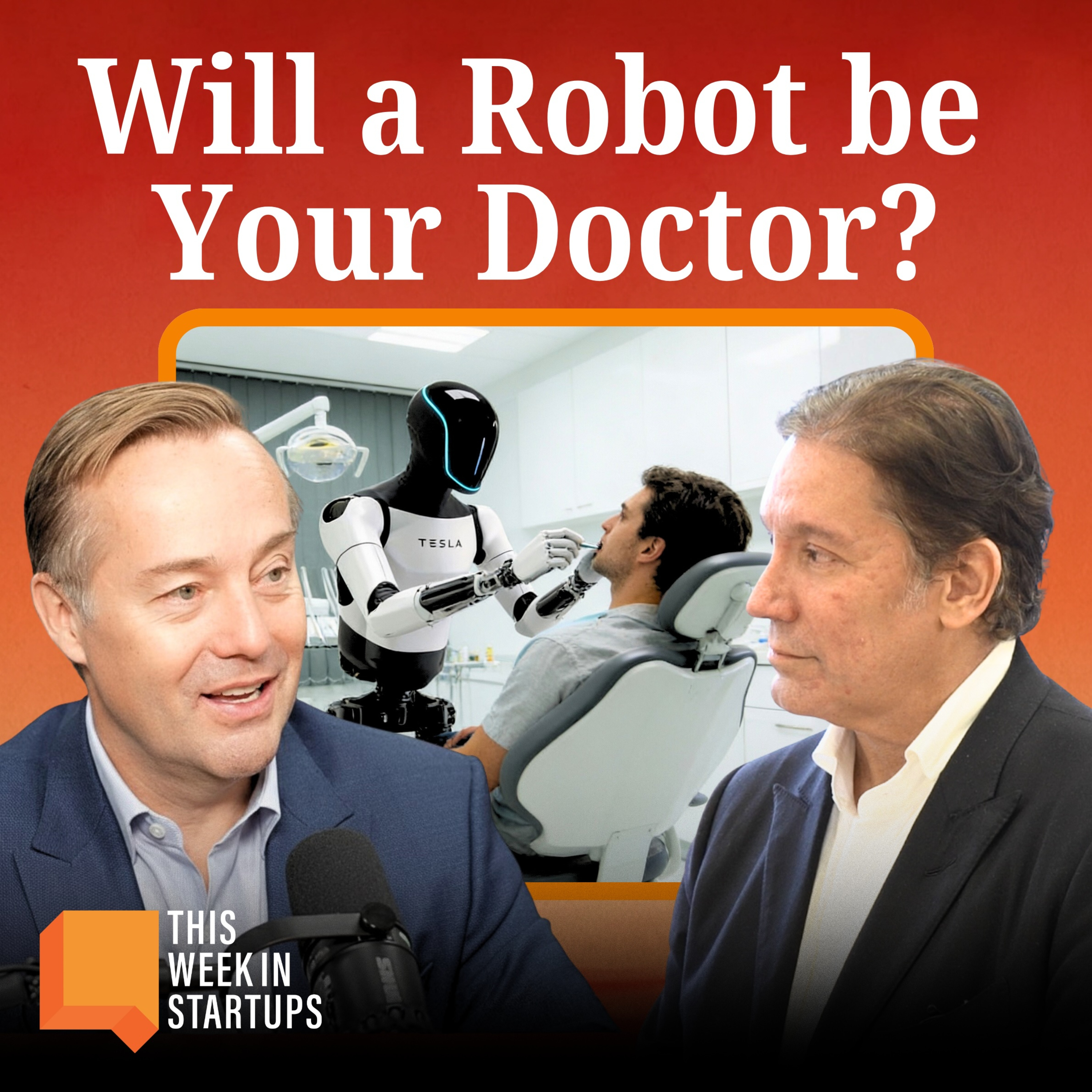
Countering job loss fears, Jensen Huang cites that AI in radiology increased the demand for radiologists. AI automated the *task* (reading scans) but amplified the *purpose* (diagnosing disease). This efficiency allows for more scans and more patients to be treated, ultimately growing the need for the professionals who leverage the technology.

As AI gets better at assessing health data and recommending interventions, the value of human experts will increase, not decrease. Clients will seek experienced coaches for guidance, accountability, and the nuanced application of AI-generated plans. This is already causing a market shift back toward in-person training.

AI's most significant impact won't be on broad population health management, but as a diagnostic and decision-support assistant for physicians. By analyzing an individual patient's risks and co-morbidities, AI can empower doctors to make better, earlier diagnoses, addressing the core problem of physicians lacking time for deep patient analysis.
Jensen Huang uses radiology as an example: AI automated the *task* of reading scans, but this freed up radiologists to focus on their *purpose*: diagnosing disease. This increased productivity and demand, ultimately leading to more jobs, not fewer.

While AI can handle routine tasks like prescription refills, this creates a paradox. If AI siphons off all straightforward cases, a primary care doctor's day could become a relentless series of the most medically complex and emotionally taxing patients, potentially increasing burnout rather than alleviating it.

While the caring economy is often cited as a future source of human jobs, AI's ability to be infinitely patient gives it an "unfair advantage" in roles like medicine and teaching. AI doctors already receive higher ratings for bedside manner, challenging the assumption that these roles are uniquely human.
Instead of replacing doctors, AI will serve as a force multiplier for scarce General Practitioners. By automating paperwork and answering repetitive patient questions, AI frees doctors to focus on high-value human interaction and complex diagnosis.
