Get your free personalized podcast brief
We scan new podcasts and send you the top 5 insights daily.
The history of innovation at companies like Google shows that 'side quests' are high-risk, high-reward. While many fail, projects once seen as tangential, like the DeepMind acquisition, can evolve to become the most critical part of the core business, arguing against a blanket 'no side quests' policy.

Related Insights
OpenAI initially experimented broadly with 'side quests' like a hyperscaler (e.g., Google), launching many initiatives. Facing intense competition and the need to scale compute, it's now consolidating its focus on the 'main quest' of core productivity for business and coding users, marking a significant strategic shift.
Google's early, unstructured engineering culture allowed employees like Noam Shazir to pursue contrarian ideas like language models without direct management. This freedom directly led to foundational products like spell check and the core technology behind AdSense, demonstrating how autonomy can fuel breakthrough innovation.
The Gemini project originated from a one-page memo by Jeff Dean arguing Google was fragmenting its best people, compute, and ideas across separate projects in Google Brain and DeepMind. He advocated for a unified effort to build a single powerful multimodal model, leading to the strategic merger that created Gemini.
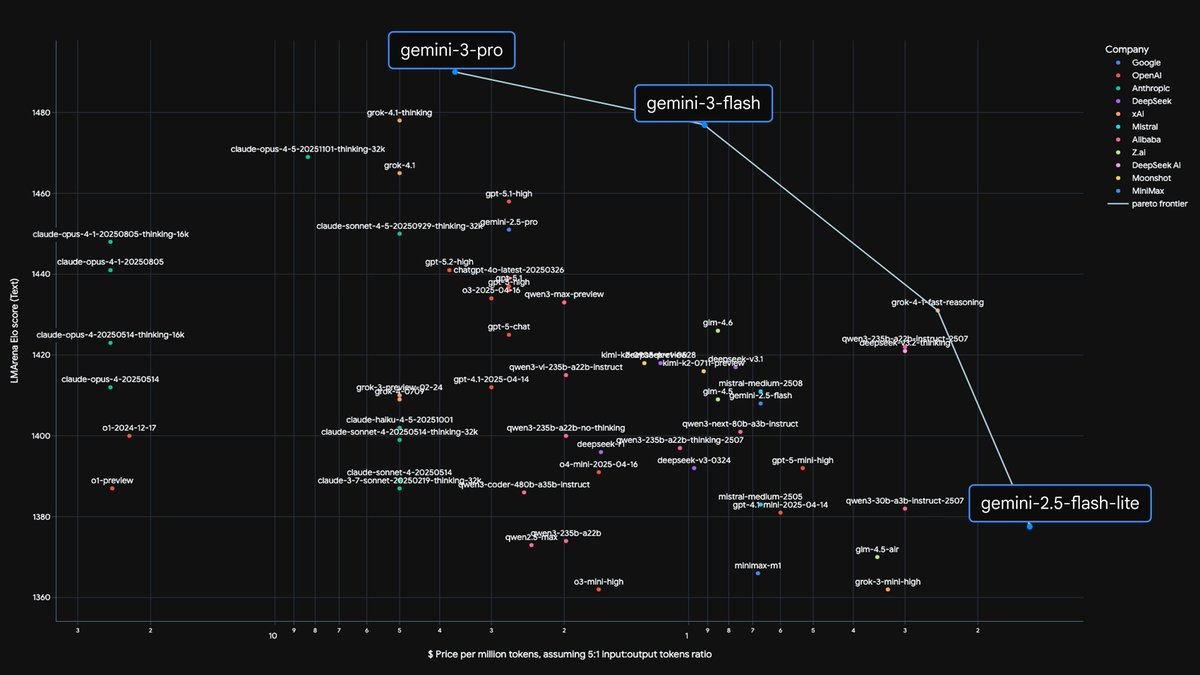
Framing OpenAI as a new hyperscaler, rather than a typical product company, rationalizes its numerous experimental launches. Like Google, it's expected that many "bets" will fail, but the strategy is to explore many fronts to find the next major growth engine.
Frame moonshot projects like Google's Waymo not as singular bets, but as platforms for innovation. Even if the primary goal fails, the project should be structured to spin off valuable 'side effects'—advances in component technologies like AI, mapping, or hardware that benefit the core business.
Leadership actively evaluates the maturity of core technologies like Gemini to decide when to "double down" on specific applications, such as infusing AI into learning science. This treats timing not as a passive deadline, but as a core management principle for pausing or accelerating projects.
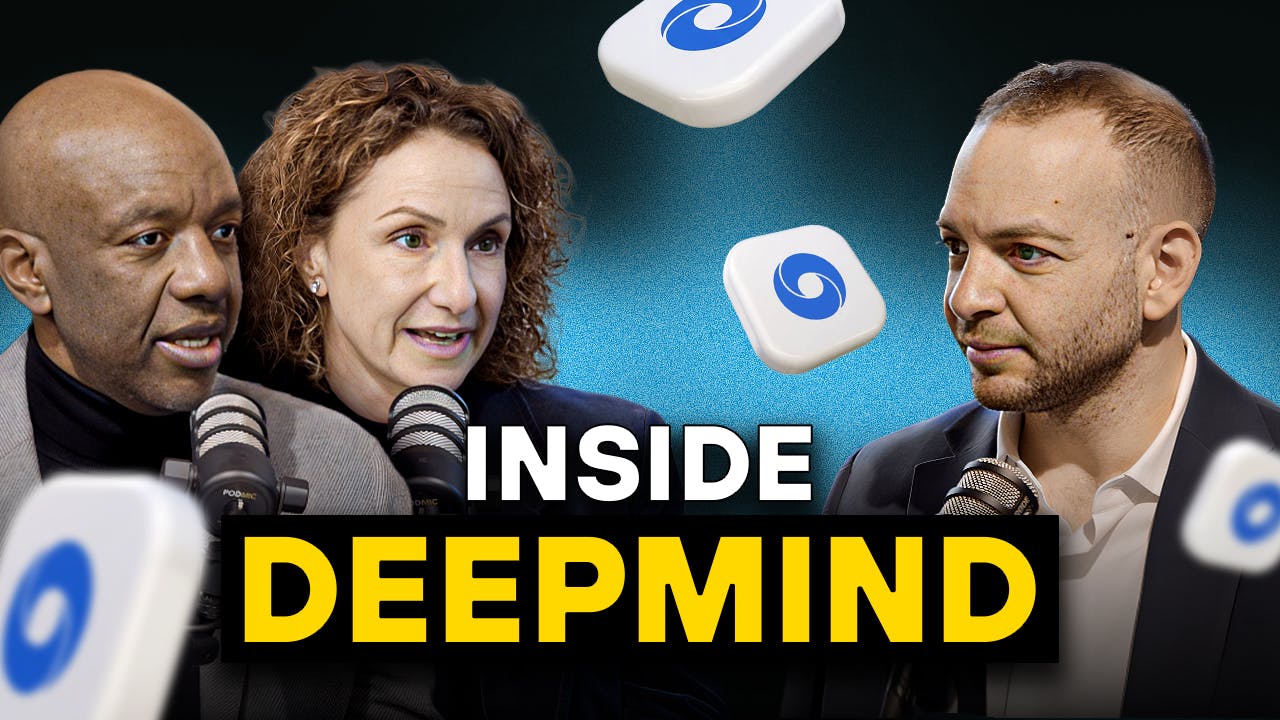
OpenAI is strategically deprioritizing experimental projects like hardware and a web browser. This signals a shift to concentrate resources on its core, most profitable fronts—enterprise and developer tools—as competition from Anthropic and Google intensifies.
By embedding product teams directly within the research organization, Google creates a tight feedback loop. Instead of receiving models "over the wall," product and research teams co-develop them, aligning technical capabilities with customer needs from the start.

DeepMind sets ambitious, top-down research agendas but grants interdisciplinary teams (e.g., bioethicists and neuroscientists) the autonomy to explore solutions. This model, inspired by Bell Labs, the Apollo program, and Pixar, fosters a culture of both directed research and creative freedom.
Demis Hassabis reveals his original vision was to keep AI in the lab longer to solve fundamental scientific problems, like curing cancer. The unexpected commercial success of chatbots created an intense 'race condition' that altered this 'purer' scientific path, bringing both challenges and a massive influx of resources.