Get your free personalized podcast brief
We scan new podcasts and send you the top 5 insights daily.
The Gemini project originated from a one-page memo by Jeff Dean arguing Google was fragmenting its best people, compute, and ideas across separate projects in Google Brain and DeepMind. He advocated for a unified effort to build a single powerful multimodal model, leading to the strategic merger that created Gemini.
Related Insights
Just as Microsoft's Internet Explorer crushed first-mover Netscape, Google's Gemini is poised to overtake ChatGPT. Gemini's access to Google's vast proprietary data from Search and YouTube gives it an insurmountable advantage, making its eventual dominance over OpenAI seem inevitable.

Historically criticized for poor productization, Google is showing a turnaround. Gemini features like 'Dynamic View,' which creates interactive presentations from prompts, demonstrate a newfound ability to translate powerful AI into novel, user-centric products, challenging OpenAI's lead in product-led growth.

Google's strategy of integrating its AI, Gemini, directly into its widely-used Chrome browser gives it a massive distribution advantage over standalone tools like ChatGPT. By making AI a seamless part of the user's existing workflow, Google can make its tool the default choice, which marketers must optimize for.

While many credit co-founder Sergey Brin's return for revitalizing Google's AI, the real catalyst was likely CEO Sundar Pichai's less glamorous corporate reorganization. Centralizing AI development by merging units like DeepMind was a classic management move that proved essential for focused execution.
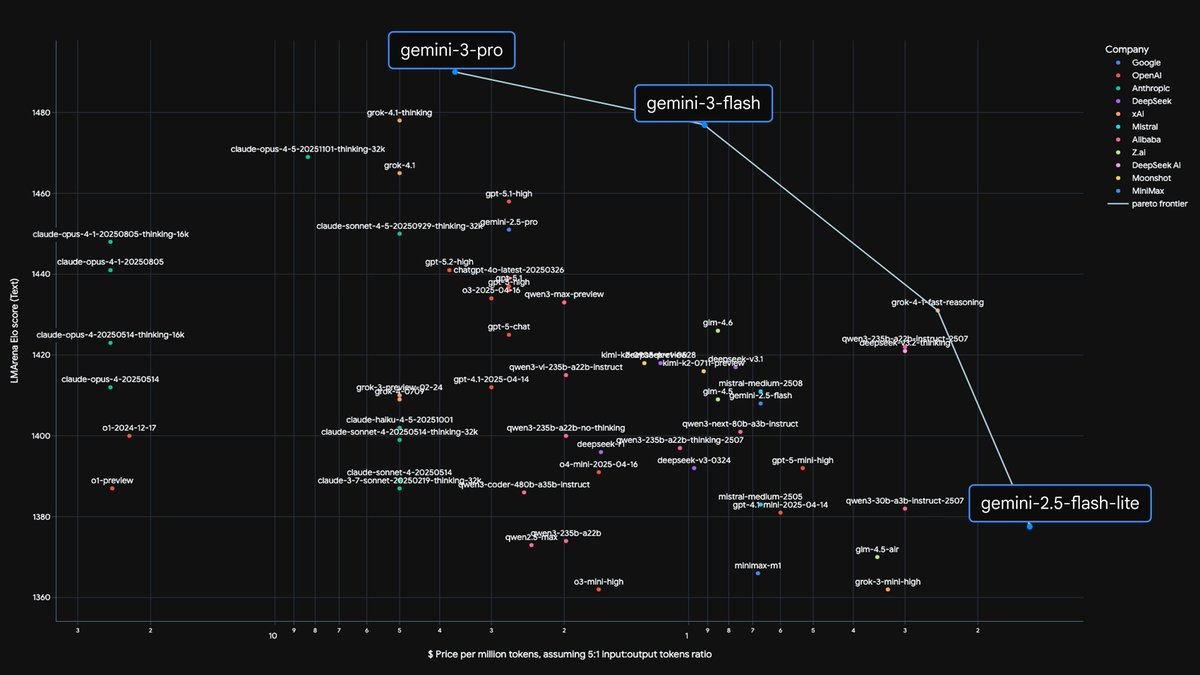
Google's Gemini models show that a company can recover from a late start to achieve technical parity, or even superiority, in AI. However, this comeback highlights that the real challenge is translating technological prowess into product market share and user adoption, where it still lags.

Google's Gemini is integrating user data from Gmail, Photos, and Search. This isn't just a feature; it's a competitive strategy to build a moat. By leveraging its proprietary ecosystem of personal data, Google shifts the battleground from raw model performance to deep personalization that competitors like OpenAI cannot easily replicate.

While ChatGPT still dominates (90% usage), Google Gemini has surged from 33% to 51% adoption in just one year. This rapid growth is likely driven by its deep integration into the Google Workspace ecosystem that businesses already use and pay for.

Unlike competitors who specialize, Google is the only company operating at scale across all four key layers of the AI stack. It has custom silicon (TPUs), a major cloud platform (GCP), a frontier foundational model (Gemini), and massive application distribution (Search, YouTube). This vertical integration is a unique strategic advantage in the AI race.
Google's strategy involves building specialized models (e.g., Veo for video) to push the frontier in a single modality. The learnings and breakthroughs from these focused efforts are then integrated back into the core, multimodal Gemini model, accelerating its overall capabilities.
Google's AI, Gemini, is positioned to win the AI race against first-mover ChatGPT. Similar to how Internet Explorer leveraged Microsoft's ecosystem to beat Netscape, Gemini's integration with Google's vast search and YouTube data gives it an insurmountable long-term competitive advantage.