Get your free personalized podcast brief
We scan new podcasts and send you the top 5 insights daily.
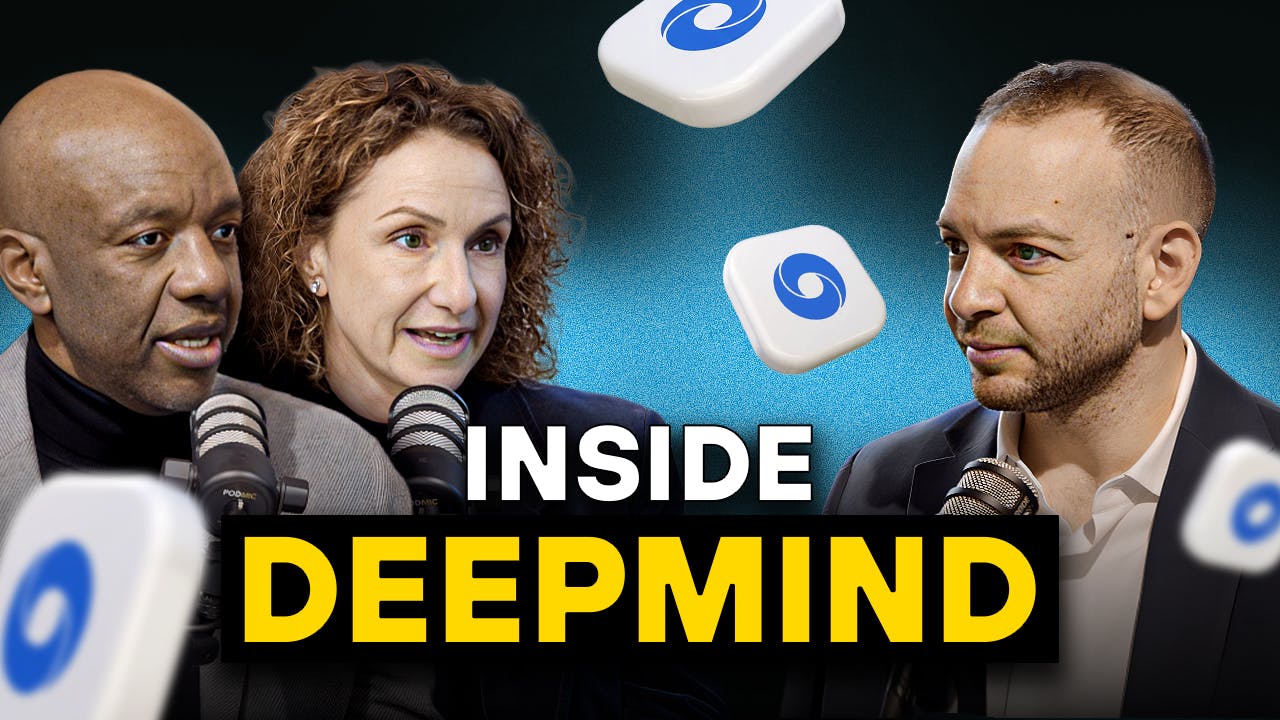
DeepMind sets ambitious, top-down research agendas but grants interdisciplinary teams (e.g., bioethicists and neuroscientists) the autonomy to explore solutions. This model, inspired by Bell Labs, the Apollo program, and Pixar, fosters a culture of both directed research and creative freedom.
Related Insights
The most successful companies deploying AI use a "leadership lab and crowd" model. Leadership provides clear direction, while the entire organization is given access to tools to experiment and discover novel use cases. An internal team then harvests these grassroots ideas for strategic implementation.

In the fast-moving AI space, rigid long-term planning is futile. Lovable uses a flexible six-month product roadmap, while ElevenLabs uses quarterly initiatives for alignment but gives its foundational research teams total freedom from timelines to foster innovation.

Google's early, unstructured engineering culture allowed employees like Noam Shazir to pursue contrarian ideas like language models without direct management. This freedom directly led to foundational products like spell check and the core technology behind AdSense, demonstrating how autonomy can fuel breakthrough innovation.
Instead of a linear handoff, Google fosters a continuous loop where real-world problems inspire research, which is then applied to products. This application, in turn, generates the next set of research questions, creating a self-reinforcing cycle that accelerates breakthroughs.

Mark Zuckerberg has structured his top AI research group, TBD, with a "no deadlines" policy. He argues that for true research with many unknown problems, imposing artificial timelines leads to sub-optimal outcomes. The goal is to allow the team to pursue the "full thing" without constraints, fostering deeper innovation.

Getting hired at a premier AI lab like Google DeepMind often bypasses traditional applications. Top researchers actively scout and directly contact individuals who produce work that demonstrates excellent "research taste." The key is to independently identify and pursue fruitful research directions, signaling an innate ability to innovate.

Contrary to the belief that it has faded, Google's culture of employee-driven innovation persists. Roughly 20% of projects in the experimental Google Labs, such as the 'Learn Your Way' educational tool, originate from employees' '20% time' outside their core roles and teams.
Leadership actively evaluates the maturity of core technologies like Gemini to decide when to "double down" on specific applications, such as infusing AI into learning science. This treats timing not as a passive deadline, but as a core management principle for pausing or accelerating projects.
By embedding product teams directly within the research organization, Google creates a tight feedback loop. Instead of receiving models "over the wall," product and research teams co-develop them, aligning technical capabilities with customer needs from the start.

Products like video generator Flow and research tool NotebookLM are not built in a vacuum. Google Labs actively seeks input from creatives like filmmakers and authors to shape experimental AI tools, ensuring they solve real-world problems for non-technical users from the start.