Get your free personalized podcast brief
We scan new podcasts and send you the top 5 insights daily.
Contrary to fearing automation, employees will embrace it when given the tools and autonomy. Dan Martell's AI hackathon revealed that teams instinctively built solutions to automate their own core tasks, demonstrating a desire to move on to higher-level, more creative work.

Related Insights
Many employees secretly use AI for huge efficiency gains. To harness this, leaders must create programs that reward sharing these methods, rather than making workers fear punishment or layoffs. This allows innovative, bottom-up AI usage to be scaled across the organization.

Instead of relying solely on top-down, consultant-led workflow automation, enterprises should empower individual employees with AI tools. This builds user fluency and intuition, allowing them to pull AI into their own workflows, resulting in greater overall impact and less disempowerment.
The common fear of AI eliminating jobs is misguided. In practice, AI automates specific, often administrative, tasks within a role. This allows human workers to offload minutiae and focus on uniquely human skills like relationship building and strategic thinking, ultimately increasing their leverage and value.

Frame internal AI initiatives not as a way to replace employees, but to automate their chores. This frees them to move 'up the stack' to perform higher-value functions like client relations, creative strategy, and founder meetings, ultimately increasing overall output.
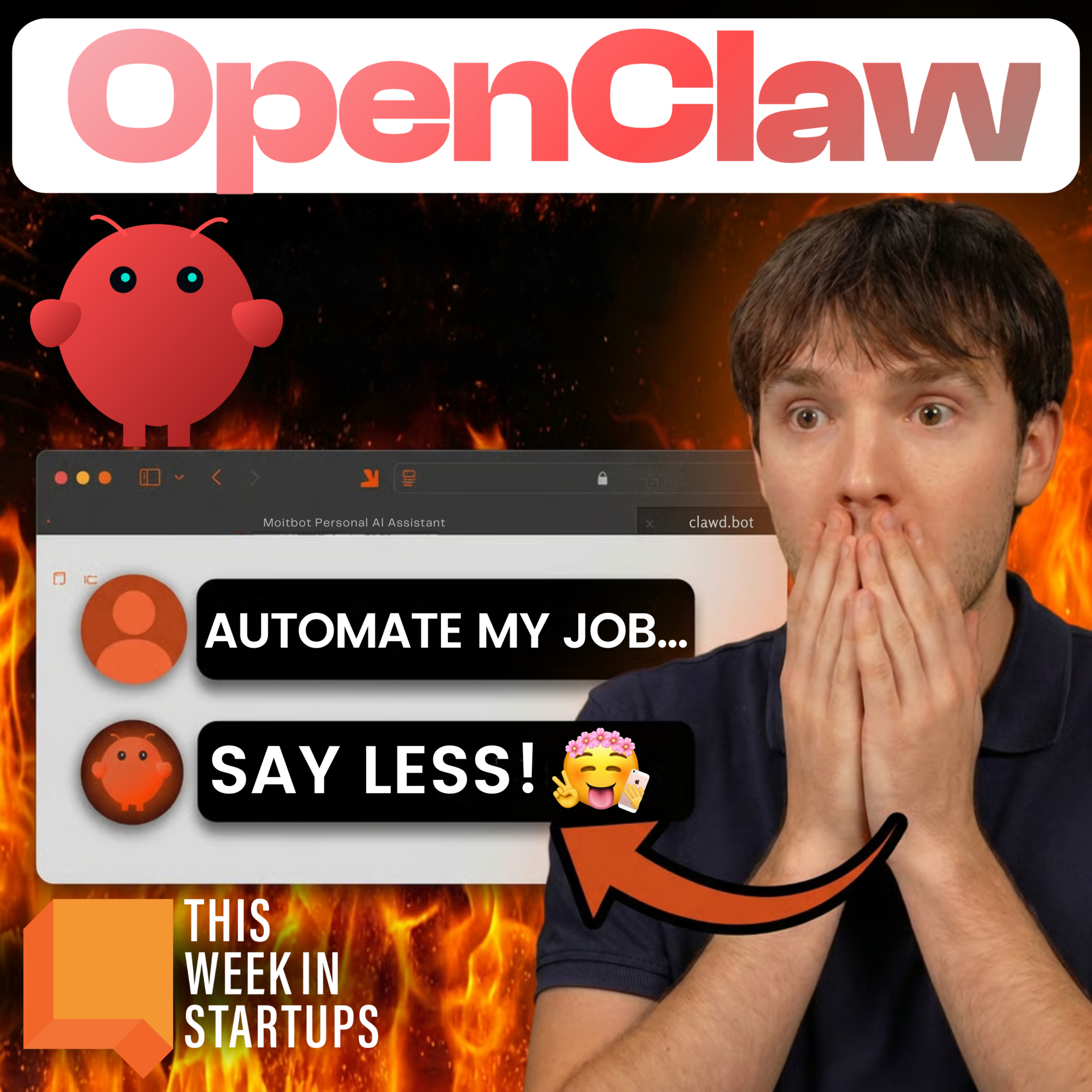
To combat employee fear of replacement, frame AI automation as a path to promotion. By automating their current IC-level tasks, employees free themselves to operate at the next level, effectively managing their new 'AI direct report' and taking on more strategic work.

Enterprises face hurdles like security and bureaucracy when implementing AI. Meanwhile, individuals are rapidly adopting tools on their own, becoming more productive. This creates bottom-up pressure on organizations to adopt AI, as empowered employees set new performance standards and prove the value case.

To accelerate AI adoption and overcome fear of displacement, OneMind's CEO has a policy to financially reward and find new roles for employees who successfully eliminate their own positions using AI. This turns a threat into an incentive for innovation.

Kahlow actively encourages her team to find ways to replace their own roles with AI. She promises that those who succeed in automating their job will be given a new, higher-value position within the company.

AI tools serve as an "antidote to the managerial revolution" by empowering individual contributors to build and deploy solutions directly. This bypasses bureaucratic layers of middle management, accelerates innovation, and shifts the power balance within organizations back to frontline workers.

The podcast team's willingness to work weekends using the OpenClaw AI agent reveals a key insight: technology that eliminates tedious chores can be a massive motivator, increasing employee engagement and excitement far beyond simple productivity gains.