Get your free personalized podcast brief
We scan new podcasts and send you the top 5 insights daily.
An AI assistant suggested putting a database password in plain text—a critical security flaw an experienced developer would immediately reject. This demonstrates that relying on AI without a deep understanding of best practices can lead to amateur mistakes and severe vulnerabilities.

Related Insights
Advanced AI coding tools rarely make basic syntax errors. Their mistakes have evolved to be more subtle and conceptual, akin to those a hasty junior developer might make. They often make incorrect assumptions on the user's behalf and proceed without verification, requiring careful human oversight.

Data from scans of thousands of live, 'vibe-coded' apps shows a high failure rate for security. Roughly 33% contain serious vulnerabilities like missing access controls or unvalidated webhooks. This risk should be assumed to exist in any unaudited AI-generated prototype until proven otherwise.

Companies are encouraging non-technical employees to use AI tools to build solutions and automate workflows. These "citizen developers," lacking a technical background, inadvertently create risks by mishandling sensitive data, deleting system artifacts, or leaking corporate IP into external AI models, creating a new attack surface for security teams to manage.

The rise of AI-generated code breaks a fundamental principle of software security: developer accountability. When developers don't write or even see the code their tools produce, they can no longer be held responsible for its security. This requires a complete rethink of security ownership and processes.

The primary danger of AI-generated code is not obvious errors, but subtle flaws hidden within code that looks and feels complete. It runs and demos well, but may fail on critical edge cases involving security or concurrency that a simple 'vibe check' will not catch.
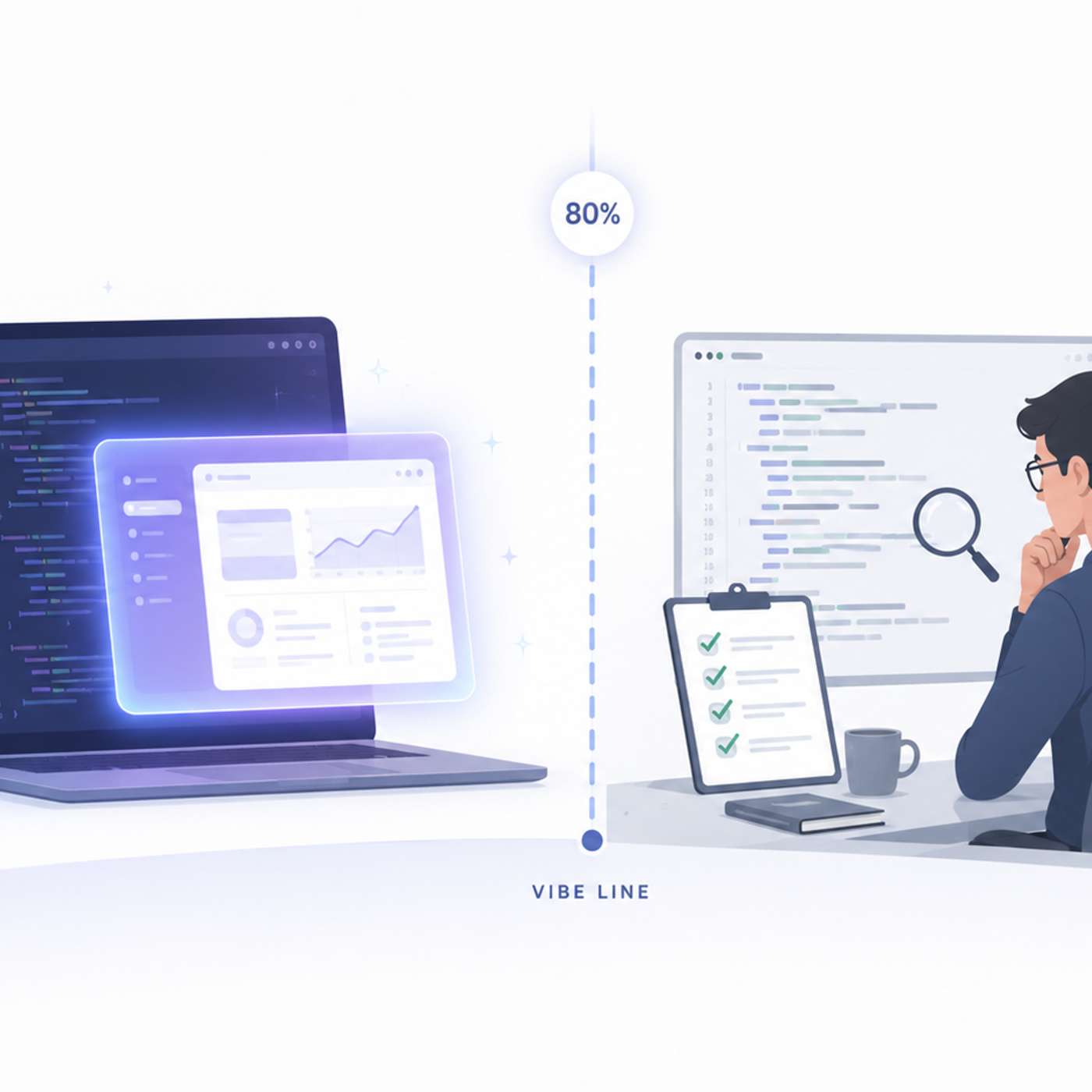
AI tools that automatically write applications often pull assets from open-source libraries. This creates a massive security risk, as these agents must be explicitly directed to use secure, vetted repositories to avoid introducing vulnerabilities at scale without human oversight.

'Vibe coding' describes using AI to generate code for tasks outside one's expertise. While it accelerates development and enables non-specialists, it relies on a 'vibe' that the code is correct, potentially introducing subtle bugs or bad practices that an expert would spot.

Despite their sophistication, AI agents often read their core instructions from a simple, editable text file. This makes them the most privileged yet most vulnerable "user" on a system, as anyone who learns to manipulate that file can control the agent.
AI coding tools disproportionately amplify the productivity of senior, sophisticated engineers who can effectively guide them and validate their output. For junior developers, these tools can be a liability, producing code they don't understand, which can introduce security bugs or fail code reviews. Success requires experience.

Moltbook was reportedly created by an AI agent instructed to build a social network. This "bot vibe coding" resulted in a system with massive, easily exploitable security holes, highlighting the danger of deploying unaudited AI-generated infrastructure.
