Get your free personalized podcast brief
We scan new podcasts and send you the top 5 insights daily.
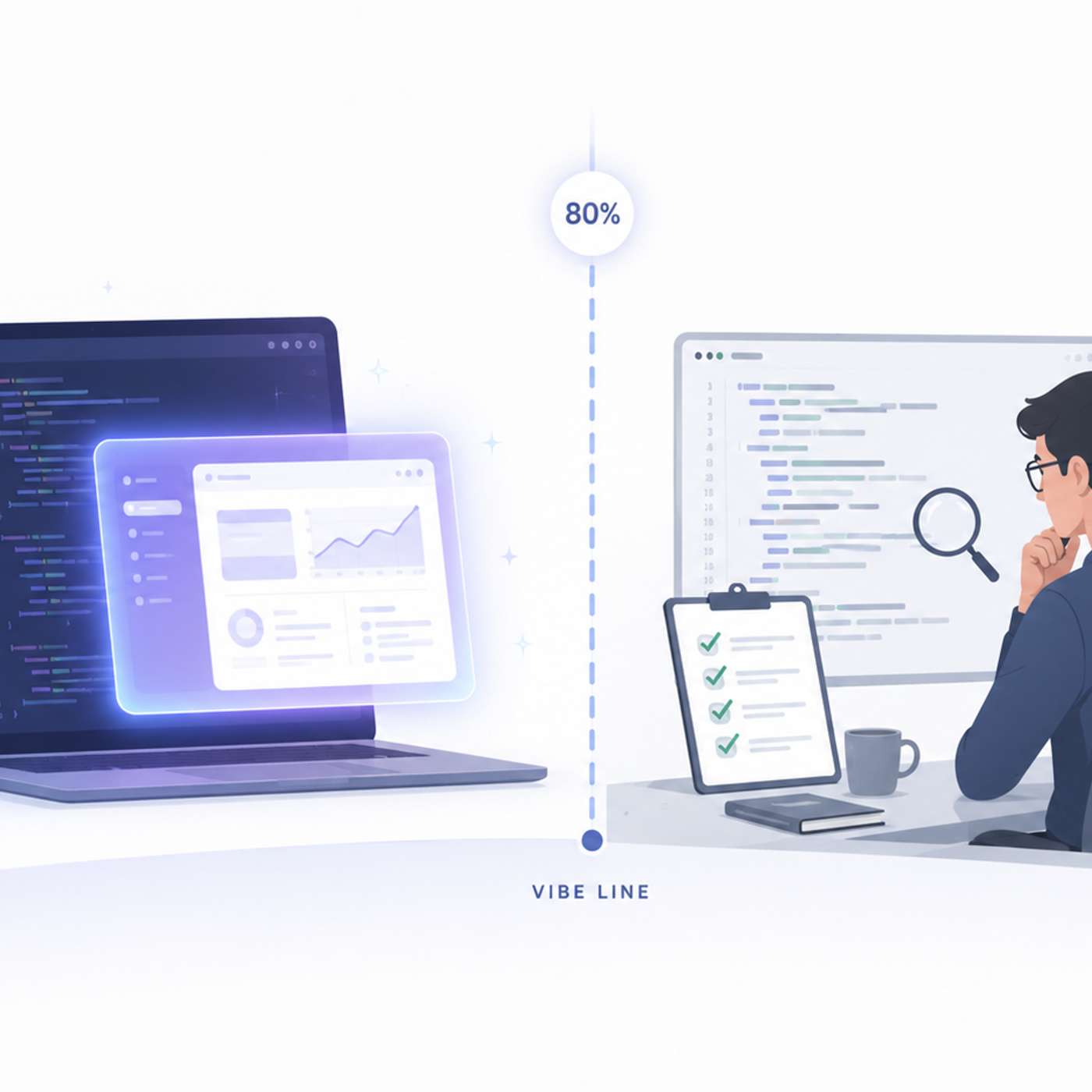
The primary danger of AI-generated code is not obvious errors, but subtle flaws hidden within code that looks and feels complete. It runs and demos well, but may fail on critical edge cases involving security or concurrency that a simple 'vibe check' will not catch.
Related Insights
Advanced AI coding tools rarely make basic syntax errors. Their mistakes have evolved to be more subtle and conceptual, akin to those a hasty junior developer might make. They often make incorrect assumptions on the user's behalf and proceed without verification, requiring careful human oversight.

AI coding tools let solo developers 'vibe code' impressive prototypes quickly, creating a false belief that they are production-ready. These projects often lack the robust architecture needed to scale, requiring expensive rewrites by 'God level' developers to fix the resulting spaghetti code.

AI can generate comprehensive documentation and extensive test suites in an instant. This devalues them as signals of a project's maturity or quality. The new, more reliable indicator of quality is actual usage and battle-testing, as AI-generated code might be technically perfect but practically unproven.

The trend of using AI to rapidly generate code without deep human comprehension ("vibe coding") creates software no one can fully evaluate. This practice is setting the stage for a catastrophic "Chernobyl moment" when such code is deployed in a mission-critical application.

The primary danger in AI safety is not a lack of theoretical solutions but the tendency for developers to implement defenses on a "just-in-time" basis. This leads to cutting corners and implementation errors, analogous to how strong cryptography is often defeated by sloppy code, not broken algorithms.

AI tools that automatically write applications often pull assets from open-source libraries. This creates a massive security risk, as these agents must be explicitly directed to use secure, vetted repositories to avoid introducing vulnerabilities at scale without human oversight.

'Vibe coding' describes using AI to generate code for tasks outside one's expertise. While it accelerates development and enables non-specialists, it relies on a 'vibe' that the code is correct, potentially introducing subtle bugs or bad practices that an expert would spot.

AI agents can generate and merge code at a rate that far outstrips human review. While this offers unprecedented velocity, it creates a critical challenge: ensuring quality, security, and correctness. Developing trust and automated validation for this new paradigm is the industry's next major hurdle.
AI can generate code that passes initial tests and QA but contains subtle, critical flaws like inverted boolean checks. This creates 'trust debt,' where the system seems reliable but harbors hidden failures. These latent bugs are costly and time-consuming to debug post-launch, eroding confidence in the codebase.

Recent incidents of AI agents causing catastrophic production failures are ending the hype around "vibe coding." The industry consensus is shifting: AI is a powerful productivity multiplier for skilled developers but is not yet capable of managing the complexity, maintenance, and risk of professional software engineering on its own.
