Get your free personalized podcast brief
We scan new podcasts and send you the top 5 insights daily.
The AI industry is failing at public perception because it lacks a figure like Steve Jobs who can communicate an earnest, optimistic vision. Current leaders often provoke negative reactions, leaving a narrative void filled with fear about job loss and misuse, rather than excitement about AI's potential to empower humanity.

Related Insights
Founders making glib comments about AI likely ending the world, even in jest, creates genuine fear and opposition among the public. This humor backfires, as people facing job automation and rising energy costs question why society is pursuing this technology at all, fueling calls to halt progress.

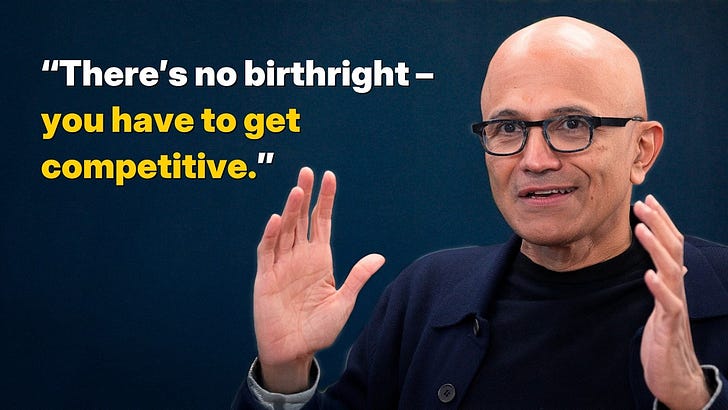
Nadella adopts a grounded perspective on AI's current state. He likens it to past technological revolutions, viewing it as a powerful tool that enhances human intellect and productivity, rather than subscribing to the more mystical 'final revolution' narrative about AGI.
The AI industry faces a major perception problem, fueled by fears of job loss and wealth inequality. To build public trust, tech companies should emulate Gilded Age industrialists like Andrew Carnegie by using their vast cash reserves to fund tangible public benefits, creating a social dividend.
The most effective strategy for AI companies to manage public backlash is to make their products pragmatically helpful to as many people as possible. Instead of just warning about disruption ('yelling fire'), companies should focus their communication on providing tools ('paddles') that help people navigate the changes.

Unlike previous technologies like the internet or smartphones, which enjoyed years of positive perception before scrutiny, the AI industry immediately faced a PR crisis of its own making. Leaders' early and persistent "AI will kill everyone" narratives, often to attract capital, have framed the public conversation around fear from day one.

There's an 'eye-watering' gap between how AI experts and the public view AI's benefits. For example, 74% of experts believe AI will boost productivity, compared to only 17% of the public. This massive divergence in perception highlights a major communication and trust challenge for the industry.
AI is experiencing a political backlash from day one, unlike social media's long "honeymoon" period. This is largely self-inflicted, as industry leaders like Sam Altman have used apocalyptic, "it might kill everyone" rhetoric as a marketing tool, creating widespread fear before the benefits are fully realized.
Unlike the dot-com or mobile eras where businesses eagerly adapted, AI faces a unique psychological barrier. The technology triggers insecurity in leaders, causing them to avoid adoption out of fear rather than embrace it for its potential. This is a behavioral, not just technical, hurdle.
By openly discussing AI-driven unemployment, tech leaders have made their industry the default scapegoat. If unemployment rises for any reason, even a normal recession, AI will be blamed, triggering severe political and social backlash because leaders have effectively "confessed to the crime" ahead of time.

Unlike other tech rollouts, the AI industry's public narrative has been dominated by vague warnings of disruption rather than clear, tangible benefits for the average person. This communication failure is a key driver of widespread anxiety and opposition.
