Get your free personalized podcast brief
We scan new podcasts and send you the top 5 insights daily.
A TikToker giving military target coordinates for Israeli infrastructure to Iran exemplifies a new, destabilizing reality. Individual citizens, without state backing, can now use their platforms to directly influence foreign military actions, blurring the lines between commentator, propagandist, and combatant in modern warfare.

Related Insights
Many foreign-based social media accounts promoting extremist views aren't state-sponsored propaganda. Instead, they are run by individuals in developing nations who have discovered that inflammatory content is the easiest way to gain followers and monetize their accounts. This reframes the issue from purely geopolitical influence to include economic opportunism.

Unlike historical propaganda which used centralized broadcasts, today's narrative control is decentralized and subtle. It operates through billions of micro-decisions and algorithmic nudges that shape individual perceptions daily, achieving macro-level control without any overt displays of power.

In the current media landscape, the political impact of military casualties depends on their virality. A non-visual event described in a traditional news article lacks the resonance of a graphic video shared on platforms like TikTok. This creates a grim calculus where policy is only influenced by losses that are visually shocking and widely shared.
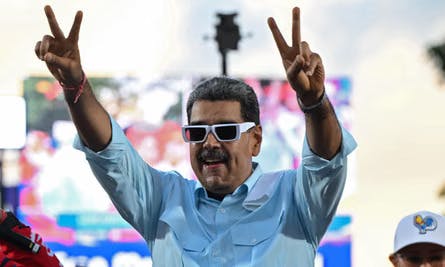
The public is now an active participant in information warfare, able to influence narratives by creating viral content about trivial details. This turns serious geopolitical events into a form of entertainment, distracting the populace from substantive issues like economic impact or military strategy.

A new wave of Chinese nationalists, known as "little pinks," fuses patriotism with the tactics of online fan culture ("stans"). They use coordinated social media strategies, typically seen among celebrity fan groups, to attack political targets and promote the state's agenda, creating a potent form of digital nationalism.

Rather than surgical strikes, which have a poor historical track record, the most effective foreign support for Iranian protesters is restoring their internet connectivity. The regime kills in the dark; offensive cyber operations that tear down its 'digital iron wall' directly empower citizens and expose atrocities.

Major conflicts are defined by the media technology that documents them (e.g., photography, TV, Twitter). The Iran conflict marks a new era where prediction markets are the defining technology, documenting events through public wagers and creating a new form of decentralized intelligence.

High-level US military and intelligence figures see independent online voices as a primary geopolitical threat. They fear that uncontrolled narratives can foster nationalism (like Brexit), which could lead to the dissolution of key alliances like the EU and NATO, disrupting the established world order.

The conflict in Iran demonstrates a new warfare paradigm. Dissidents use services like Starlink to get information out, while the regime employs sophisticated blocking mechanisms to create near-total packet loss, making it impossible for outsiders to get a clear picture of events.
Social influence has become even more concentrated in the hands of a few. While the 'super spreader' phenomenon has always existed for ideas and diseases, modern technology dramatically enhances their power by increasing their reach and, crucially, making them easier for others to identify and target.
