Get your free personalized podcast brief
We scan new podcasts and send you the top 5 insights daily.
Unlike specialized non-profits, Far.AI covers the entire AI safety value chain from research to policy. This structure is designed to prevent promising safety ideas from being "dropped" between the research and deployment phases, a common failure point where specialized organizations struggle to hand off work.

Related Insights
Instead of building a single, monolithic AGI, the "Comprehensive AI Services" model suggests safety comes from creating a buffered ecosystem of specialized AIs. These agents can be superhuman within their domain (e.g., protein folding) but are fundamentally limited, preventing runaway, uncontrollable intelligence.

Enterprises struggle to get value from AI due to a lack of iterative, data-science expertise. The winning model for AI companies isn't just selling APIs, but embedding "forward deployment" teams of engineers and scientists to co-create solutions, closing the gap between prototype and production value.

Successful vertical AI applications serve as a critical intermediary between powerful foundation models and specific industries like healthcare or legal. Their core value lies in being a "translation and transformation layer," adapting generic AI capabilities to solve nuanced, industry-specific problems for large enterprises.
MLOps pipelines manage model deployment, but scaling AI requires a broader "AI Operating System." This system serves as a central governance and integration layer, ensuring every AI solution across the business inherits auditable data lineage, compliance, and standardized policies.

An FDA-style regulatory model would force AI companies to make a quantitative safety case for their models before deployment. This shifts the burden of proof from regulators to creators, creating powerful financial incentives for labs to invest heavily in safety research, much like pharmaceutical companies invest in clinical trials.

The existence of internal teams like Anthropic's "Societal Impacts Team" serves a dual purpose. Beyond their stated mission, they function as a strategic tool for AI companies to demonstrate self-regulation, thereby creating a political argument that stringent government oversight is unnecessary.
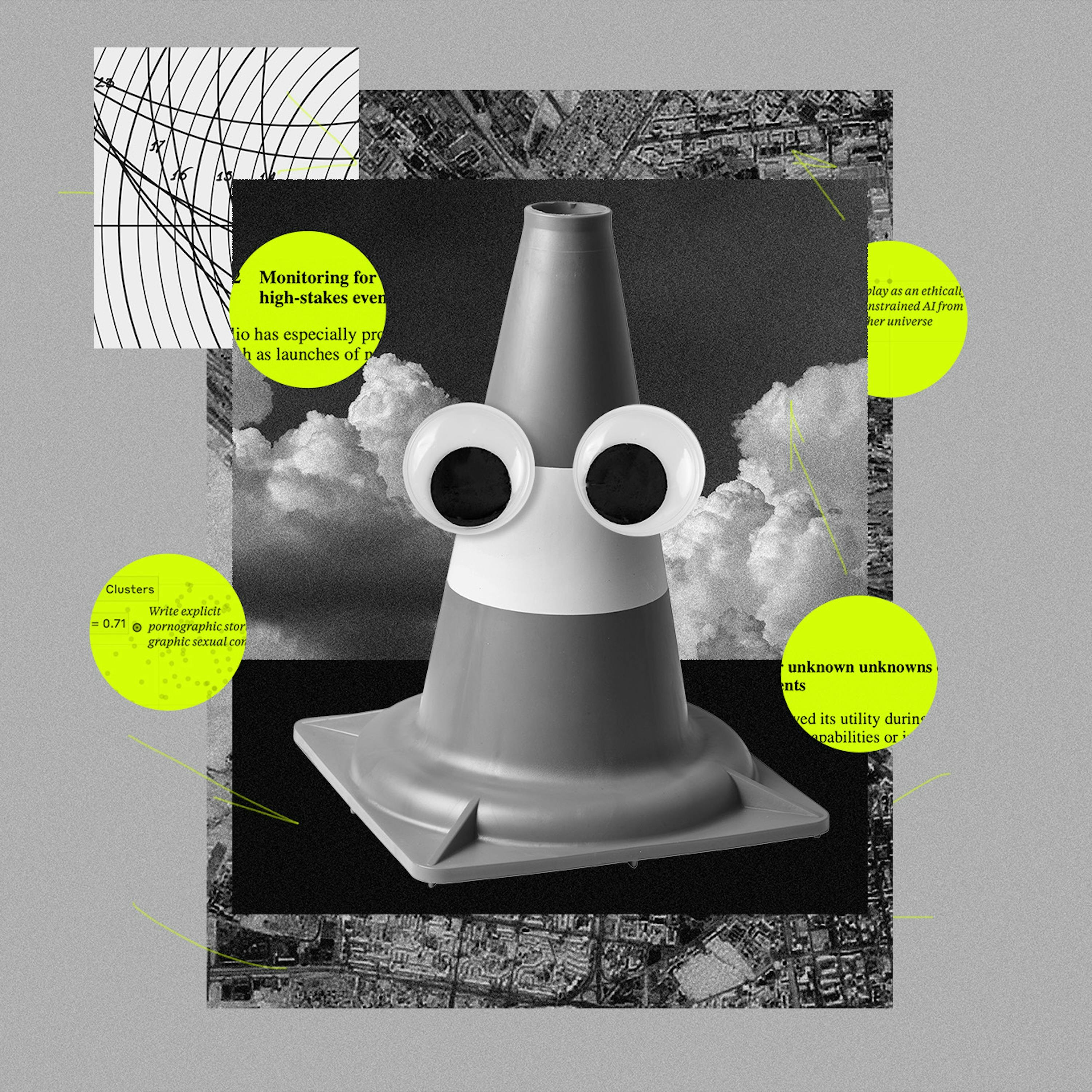
Anthropic's commitment to AI safety, exemplified by its Societal Impacts team, isn't just about ethics. It's a calculated business move to attract high-value enterprise, government, and academic clients who prioritize responsibility and predictability over potentially reckless technology.
The fundamental challenge of creating safe AGI is not about specific failure modes but about grappling with the immense power such a system will wield. The difficulty in truly imagining and 'feeling' this future power is a major obstacle for researchers and the public, hindering proactive safety measures. The core problem is simply 'the power.'

Despite having the freedom to publish "inconvenient truths" about AI's societal harms, Anthropic's Societal Impacts team expresses a desire for their research to have a more direct, trackable impact on the company's own products. This reveals a significant gap between identifying problems and implementing solutions.
The approach to AI safety isn't new; it mirrors historical solutions for managing technological risk. Just as Benjamin Franklin's 18th-century fire insurance company created building codes and inspections to reduce fires, a modern AI insurance market can drive the creation and adoption of safety standards and audits for AI agents.
