Get your free personalized podcast brief
We scan new podcasts and send you the top 5 insights daily.
The dynamic between the two superpowers has fundamentally shifted. Economic and technological issues, from AI and semiconductors to biotech and pharma, are no longer seen as purely commercial. Instead, both Washington and Beijing view them through a national security lens, treating them as potential weapons in a broader strategic conflict.

Related Insights
The dispute highlights a core tension for democracies: how to compete with authoritarian states like China, which can command its AI labs without debate. The pressure to maintain a military edge may force the U.S. to adopt more coercive policies towards its own private tech companies, compromising the free market principles it aims to defend.

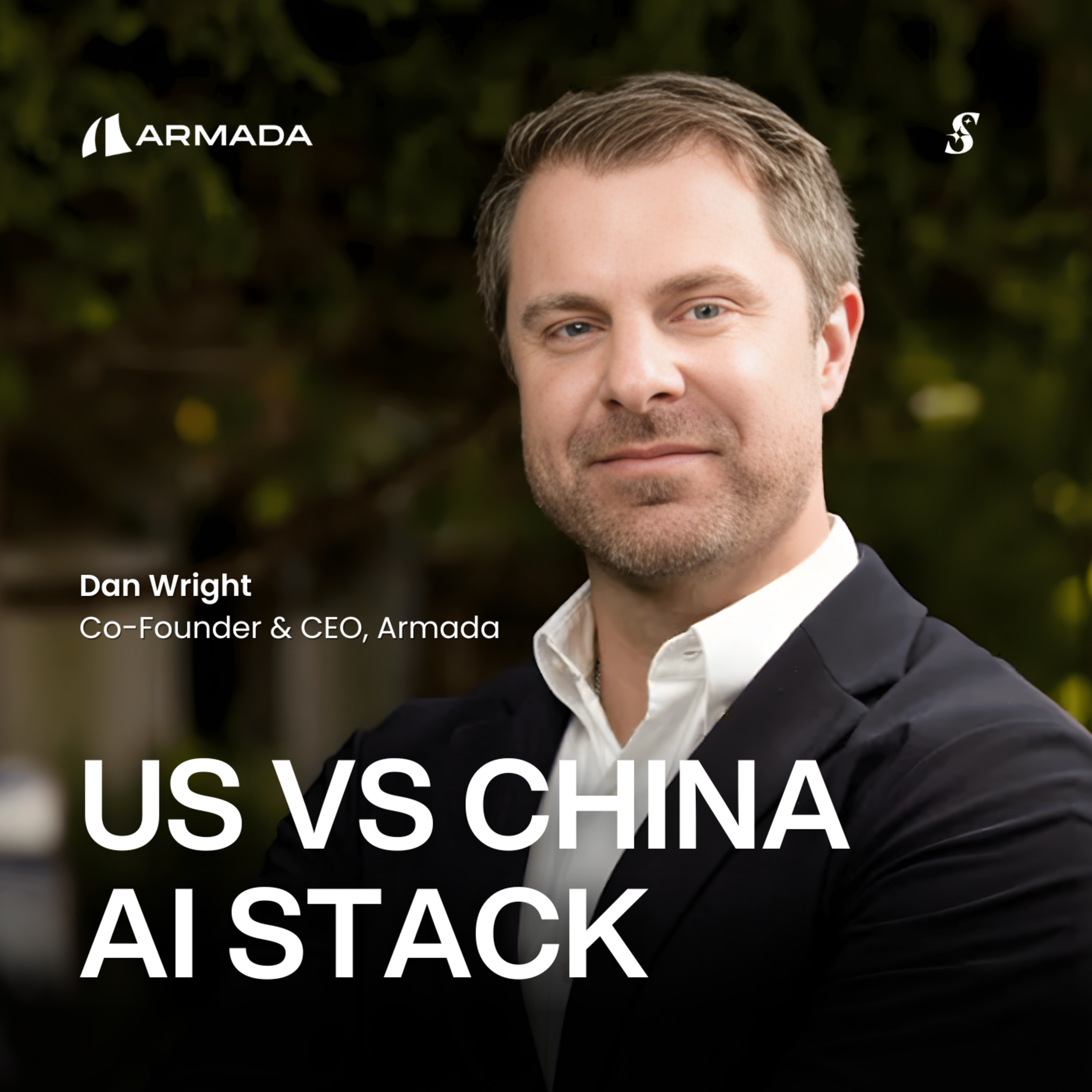
The competition in AI infrastructure is framed as a binary, geopolitical choice. The future will be dominated by either a US-led AI stack or a Chinese one. This perspective positions edge infrastructure companies as critical players in national security and technological dominance.
The justification for accelerating AI development to beat China is logically flawed. It assumes the victor wields a controllable tool. In reality, both nations are racing to build the same uncontrollable AI, making the race itself, not the competitor, the primary existential threat.

The same governments pushing AI competition for a strategic edge may be forced into cooperation. As AI democratizes access to catastrophic weapons (CBRN), the national security risk will become so great that even rival superpowers will have a mutual incentive to create verifiable safety treaties.

The competition for AI supremacy is a two-country race between the US and China, with all other nations playing peripheral roles. This singular dynamic is so powerful that it will consume global capital and force all other geopolitical issues to align around it, defining the next era of international relations.

The brazen smuggling of NVIDIA chips to China signals that the competition for AI dominance is an "all-out sprint" and a matter of national security. Control over compute infrastructure is now as geopolitically critical as energy, making it the central battleground of a new technological Cold War.

Instead of military action, China could destabilize the US tech economy by releasing high-quality, open-source AI models and chips for free. This would destroy the profitability and trillion-dollar valuations of American AI companies.

Despite intense technological competition, both the U.S. and China face a common threat from non-state actors like terrorist or criminal groups acquiring powerful AI models. This shared vulnerability presents a potential opportunity for cooperation on AI regulation and safeguards, even amid broader strategic rivalry.

The conflict flashpoint extends beyond direct arms sales. China's provision of AI-enhanced satellite imagery via a commercial firm and dual-use technologies like drone components to Iran creates a strategic gray area, intensifying the US-China rivalry and complicating tariff threats.
Ben Thompson argues that if AI is as powerful as its creators claim, they must anticipate a forceful government response. Private companies unilaterally setting restrictions on dual-use technology will be seen as an intolerable challenge to state power, leading to direct conflict.
