Get your free personalized podcast brief
We scan new podcasts and send you the top 5 insights daily.
The conflict flashpoint extends beyond direct arms sales. China's provision of AI-enhanced satellite imagery via a commercial firm and dual-use technologies like drone components to Iran creates a strategic gray area, intensifying the US-China rivalry and complicating tariff threats.
Related Insights
The dispute highlights a core tension for democracies: how to compete with authoritarian states like China, which can command its AI labs without debate. The pressure to maintain a military edge may force the U.S. to adopt more coercive policies towards its own private tech companies, compromising the free market principles it aims to defend.

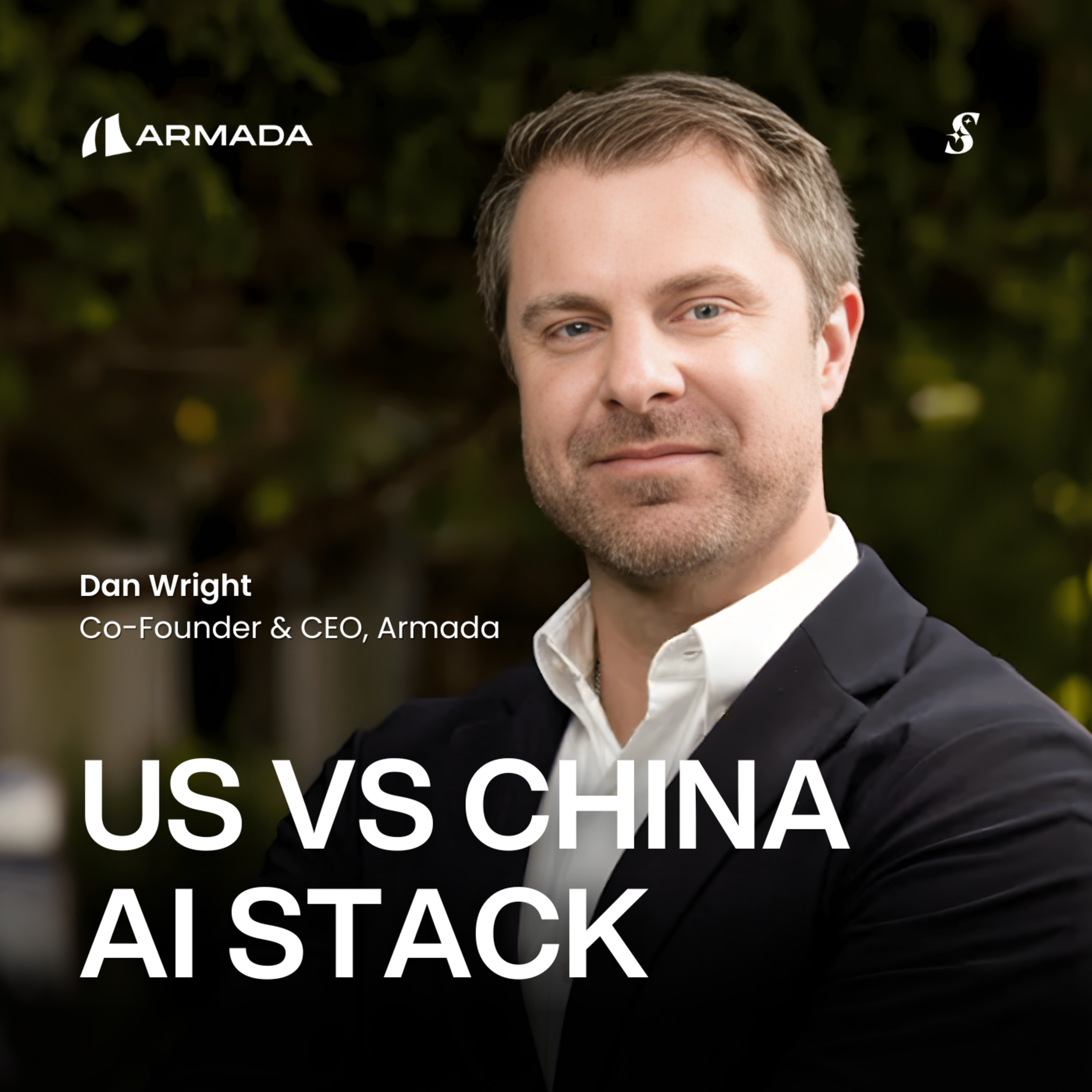
The competition in AI infrastructure is framed as a binary, geopolitical choice. The future will be dominated by either a US-led AI stack or a Chinese one. This perspective positions edge infrastructure companies as critical players in national security and technological dominance.
Dario Amodei, CEO of Anthropic, frames the debate over selling advanced GPUs to China not as a trade issue, but as a severe national security risk. He compares it to selling nuclear weapons, arguing that it arms a geopolitical competitor with the foundational technology for advanced AI, which he calls "a country of geniuses in a data center."

The brazen smuggling of NVIDIA chips to China signals that the competition for AI dominance is an "all-out sprint" and a matter of national security. Control over compute infrastructure is now as geopolitically critical as energy, making it the central battleground of a new technological Cold War.

Instead of military action, China could destabilize the US tech economy by releasing high-quality, open-source AI models and chips for free. This would destroy the profitability and trillion-dollar valuations of American AI companies.

The US government is labeling Anthropic a "supply chain risk" over ethical disputes while simultaneously using its AI model, Claude, for targeting and intelligence in strikes on Iran. This reveals a deep, contradictory dependence on the very technology it publicly rejects, undermining its own punitive measures.

By forcing the U.S. to operate its air defense systems at scale, the conflict in Iran is inadvertently providing China with a treasure trove of intelligence. The Chinese can observe how these systems perform, identify weaknesses, and refine their own tactics for a potential future conflict.

A zero-tolerance policy on selling advanced AI chips to China might be strategically shortsighted. Allowing some sales could build a degree of dependence within China's ecosystem. This dependence then becomes a powerful point of leverage that the U.S. could exploit in a future crisis, a weapon it wouldn't have if China were forced into total self-sufficiency from the start.

China is engaged in a strategic propaganda campaign, exaggerating its technological self-sufficiency in areas like AI chips. The goal is to convince U.S. policymakers that export controls are futile. This narrative aims to pressure the U.S. into relaxing restrictions, which would then allow China to acquire the very technology it claims not to need.

Private Chinese tech companies are using satellite imagery and AI to track and publicly share real-time US military deployments. This open-source intelligence could be accessed by adversaries like Iran, creating a new and significant source of friction in US-China relations.