Get your free personalized podcast brief
We scan new podcasts and send you the top 5 insights daily.
A dual-brand strategy (e.g., Hims & Hers) creates deep emotional resonance by speaking to distinct audiences on personal journeys. This is more than a simple filter; it's executed efficiently via a componentized codebase, allowing for tailored experiences without halting product velocity.

Related Insights
The need for emotional connection isn't limited to consumer products. All software is used by humans whose expectations are set by the best B2C experiences. Even enterprise products must honor user emotions to succeed, a concept termed 'Business to Human'.

Don't unleash a generic AI agent on your entire database. To get high response rates, segment contacts into specific sub-personas based on role, behavior, or status (e.g., churn risk). Then, train dedicated sub-agents or campaigns for each persona, allowing for true personalization at scale in batches of around 1,000 contacts.

Personalization is not one-size-fits-all. Director-level and above prospects are 50% more likely to respond to company-level relevance (e.g., business initiatives). In contrast, individual contributors and managers are more receptive to individual-level personalization.

True differentiation comes from "deep delight," where emotional needs are addressed within the core functional solution. This is distinct from "surface delight" like animations or confetti, which are nice but fail to build the strong emotional connections that drive loyalty.
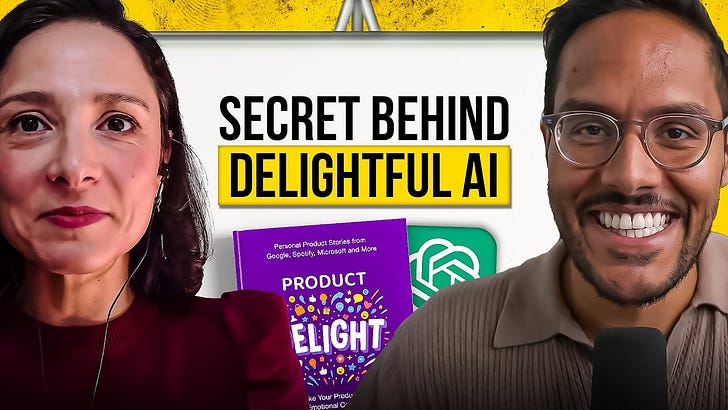
The most effective user segmentation is based on underlying motivations. Identifying both functional ("inspire me with new music") and emotional ("help me feel less lonely") drivers is the crucial first step to engineering meaningful product delight that resonates deeply with users.
While customer experience (CX) focuses on smooth transactions, customer intimacy builds deep, lasting loyalty by fostering closeness. This is achieved through empathetic actions in "moments that matter," creating powerful brand stories that resonate more than any marketing campaign.

In a crowded market, brand is defined by the product experience, not marketing campaigns. Every interaction must evoke the intended brand feeling (e.g., "lovable"). This transforms brand into a core product responsibility and creates a powerful, defensible moat that activates word-of-mouth and differentiates you from competitors.

Avoid the 'settings screen' trap where endless customization options cater to a vocal minority but create complexity for everyone. Instead, focus on personalization: using behavioral data to intelligently surface the right features to the right users, improving their experience without adding cognitive load for the majority.
Brands will need a bifurcated approach for marketing. One strategy will focus on creating authentic content for human connection, while a separate, distinct strategy must structure information to be effectively parsed and prioritized by the AI agents that increasingly intermediate the customer journey.