Get your free personalized podcast brief
We scan new podcasts and send you the top 5 insights daily.
Establish a powerful feedback loop where the AI agent analyzes your notes to find inefficiencies, proposes a solution as a new custom command, and then immediately writes the code for that command upon your approval. The system becomes self-improving, building its own upgrades.

Related Insights
A cutting-edge pattern involves AI agents using a CLI to pull their own runtime failure traces from monitoring tools like Langsmith. The agent can then analyze these traces to diagnose errors and modify its own codebase or instructions to prevent future failures, creating a powerful, human-supervised self-improvement loop.
Frame your relationship with AI agents like Clawdbot as an employer-employee dynamic. Set expectations for proactivity, and it will autonomously identify opportunities and build solutions for your business, such as adding new features to your SaaS based on market trends while you sleep.
Instead of relying on one-off prompts, professionals can now rapidly build a collection of interconnected internal AI applications. This "personal software stack" can manage everything from investments and content creation to data analysis, creating a bespoke productivity system.

Create a virtuous cycle for your knowledge base. Use AI to analyze closed support tickets, identify the core issue and solution, and propose a new FAQ entry if one doesn't exist. A human then reviews and approves the suggestion, continuously improving the AI's data source.

Instead of manually refining a complex prompt, create a process where an AI agent evaluates its own output. By providing a framework for self-critique, including quantitative scores and qualitative reasoning, the AI can iteratively enhance its own system instructions and achieve a much stronger result.

Instead of codebases becoming harder to manage over time, use an AI agent to create a "compounding engineering" system. Codify learnings from each feature build—successful plans, bug fixes, tests—back into the agent's prompts and tools, making future development faster and easier.

Task your AI agent with its own maintenance by creating a recurring job for it to analyze its own files, skills, and schedules. This allows the AI to proactively identify inefficiencies, suggest optimizations, and find bugs, such as a faulty cron scheduler.
Instead of integrating with existing SaaS tools, AI agents can be instructed on a high-level goal (e.g., 'track my relationships'). The agent can then determine the need for a CRM, write the code for it, and deploy it itself.
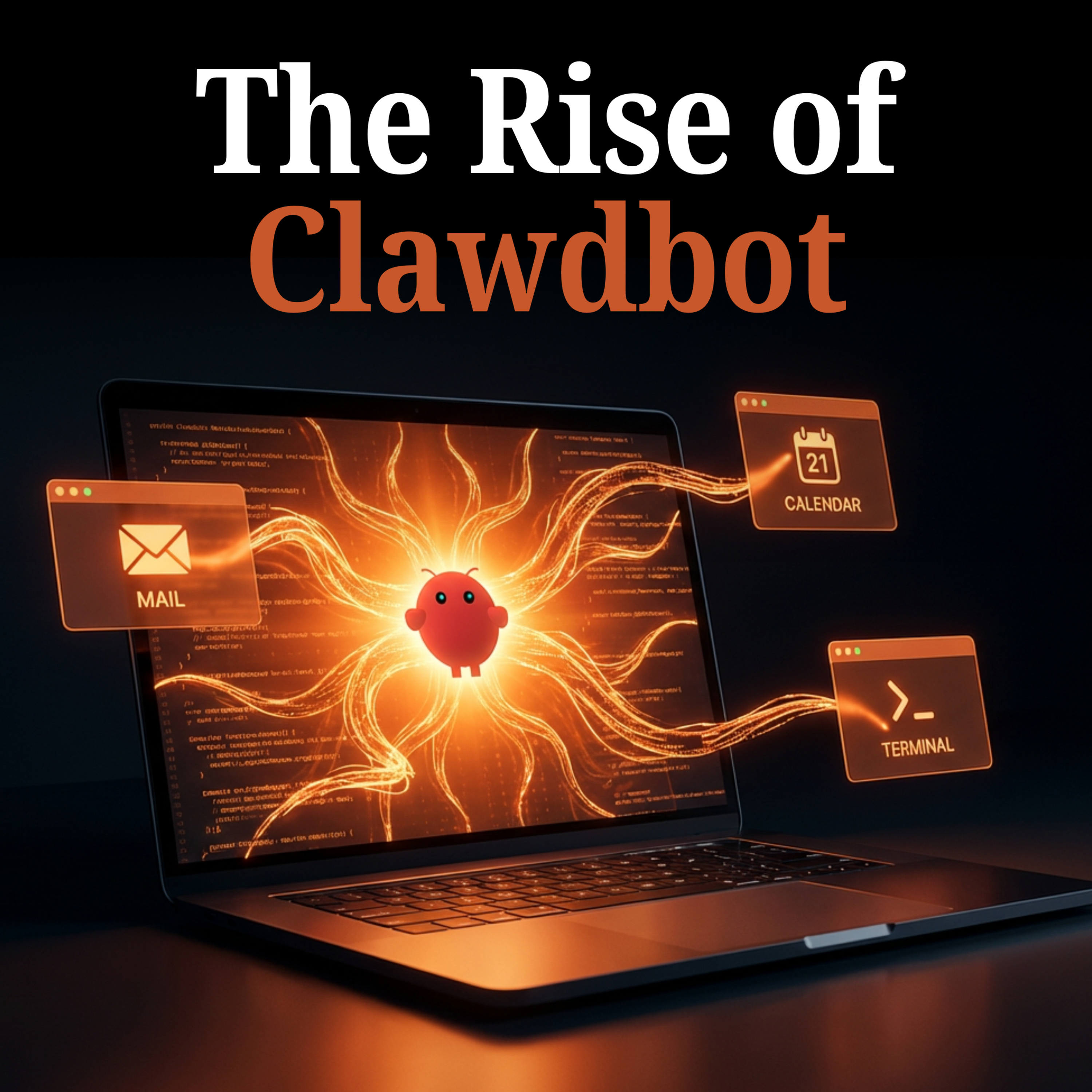
Instead of guessing where AI can help, use AI itself as a consultant. Detail your daily workflows, tasks, and existing tools in a prompt, and ask it to generate an "opportunity map." This meta-approach lets AI identify the highest-impact areas for its own implementation.

Instead of manually maintaining your AI's custom instructions, end work sessions by asking it, "What did you learn about working with me?" This turns the AI into a partner in its own optimization, creating a self-improving system.
