Get your free personalized podcast brief
We scan new podcasts and send you the top 5 insights daily.
When deploying an AI agent for a critical function like invoicing, it is crucial to manually walk it through the process for the first few real-world tasks. The speaker verified the agent's proposed steps and outputs for the first three deals before allowing it to run autonomously.

Related Insights
To avoid failure, launch AI agents with high human control and low agency, such as suggesting actions to an operator. As the agent proves reliable and you collect performance data, you can gradually increase its autonomy. This phased approach minimizes risk and builds user trust.

Before committing to automating an operational task like a daily briefing, run the process manually with AI every day for a week or two. This trial period allows you to evaluate the output's actual utility and refine the process before locking it into a potentially flawed automation.

Beyond model capabilities and process integration, a key challenge in deploying AI is the "verification bottleneck." This new layer of work requires humans to review edge cases and ensure final accuracy, creating a need for entirely new quality assurance processes that didn't exist before.
To create autonomous AI agents, first break a workflow into stages. Manually verify the quality of each stage's output. Once you trust the end-to-end process, package it as a recurring, proactive "skill" that requires only occasional check-ins.

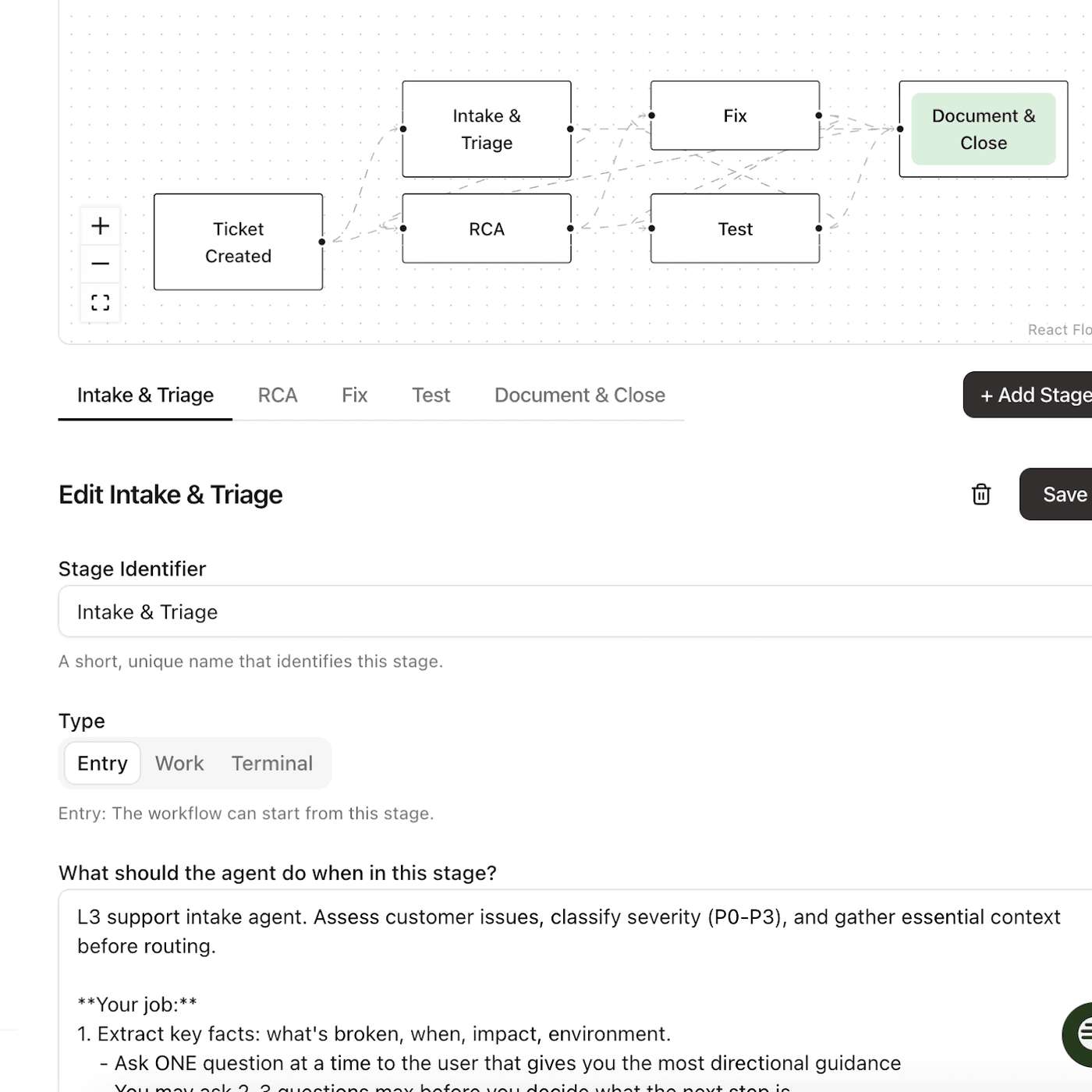
Instead of forcing full autonomy, the AI agent allows teams to start with human approvals at key stages. This 'human-in-the-loop' model builds trust and enables organizations to incrementally automate complex support workflows as they grow more confident in the system's reliability.
To mitigate risks like AI hallucinations and high operational costs, enterprises should first deploy new AI tools internally to support human agents. This "agent-assist" model allows for monitoring, testing, and refinement in a controlled environment before exposing the technology directly to customers.

Long-horizon agents are not yet reliable enough for full autonomy. Their most effective current use cases involve generating a "first draft" of a complex work product, like a code pull request or a financial report. This leverages their ability to perform extensive work while keeping a human in the loop for final validation and quality control.
Current AI workflows are not fully autonomous and require significant human oversight, meaning immediate efficiency gains are limited. By framing these systems as "interns" that need to be "babysat" and trained, organizations can set realistic expectations and gradually build the user trust necessary for future autonomy.

For complex, high-stakes tasks like booking executive guests, avoid full automation initially. Instead, implement a 'human in the loop' workflow where the AI handles research and suggestions, but requires human confirmation before executing key actions, building trust over time.
Treat custom AI agents like junior employees, not finished software. They require daily check-ins to monitor for bugs, performance issues, and regressions. There is no "set and forget"—a human must actively manage the agent every day for it to succeed.
