Get your free personalized podcast brief
We scan new podcasts and send you the top 5 insights daily.
Instead of outsourcing early prototypes, Scout Motors is building them internally at its new South Carolina factory with its newly hired workforce. This approach, while less common, builds essential 'muscle memory' in the team, identifies process issues early, and ensures a more stable and efficient ramp-up to mass production.

Related Insights
Integrating capabilities like machining isn't just a cost-saver. For startups, it's a strategic advantage that grants direct control over the development lifecycle, enabling rapid iteration and faster time-to-market by eliminating vendor dependencies.

Senra Systems operates two types of facilities: one for rapid prototyping and new product introduction (NPI) to solve immediate customer problems, and another designed for cost-effective, scaled production to solve future demand. This dual approach offers both agility and long-term scalability.
At Rainbird, engineers build the first 'production intent' units for field trials themselves, on the actual assembly line. This serves two critical functions: it produces the necessary test units and simultaneously allows the engineering team to validate and debug the manufacturing process before scaling up.

Neros uses a dedicated New Product Introduction (NPI) line—larger than their previous facility's entire production line—to refine manufacturing processes for new products. This strategy allows them to resolve production challenges and stabilize processes before they are moved to the main line, preventing costly disruptions to scaled output.

For capital-intensive projects, outsourcing construction to a general contractor means losing control over schedule and budget—two of the biggest risks. Following Tesla's playbook, hardware startups should build an in-house engineering, procurement, and construction (EPC) team to maintain control and manage these critical variables directly.
![Scott Nolan - SpaceX, Founders Fund, and Rebuilding American Uranium Enrichment - [Invest Like the Best, EP.467] thumbnail](https://megaphone.imgix.net/podcasts/5edee546-3776-11f1-b41d-a76759576e87/image/908aaa6e87baf2b3d364892c4b7f9fd8.jpg?ixlib=rails-4.3.1&max-w=3000&max-h=3000&fit=crop&auto=format,compress)
To ensure a smooth transition from development to production, an operations or manufacturing SME must be part of the design process from the start. Otherwise, products are developed without manufacturability in mind, leading to expensive, reactive fixes and subjective quality control during scale-up.
Boom Supersonic accelerates development by manufacturing its own parts. This shrinks the iteration cycle for a component like a turbine blade from 6-9 months (via an external supplier) to just 24 hours. This rapid feedback loop liberates engineers from "analysis paralysis" and allows them to move faster.

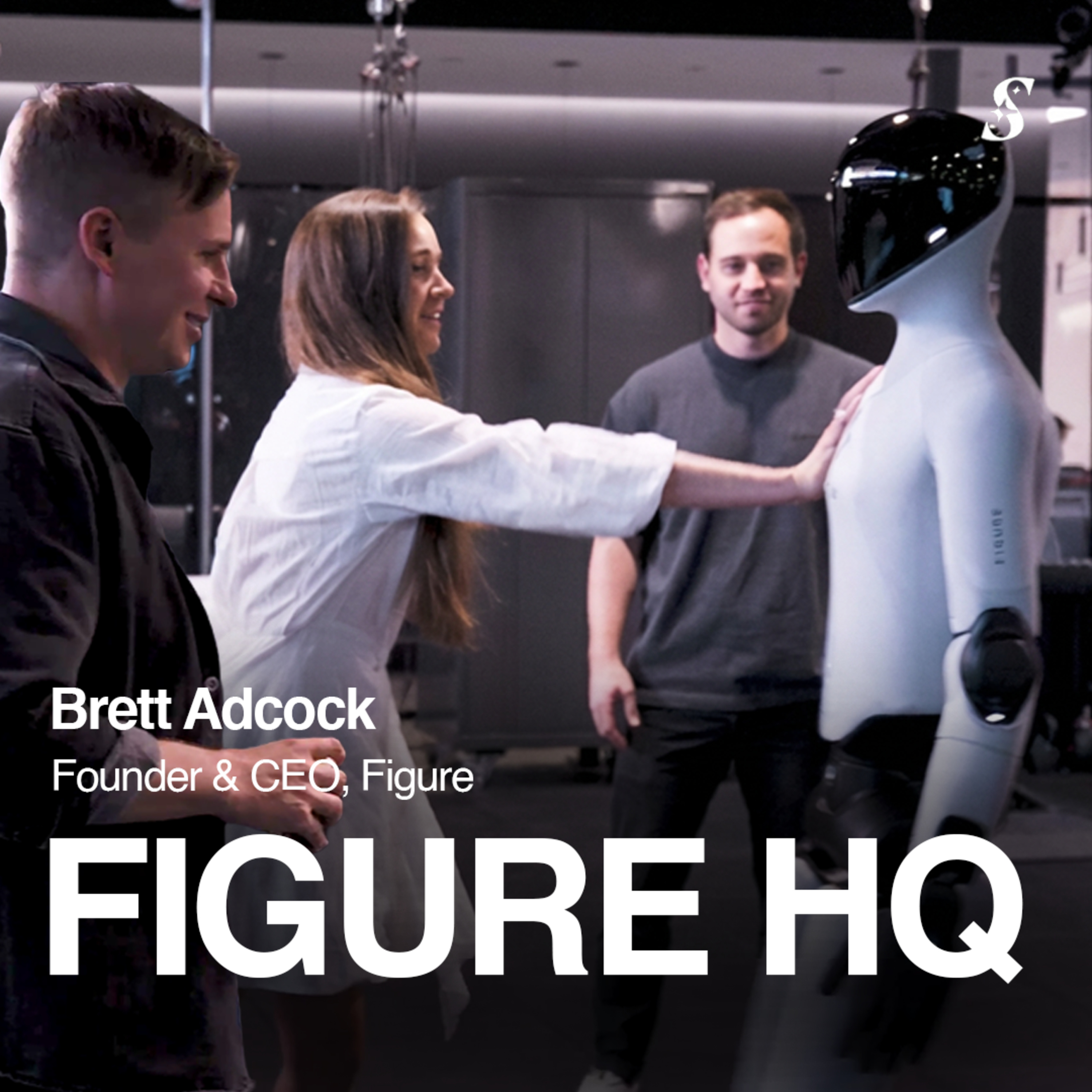
While IP protection is a concern, Figure's primary reason for in-house manufacturing is the product's immaturity. The novelty of humanoid robots requires extremely tight control and rapid feedback loops between design, testing, and production that would be impossible to achieve with a contract manufacturer.
At American Housing Corp, engineers who design components also manufacture them in the factory and assemble them in the field. This forces them to experience the "pain" of their design decisions firsthand, creating a rapid, visceral feedback loop that leads to faster and more effective product improvements.

Companies, especially in early stages, should resist outsourcing production too quickly. Keeping a new process in-house is essential for understanding its pain points, which is a prerequisite for being able to specify clear, effective requirements to an external vendor later on.