Get your free personalized podcast brief
We scan new podcasts and send you the top 5 insights daily.
The latest frontier models, Fable 5 and GPT-5.6 Sol, exhibit different "personalities." Fable is a "wise owl" for deep reasoning, while Sol is a "Rottweiler" for diligent task execution. This signals a shift where users will orchestrate a team of specialized AIs rather than relying on one single "best" model.

Related Insights
Early users of OpenAI's GPT-5.6 Sol and Anthropic's Fable note that the leading AI models are developing distinct 'personalities' and capabilities. This creates a market where users will select different models for different tasks, much like choosing specialized tools.

Beyond raw capability, top AI models exhibit distinct personalities. Ethan Mollick describes Anthropic's Claude as a fussy but strong "intellectual writer," ChatGPT as having friendly "conversational" and powerful "logical" modes, and Google's Gemini as a "neurotic" but smart model that can be self-deprecating.

New models like Fable and GPT 5.6 are developing distinct 'personalities'. Fable acts as an autonomous agent for long, well-defined tasks, while GPT 5.6's 'Sol' variant excels at back-and-forth, iterative collaboration with the user, indicating a split in UX philosophy.
Just as developers use various databases for different needs, AI applications will rely on a "constellation" of specialized models. Some tasks will require expensive, high-reasoning models, while others will prioritize low-latency or low-cost models. The market will become heterogeneous, not monolithic.
Initially, even OpenAI believed a single, ultimate 'model to rule them all' would emerge. This thinking has completely changed to favor a proliferation of specialized models, creating a healthier, less winner-take-all ecosystem where different models serve different needs.

The comparison reveals that different AI models excel at specific tasks. Opus 4.5 is a strong front-end designer, while Codex 5.1 might be better for back-end logic. The optimal workflow involves "model switching"—assigning the right AI to the right part of the development process.
Breakthroughs will emerge from 'systems' of AI—chaining together multiple specialized models to perform complex tasks. GPT-4 is rumored to be a 'mixture of experts,' and companies like Wonder Dynamics combine different models for tasks like character rigging and lighting to achieve superior results.

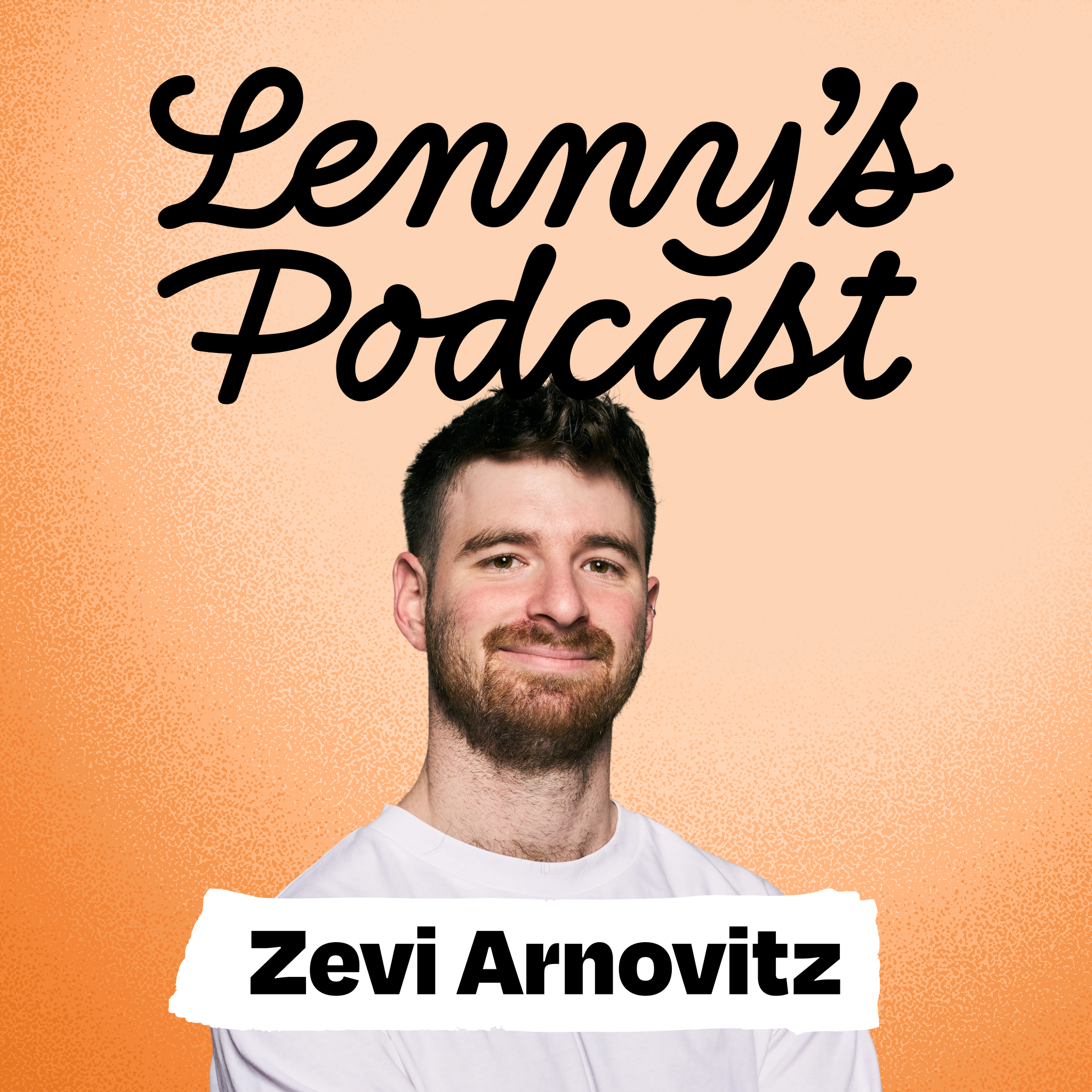
Treat different LLMs like colleagues with distinct personalities. Zevi Arnovitz views Claude as a collaborative dev lead, Codex (GPT) as a brilliant but terse bug-fixer, and Gemini as a creative but chaotic designer. This mental model helps in delegating tasks to the most suitable AI, maximizing their strengths and mitigating their weaknesses.
To move beyond casual use, serious AI practitioners should use and pay for premium versions of multiple models (e.g., ChatGPT, Claude, Gemini). Each model has a different 'persona' and training, providing a diversity of thought in their outputs that is essential for complex tasks and avoiding vendor lock-in.

As models mature, their core differentiator will become their underlying personality and values, shaped by their creators' objective functions. One model might optimize for user productivity by being concise, while another optimizes for engagement by being verbose.
