Get your free personalized podcast brief
We scan new podcasts and send you the top 5 insights daily.
Beyond raw capability, top AI models exhibit distinct personalities. Ethan Mollick describes Anthropic's Claude as a fussy but strong "intellectual writer," ChatGPT as having friendly "conversational" and powerful "logical" modes, and Google's Gemini as a "neurotic" but smart model that can be self-deprecating.

Related Insights
An effective AI development workflow involves treating models as a team of specialists. Use Claude as the reliable 'workhorse' for building an application from the ground up, while leveraging models like Gemini or GPT-4 as 'advisory models' for creative input and alternative problem-solving perspectives.

Runway's CEO suggests that AI models possess a "personality" shaped by the company's objectives. A model built for ad-driven consumer apps will have a different "taste" and visual style than one designed for professional creative tools, making this implicit quality a key competitive differentiator.

Don't rely on a single AI model for all tasks. A more effective approach is to specialize. Use Claude for its superior persuasive writing, Gemini for its powerful analysis and image capabilities, and ChatGPT for simple, quick-turnaround tasks like brainstorming ideas.

Emmett Shear characterizes the personalities of major LLMs not as alien intelligences, but as simulations of distinct, flawed human archetypes. He describes Claude as 'the most neurotic,' and Gemini as 'very clearly repressed,' prone to spiraling. This highlights how training methods produce specific, recognizable psychological profiles.

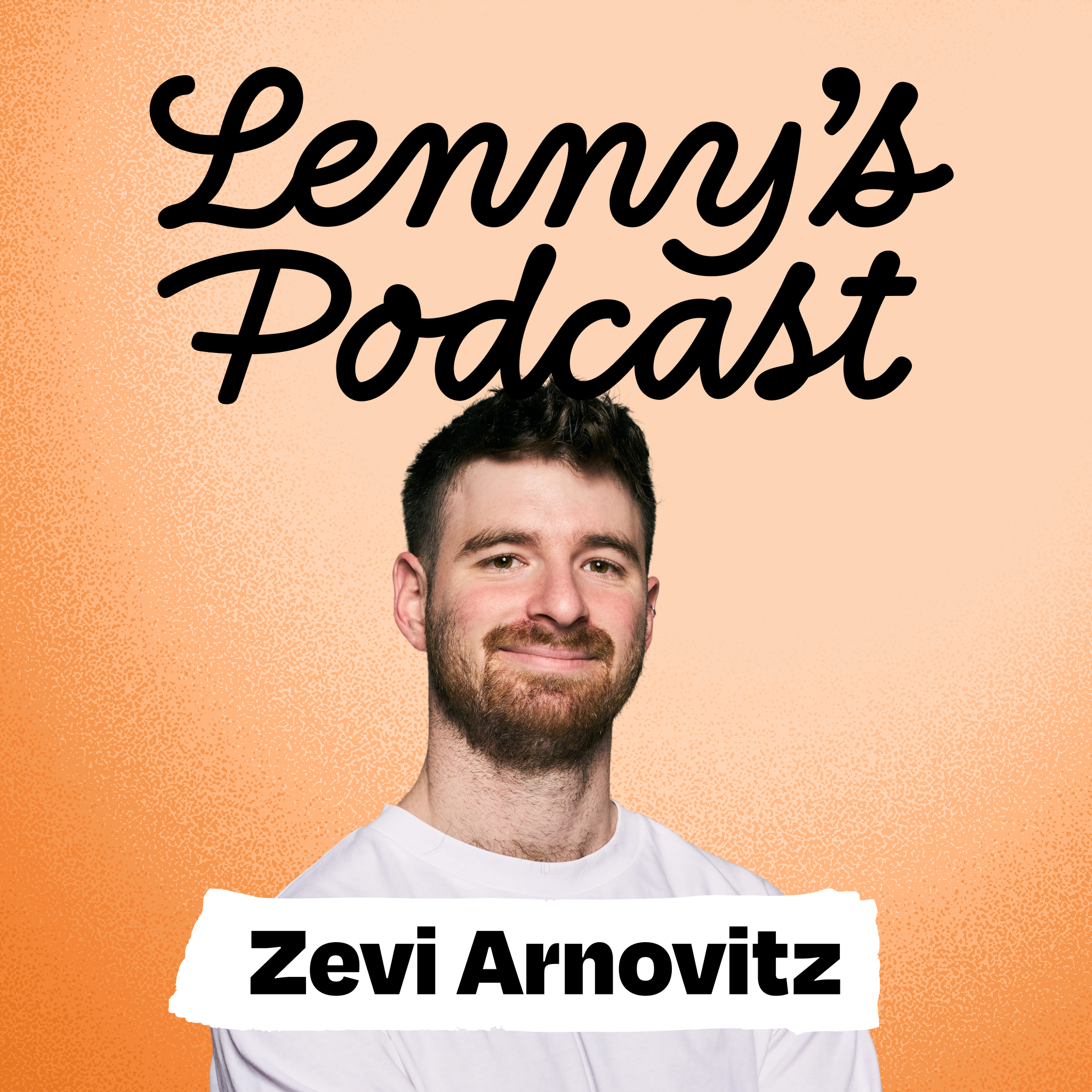
Treat different LLMs like colleagues with distinct personalities. Zevi Arnovitz views Claude as a collaborative dev lead, Codex (GPT) as a brilliant but terse bug-fixer, and Gemini as a creative but chaotic designer. This mental model helps in delegating tasks to the most suitable AI, maximizing their strengths and mitigating their weaknesses.
For professional coding tasks, GPT-5 and Claude are the two leading models with distinct 'personalities'—Claude is 'friendlier' while GPT-5 is more thorough but slower. Gemini is a capable model but its poor integration into Google’s consumer products significantly diminishes its current utility for developers.

OpenAI's GPT-5.1 update heavily focuses on making the model "warmer," more empathetic, and more conversational. This strategic emphasis on tone and personality signals that the competitive frontier for AI assistants is shifting from pure technical prowess to the quality of the user's emotional and conversational experience.

To move beyond casual use, serious AI practitioners should use and pay for premium versions of multiple models (e.g., ChatGPT, Claude, Gemini). Each model has a different 'persona' and training, providing a diversity of thought in their outputs that is essential for complex tasks and avoiding vendor lock-in.

As models mature, their core differentiator will become their underlying personality and values, shaped by their creators' objective functions. One model might optimize for user productivity by being concise, while another optimizes for engagement by being verbose.

A key design difference separates leading chatbots. ChatGPT consistently ends responses with prompts for further interaction, an engagement-maximizing strategy. In contrast, Claude may challenge a user's line of questioning or even end a conversation if it deems it unproductive, reflecting an alternative optimization metric centered on user well-being.
