Get your free personalized podcast brief
We scan new podcasts and send you the top 5 insights daily.
The first fresh-frozen product was successful but expensive to ship and required freezer space. They launched 'Unkibble,' a shelf-stable version solving these problems. This second product became the primary driver of their nine-figure revenue.

Related Insights
Securing your first few customers is not just about initial revenue; it's a critical signal. For Spot & Tango, this early traction provided the confidence that a much larger market was attainable, justifying further investment in solving logistics and marketing.
Fruitist achieved a $1 billion valuation by transforming the blueberry from a supporting ingredient into a standalone snack or meal replacement. By engineering a jumbo-sized, consistent product, they created a new product category and unlocked premium pricing.

A company with modest growth experimented with niche content for a small user segment, revealing a massive, underserved market. This led to a second, separate app that quickly surpassed the original product's revenue and drove hyper-growth, challenging the "focus on one thing" dogma.

Pivoting isn't just for failing startups; it's a requirement for massive success. Ambitious companies often face 're-founding moments' when their initial product, even if successful, proves insufficient for market-defining scale. This may require risky moves, like competing against your own customers.

Even a company with significant revenue can be stuck in the "problem-market fit" stage if it introduces too much complexity. Pursuing multiple products, ICPs, or go-to-market motions dilutes focus and exponentially increases difficulty, hindering the ability to scale effectively.

The breakout success of Nerds Gummy Clusters came from reimagining the product's form factor. By combining the classic sandy Nerds texture with a gummy center into bite-sized clusters, they solved the messy and awkward user experience of the original, demonstrating how physical product design can drive massive growth.

Spot & Tango entered the massive ($40B) and crowded dog food market. The founder saw this not as a threat, but an opportunity. The market's huge size and lack of a single 'category killer' meant there was ample room for a differentiated brand to succeed.
Exponential valuation growth often comes from fundamentally repositioning a product to command a much higher price, not just increasing sales volume. This strategy, which multiplied one company's sale value by over 100x, requires deep market understanding to turn a low-value proposition into a high-ticket one.

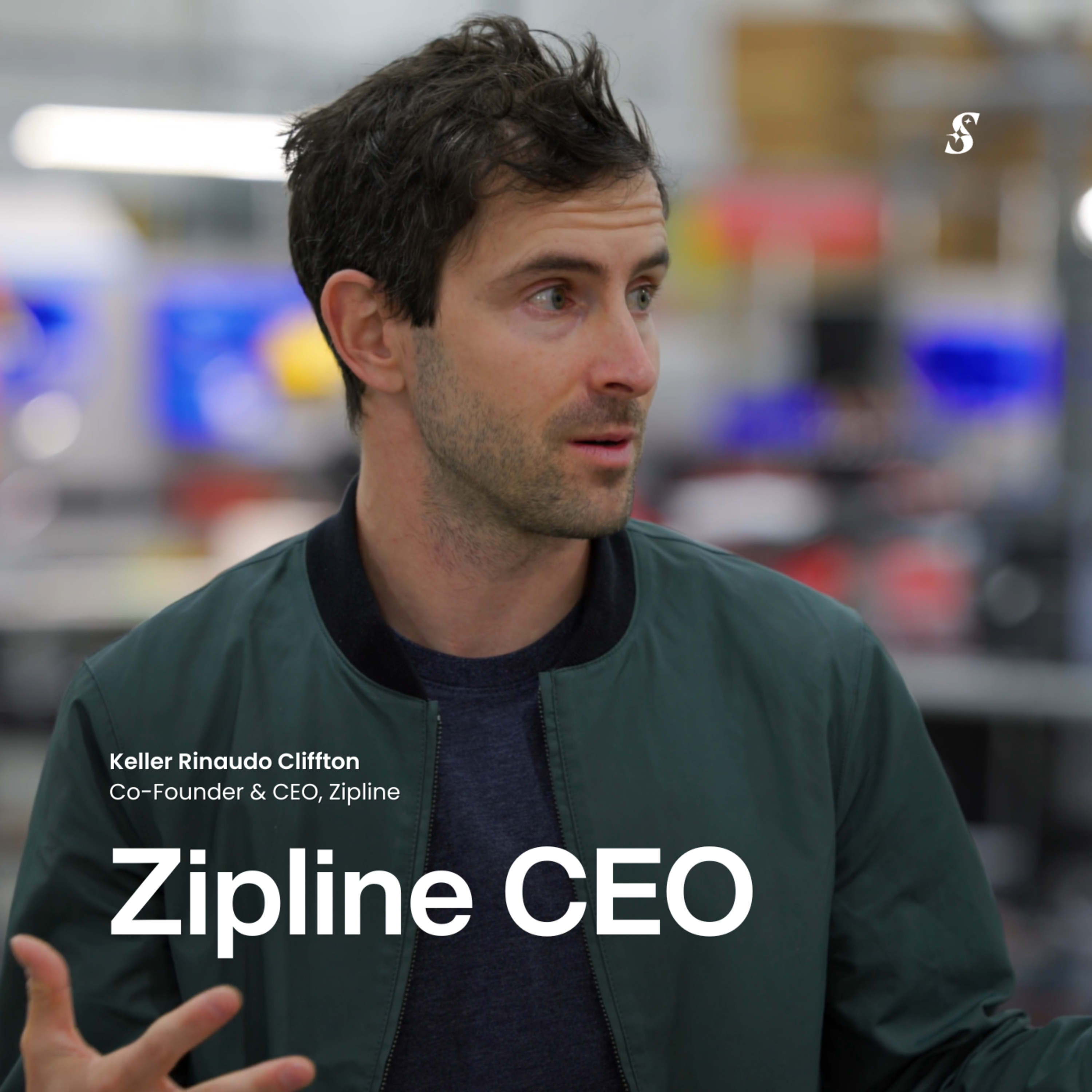
Zipline found that making delivery 10x faster and more convenient didn't just win customers from existing apps. It fundamentally changed user behavior, increasing order frequency so dramatically that they project the total addressable market is actually 10 times larger than currently estimated.
The company's breakthrough, and its highest-grossing business segment, was the Cupcake ATM. This highlights that revolutionary growth can come from innovating on product access and delivery, rather than just the core product itself.