Get your free personalized podcast brief
We scan new podcasts and send you the top 5 insights daily.
The company's breakthrough, and its highest-grossing business segment, was the Cupcake ATM. This highlights that revolutionary growth can come from innovating on product access and delivery, rather than just the core product itself.
Related Insights
Domino's became a top-performing stock not by having the best pizza, but by focusing on convenience through technology. Their app created a direct customer relationship, enabling better targeting and a smoother experience. This tech advantage transitioned into a physical world distribution and scale advantage.

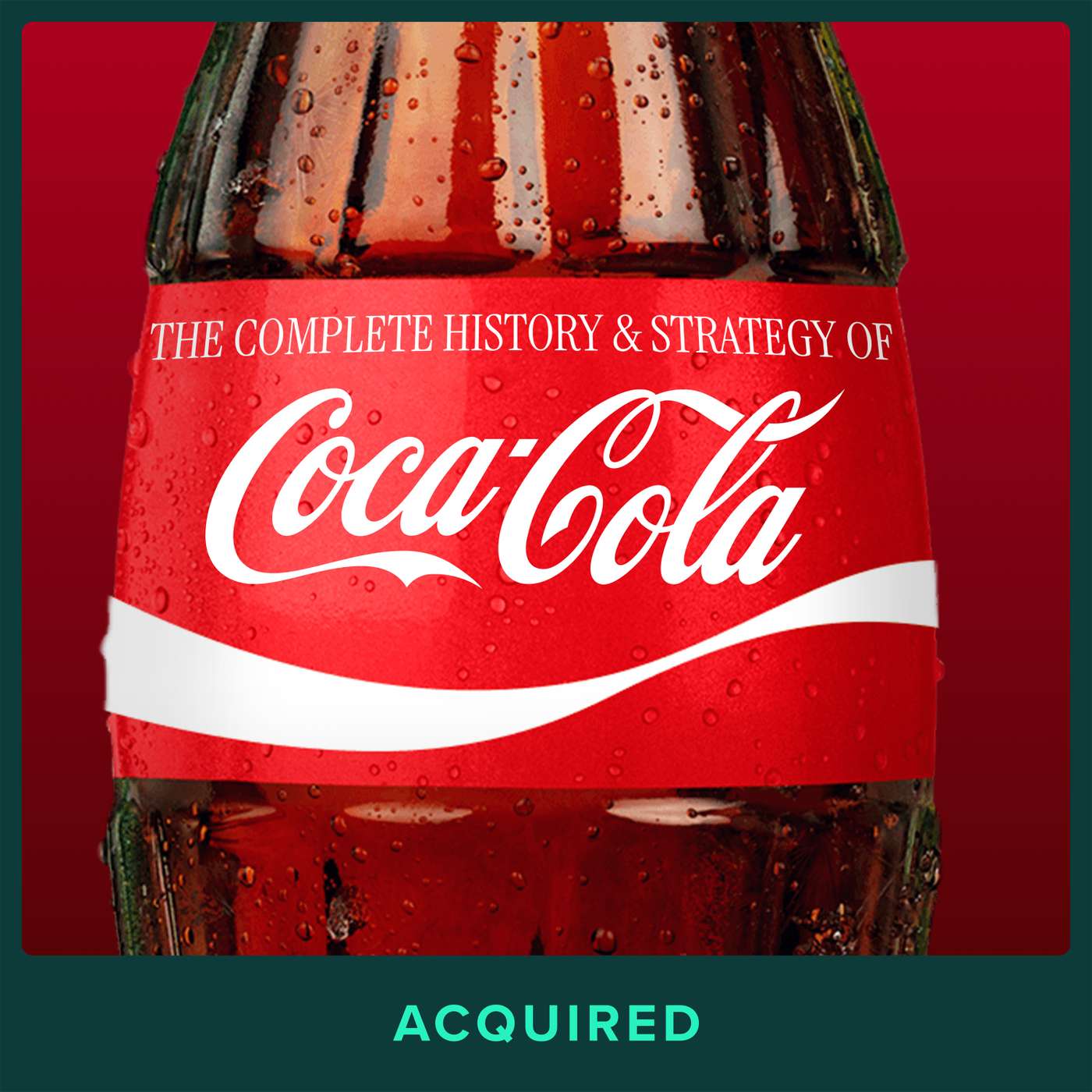
Coca-Cola gave away bottling rights for free in a perpetual contract. This seemingly terrible deal offloaded capital expenditure and operational complexity, enabling rapid, asset-light scaling through a franchised network of local entrepreneurs who built the distribution system.
Before launching, assess a product's viability by the sheer number of potential distribution points. Manufacturing and logistics are solvable problems if the market access is vast. This reverses the typical product-first approach by prioritizing market penetration from day one.

Fairlife's use of ultra-pasteurization and aseptic packaging creates a shelf-stable product that doesn't require refrigeration before opening. This key innovation overcame milk's traditional logistical hurdles, enabling a game-changing distribution partnership with Coca-Cola's vast, non-refrigerated network.

Business model innovation is a third, often-overlooked pillar of success alongside product and go-to-market. A novel business model can unlock better unit economics, align incentives with customers, and dictate the entire product and operational strategy.

By releasing a giant, 1,700-sheet toilet paper roll specifically for large Thanksgiving gatherings, Charmin demonstrates a key innovation principle. Even the most commoditized products can find new growth by solving a highly specific, event-based customer problem.

A key breakthrough for Au Bon Pain was realizing customers didn't just want bread; they wanted sandwiches. By seeing their core product (the baguette) as a platform for a larger "job to be done" (a convenient, quality lunch), they unlocked massive growth. This empathetic shift in perspective is a powerful tool for innovation.

David Aaker posits that true market growth comes only from disruptive innovation, not from "my brand is better than yours" incrementalism. He criticizes seminal works on innovation for ignoring that branding is essential to position the new category, build barriers to entry, and make the innovation successful.

Deliver's founder admits their logistics model (distributed inventory) wasn't a unique insight; Amazon had already mastered it. The true innovation was recognizing that the rise of Shopify created a new, underserved market of small merchants. By aggregating their inventory, Deliver could offer them Amazon-level fulfillment infrastructure.

Sprinkles' failure under private equity ownership wasn't just due to a fading fad. The PE model, which requires sustainable and predictable businesses (like car washes), is fundamentally incompatible with fad-driven, occasion-based products like gourmet cupcakes.