Get your free personalized podcast brief
We scan new podcasts and send you the top 5 insights daily.
Categorize risks to prioritize action. 'Tigers' are critical threats that will kill the project. 'Paper Tigers' are perceived risks that are actually under control, requiring only reassurance. 'Elephants' are the unspoken, uncomfortable truths that need to be surfaced for discussion.

Related Insights
During product discovery, Amazon teams ask, "What would be our worst possible news headline?" This pre-mortem practice forces the team to identify and confront potential weak points, blind spots, and negative outcomes upfront. It's a powerful tool for looking around corners and ensuring all bases are covered before committing to build.

Extend premortems beyond failure scenarios to consider overwhelming success. This reframes success as a potential failure if you're unprepared, helping teams proactively identify and plan for scaling risks and organizational readiness before they become critical issues.
Premortems are not just for project kickoffs. They are a powerful diagnostic tool when a project feels 'off track' or when teams are 'speaking from different sheets of music.' This can surface misalignments and communication breakdowns that sprint retrospectives might not catch.
Before a major initiative, run a simple thought experiment: what are the best and worst possible news headlines? If the worst-case headline is indefensible from a process, intent, or PR perspective, the risk may be too high. This forces teams to confront potential negative outcomes early.

A pre-mortem asks a team to imagine their project has already failed spectacularly. By explaining the hypothetical failure, they uncover potential risks and can build mitigation strategies, effectively using the power of hindsight bias in advance.
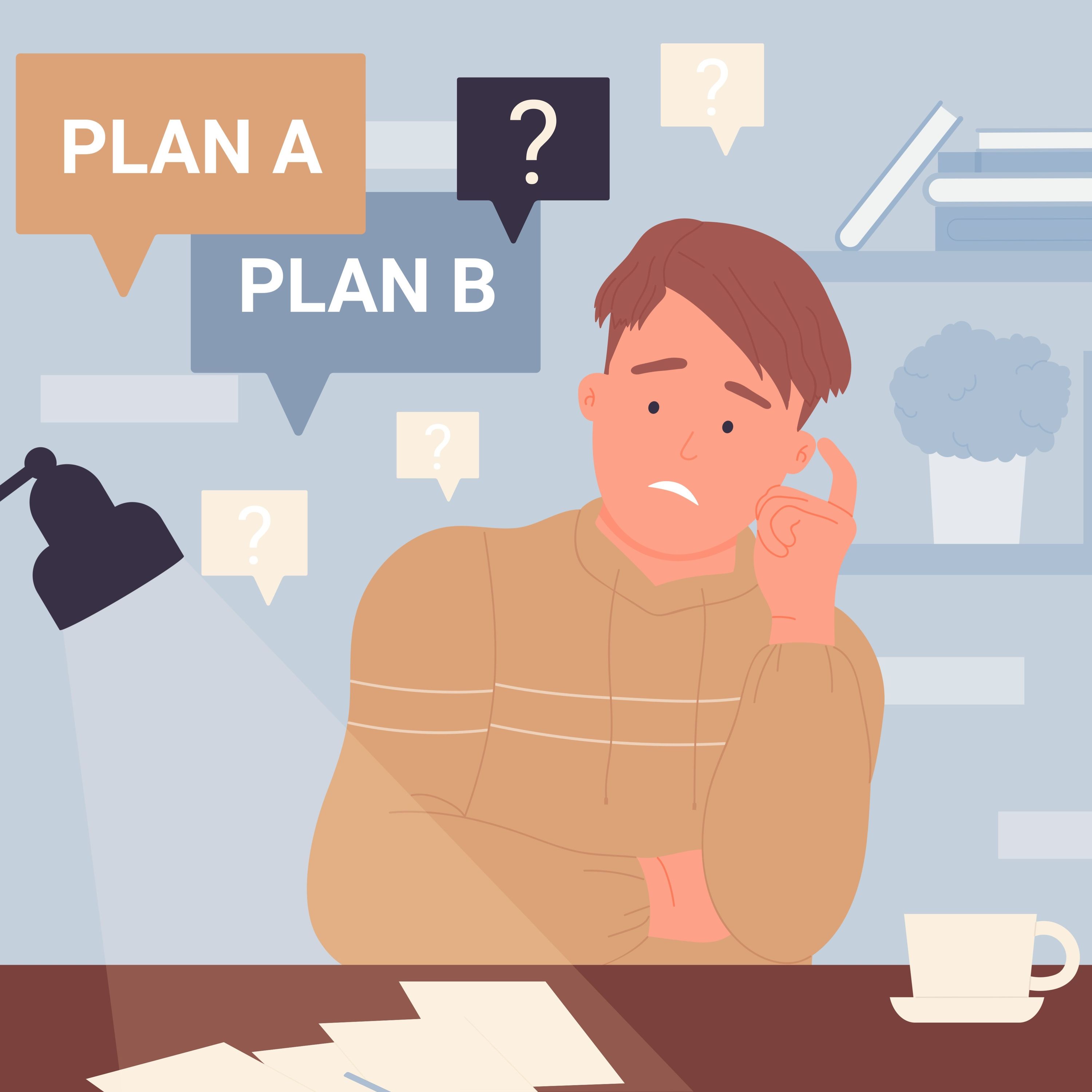
Instead of creating a massive risk register, identify the core assumptions your product relies on. Prioritize testing the one that, if proven wrong, would cause your product to fail the fastest. This focuses effort on existential threats over minor issues.

The 'fake press release' is a useful vision-setting tool, but a 'pre-mortem' is more tactical. It involves writing out two scenarios before a project starts: one detailing exactly *why* it succeeded (e.g., team structure, metrics alignment) and another detailing *why* it failed. This forces a proactive discussion of process and risks, not just the desired outcome.
Instead of complex prioritization frameworks like RICE, designers can use a more intuitive model based on Value, Cost, and Risk. This mirrors the mental calculation humans use for everyday decisions, allowing for a more holistic and natural conversation about project trade-offs.
Before starting a project, ask the team to imagine it has failed and write a story explaining why. This exercise in 'time travel' bypasses optimism bias and surfaces critical operational risks, resource gaps, and flawed assumptions that would otherwise be missed until it's too late.

Hormozi's team didn't just plan for success; they systematically identified every potential point of failure ("choke points") from ad platforms to payment processors. By asking "how would we fail?" and creating contingencies for each scenario, they proactively managed risk for a complex, high-stakes event.
